What to Expect During a Sleep Study for Diagnosing Insomnia Disorders
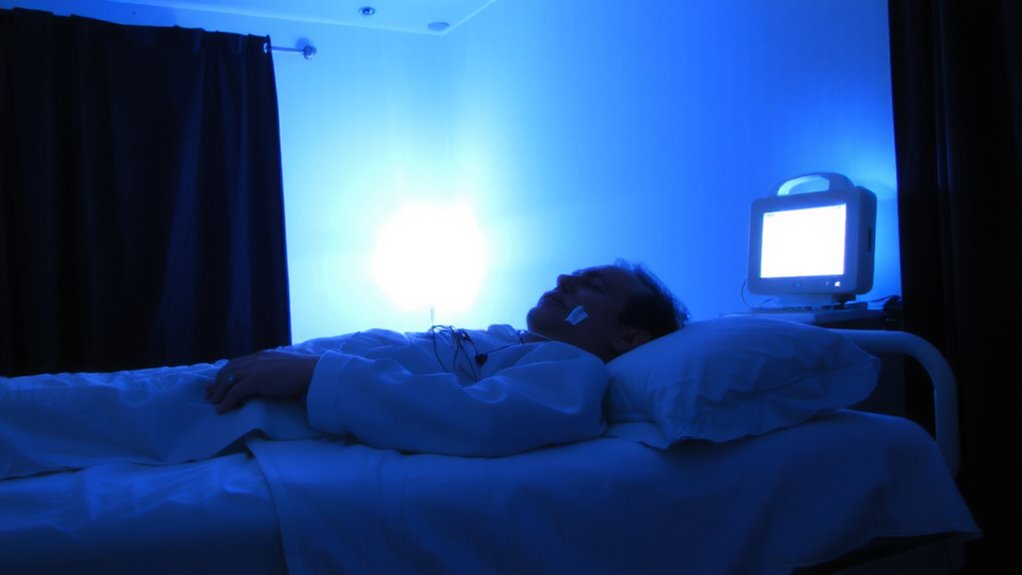
You’ll spend the night at a sleep center wearing small sensors that track your brain waves, breathing, heart rate, and movements. A tech will help place them comfortably on your scalp, face, chest, and legs. You’ll sleep in a private, quiet room with dim lighting and can bring your pillow or pajamas. Even if you don’t sleep deeply, useful data is still gathered. This test checks for insomnia or other sleep disorders, helping guide effective treatment-learn how the results could clarify your next steps.
Notable Insights
- A sleep study helps determine if insomnia is primary or caused by another sleep disorder like sleep apnea.
- You’ll be monitored overnight with sensors that track brain waves, breathing, heart rate, and muscle activity.
- Avoid caffeine and lotions before the study, and bring comfortable sleepwear and personal items if desired.
- The sleep center provides a private, home-like room where most people get enough sleep for accurate results.
- Technicians monitor your sleep in real time, and data on sleep stages and disruptions guide diagnosis and treatment.
Do You Need a Sleep Study for Insomnia?
Why might you need a sleep study for insomnia? You’ve likely tried sleep medication, but if it’s not helping or causes side effects, a deeper look is needed. A sleep study isn’t always required, but it helps rule out other conditions like sleep apnea or restless legs that mimic insomnia. Your doctor may recommend one if your symptoms last months or affect daily function. Alongside the study, a psychological evaluation checks for anxiety, depression, or stress worsening your sleep. Together, these tools give a fuller picture than medication alone. They help determine whether your insomnia is primary or a symptom of another issue. This guides better treatment choices-behavioral therapy, adjusted medication, or lifestyle changes. Though not a quick fix, the data from a study supports long-term solutions. It’s a step toward understanding your sleep patterns, not just masking them.
How to Prepare for Your Sleep Study
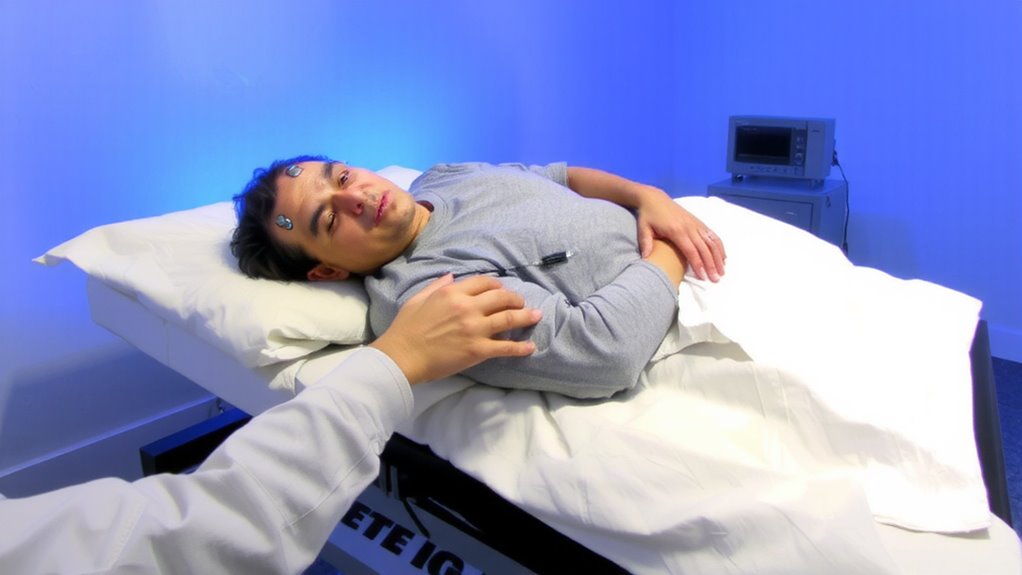
Getting ready for your sleep study starts with a clear plan, so you can rest as naturally as possible while the equipment captures accurate data. Stick to your usual sleep environment routines as much as you can-bring comfortable bedding or a pillow if allowed. Avoid caffeine and heavy meals several hours before bedtime, since they can disrupt your sleep patterns. Review your personal habits with the technician, including when you usually go to bed, how long it takes to fall asleep, and any sleep aids you use. This helps them interpret your results correctly. Wear loose, comfortable clothes and skip lotions or oils, as they can interfere with sensors. If you use a CPAP or take medication, check whether you should bring or use them. Planning ahead guarantees the data reflects your real sleep, making diagnosis and treatment decisions clearer.
What to Expect When You Arrive at the Sleep Center
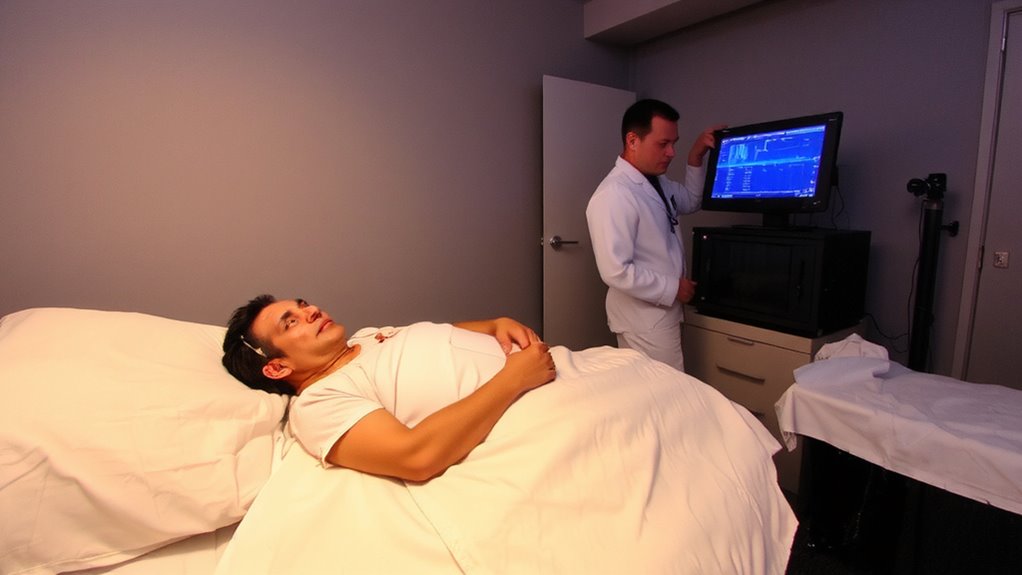
When you arrive at the sleep center in the evening, the staff will greet you and walk you through the check-in process, making sure you feel comfortable before the study begins. You’ll complete the patient intake forms, which include medical history and sleep patterns, helping the team tailor the study to your needs. Afterward, a technician will give you a center tour, showing you the private room, restroom, and monitoring area so you know what to expect. The environment is quiet and designed to feel home-like, with adjustable lighting and comfortable bedding. You’re welcome to bring personal items like pajamas or a favorite pillow. The staff will answer questions and explain the next steps, keeping you informed and at ease. They aim to make the experience smooth and stress-free, focusing on clear communication and practical support throughout your visit.
Can You Sleep During a Sleep Study?
It’s normal to wonder whether you’ll actually be able to sleep during the study, especially after settling into the quiet, home-like room and going over the setup with the technician. While it’s common to sleep less than at home, you don’t need a full night’s rest for accurate results. Most people get enough sleep for the test to assess sleep quality and patterns effectively. The sensors track even light sleep, so test accuracy isn’t compromised by a restless night.
| Factor | Impact on Study |
|---|---|
| Light sleep | Still provides usable data |
| Fewer hours | Doesn’t reduce test accuracy |
| Movement | Monitored without disruption |
| Sleep quality | Evaluated objectively |
Technicians expect some discomfort-this doesn’t affect data collection. You’ll still provide valuable information for diagnosing insomnia disorders.
How Brain & Body Activity Are Monitored at Night
Though you’re in a new environment, the equipment used during the sleep study works quietly and efficiently to capture your brain and body activity throughout the night. Small sensors on your scalp track your brain waves, showing when you fall asleep and what stages of sleep you enter. Others are placed on your chin and legs to measure muscle tension, helping identify if you’re physically restless or tense during rest. Elastic belts around your chest and abdomen monitor breathing patterns, while a clip on your finger checks oxygen levels and heart rate. You might feel a little aware of the wires at first, but most people adjust and sleep well. The tech guarantees everything stays connected without discomfort. None of the tools hurt, and they’re designed to stay in place without restricting movement. This night’s data offers a clear picture of how your body behaves when it’s meant to rest.
How Your Data Reveals Insomnia (Or Other Issues)
The information collected overnight gives your care team real insight into how your sleep functions-or where it struggles. Disruptions in your sleep architecture, like spending too little time in deep sleep or waking often, can point to insomnia or other conditions. If your brain waves show you’re not cycling through stages normally, it could mean your body isn’t shifting smoothly between light, deep, and REM sleep. Hormonal fluctuations, especially in cortisol or melatonin, may also affect your patterns and are sometimes inferred from your sleep behavior. Breathing interruptions, limb movements, or high arousal levels could suggest other disorders mimicking insomnia. Your data doesn’t lie-it shows actual rest quality, not just your perception. All this helps pinpoint whether insomnia is the main issue or if something else is disrupting your rest.
What Happens if You’Re Diagnosed With Insomnia: or Not
What comes next after your sleep study results come in? You’ll meet with your doctor to review what the data shows-whether it’s insomnia or another sleep issue. If diagnosed with insomnia, treatment often starts with Cognitive behavioral therapy, the recommended first step for long-term improvement. It helps reshape thoughts and habits around sleep. Medication management may also be discussed, but usually as a short-term option. If insomnia isn’t confirmed, other conditions like sleep apnea or restless legs syndrome might be the cause, requiring different approaches.
| Outcome | Likely Next Step | Focus |
|---|---|---|
| Insomnia diagnosed | Cognitive behavioral therapy | Changing sleep habits |
| Needs medication support | Medication management | Short-term relief |
| No insomnia found | Further testing or referrals | Rule out other disorders |
On a final note
You’ll likely feel tired the next day, but knowing what’s causing your sleep issues helps. If diagnosed with insomnia, your doctor may suggest therapy, lifestyle changes, or short-term aids-each with pros and cons. Some treatments work quickly; others take weeks. A follow-up might adjust your plan. You’re not stuck with one option-trial periods and monitoring help find what fits. Always check with your provider before trying new sleep aids.