How to Educate Teachers About Delayed Sleep Phase Disorder in Students
You’re likely seeing DSPD when students can’t fall asleep early, even when tired, and struggle to wake for early classes. Their melatonin releases later, shifting their natural rhythm. They’re not lazy-this is a real circadian delay. Track sleep logs and notice afternoon alertness shifts. Offer flexible start times or deadlines. Create low-light focus areas. Share research on how later school starts improve attendance and mood. There’s solid support for change, and you’ll see what practical steps schools can take next.
Notable Insights
- DSPD causes a biological delay in sleep timing, making early sleep and wake times nearly impossible despite effort.
- Students with DSPD are not lazy; their circadian rhythm delays melatonin release, affecting alertness and punctuality.
- Early school start times exacerbate sleep deprivation, impairing focus, memory, and academic performance in DSPD students.
- Use sleep logs and consistent patterns of late-night alertness to help identify DSPD in students accurately.
- Advocate for later starts, flexible deadlines, and quiet spaces to support DSPD students’ learning and well-being.
Is Your Student Just Tired: or Is It DSPD?
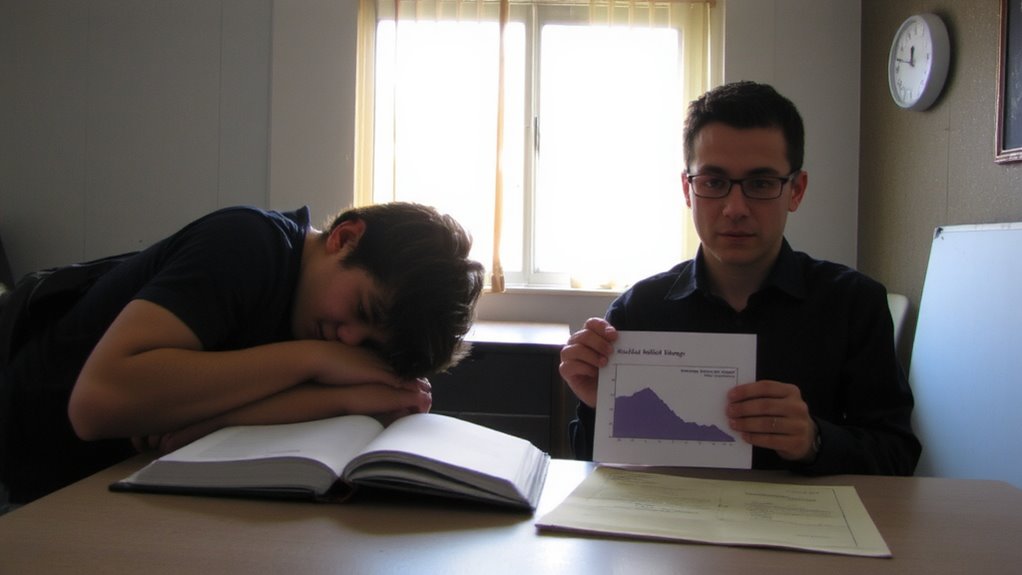
What if the student who’s always late to first period isn’t lazy but actually out of sync with the school schedule? Their sleep patterns might follow a different rhythm than most. Delayed Sleep Phase Disorder (DSPD) shifts the body’s internal clock, delaying natural sleep onset, often by hours. This isn’t just staying up late-it’s a real shift tied to melatonin levels released later at night. Teens with DSPD can’t fall asleep early, even when tired, because their body isn’t signaling rest yet. They also struggle to wake up on time. Recognizing DSPD means looking beyond behavior to biological timing. Accurate sleep logs over weeks can help identify consistent delays. Light therapy or melatonin supplements, timed carefully, may help adjust rhythms. Treatment should be discussed with a sleep specialist. Early diagnosis supports better academic and emotional outcomes.
Why Early School Start Times Hurt DSPD Students
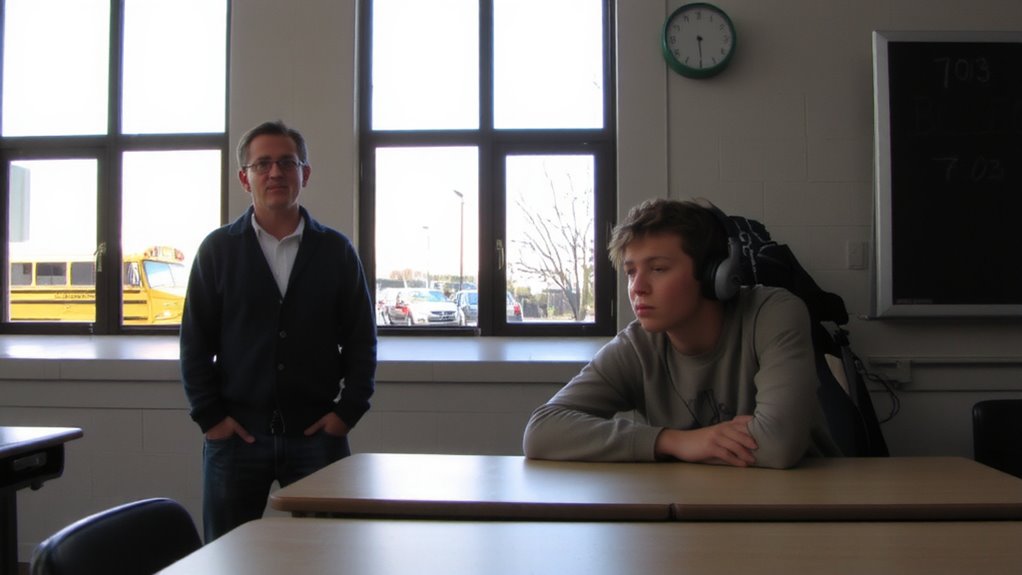
You may already know that students with Delayed Sleep Phase Disorder aren’t just dragging themselves to school because they stayed up late-they’re running on a sleep schedule their bodies can’t shift without help. Early school start times worsen circadian misalignment, forcing them to wake before their natural rhythm allows. This mismatch leads to chronic sleep deprivation, making it harder to focus, retain information, or stay emotionally balanced. Even if they try to sleep earlier, their brain isn’t ready, so they lie awake, losing precious hours. Over time, this exhaustion affects academic performance and mental well-being. You can’t expect them to “just sleep more” when their biology resists. Recognizing this helps you support better timing for assignments or exams. While not a fix, discussing sleep aids or light therapy with families might help realign rhythms. Solutions take time, consistency, and professional input, but small adjustments make a meaningful difference.
How to Spot DSPD in the Classroom
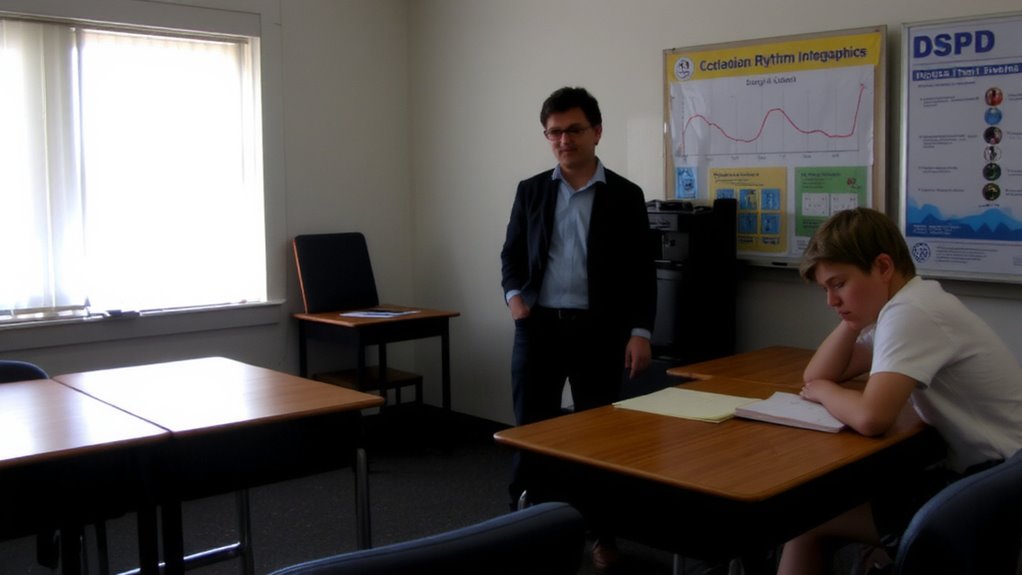
Why does a student seem sluggish and unfocused each morning, yet come alive in the afternoon or evening? You might notice they struggle to engage during first period but participate actively later in the day. These shifts often reflect underlying sleep patterns tied to delayed circadian rhythms. The student isn’t lazy-they’re likely misaligned with the school’s schedule. Look for consistent tardiness, drowsiness before noon, or improved alertness after lunch. Their sleep patterns usually involve falling asleep late, even when trying to go earlier. You won’t see weekend catch-up sleep because their circadian rhythms are delayed, not disrupted. These signs, when persistent, suggest more than poor habits. Spotting the pattern early helps guide support. You’re not diagnosing, but recognizing clues gives students a better chance at timely referrals and healthier sleep decisions.
Simple Accommodations for DSPD Students
Noticing the signs of delayed sleep phase disorder in students-like morning fatigue and sharper focus in the afternoon-opens the door to practical support through simple classroom and scheduling changes. You can help by offering Flexible deadlines for assignments, allowing students to submit work during their peak alertness hours. Providing Quiet spaces for rest or focused work supports concentration without disruption. Small adjustments make a meaningful difference in daily performance.
| Accommodation | Benefit | Implementation Example |
|---|---|---|
| Flexible deadlines | Reduces late-night stress, improves quality | Allow submissions by noon the next day |
| Quiet spaces | Enhances focus during off-peak hours | Designate a low-light corner with seating |
| Class start tweaks | Aligns with natural alertness cycles | Permit 10-minute delayed arrival with notice |
How to Talk to DSPD Students and Their Families
How do you begin a conversation that could make school feel more manageable for a student struggling with sleep? Start by listening without judgment and acknowledging their experience. Use clear, calm language to discuss Delayed Sleep Phase Disorder (DSPD), emphasizing it’s a real sleep disorder, not laziness. Explain how consistent sleep hygiene-like reducing evening screen time and keeping a steady bedtime routine-can help regulate sleep patterns. Invite family members into the discussion, since family support plays a key role in maintaining healthy habits at home. Share resources and strategies but avoid pushing specific sleep aids unless recommended by a health provider. Let families know improvements may take time and require patience. Offer to collaborate on small, measurable changes and follow up regularly. Open, informed dialogue builds trust and creates space for practical solutions.
How Teachers Can Advocate for Later School Start Times
You’ve already taken meaningful steps by supporting students with DSPD through open conversations and home-based strategies, but there’s another layer to contemplate-one that affects all students, especially those with sleep challenges. Pushing for later school start times isn’t just helpful-it’s backed by sleep science showing teens’ natural rhythms shift during puberty. You can engage in policy advocacy by joining district wellness committees or presenting research to school boards. Share data on attendance, grades, and mental health improvements linked to later starts. When possible, support legislative action by writing to state representatives or co-signing educator letters. These efforts don’t demand perfection-just participation. Even small delays in start times can improve sleep duration and daytime focus. Your voice adds weight to a growing movement prioritizing student well-being through evidence-based scheduling.
On a final note
You now have clear ways to recognize and support students with delayed sleep phase disorder. Simple changes-like flexible deadlines or adjusted start times-can improve focus and well-being. Talk openly with students and families, and consider school-wide adjustments backed by sleep science. When evaluating solutions, weigh how they affect daily performance and long-term health. Trial accommodations for several weeks to see what works, and stay open to adjustments based on student feedback and observed outcomes.