Designing a Bedroom Environment That Supports Delayed Sleep Phase Disorder
You can design a bedroom that supports your delayed sleep phase by blocking morning light with blackout curtains made of tightly woven fabric and rubber backing, while using warm, dim evening lighting around 2700K to gently signal bedtime. Keep the room cool, between 60–67°F, with quiet ventilation and noise-reducing materials. Limit screen time and blue light at night, and track your sleep patterns to fine-tune your routine-small adjustments add up over time.
Notable Insights
- Install blackout curtains with tight weave and rubber backing to block morning light and protect late sleep.
- Use warm, dim evening lighting at 2700K and reduce brightness 2–3 hours before bedtime.
- Maintain bedroom temperature between 60–67°F and ensure quiet with noise insulation or white noise.
- Minimize blue light exposure at night using filters, night mode, or amber-colored blue light-blocking glasses.
- Track sleep patterns in a diary for two weeks to identify trends and adjust the sleep environment accordingly.
Block Morning Light to Protect Your Late Sleep
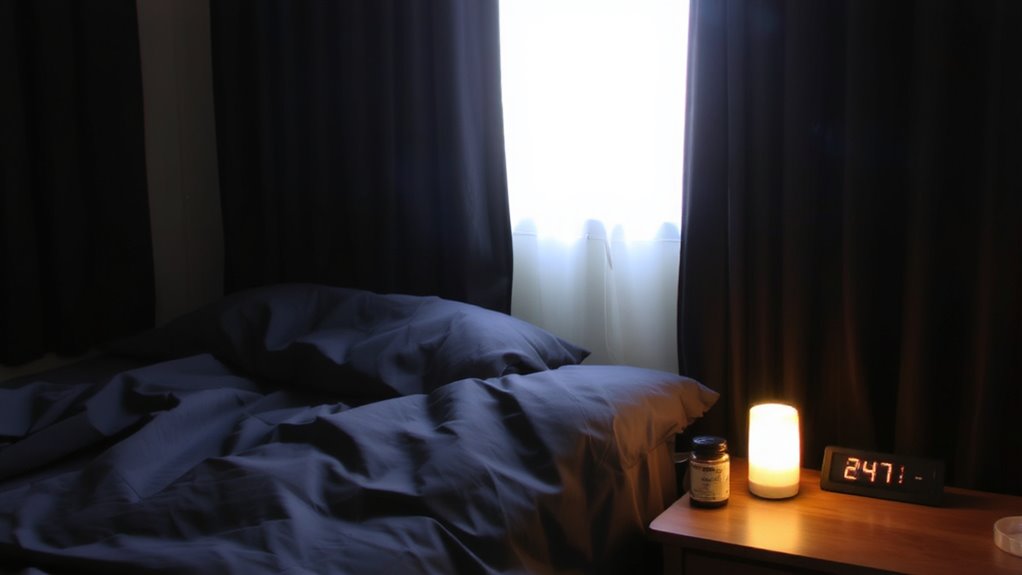
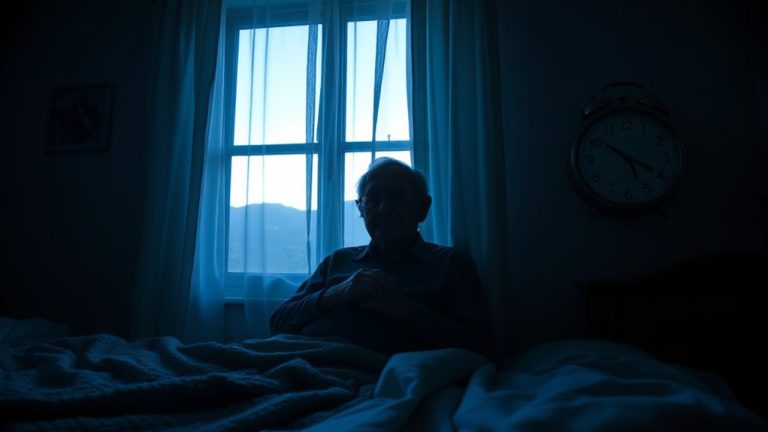
If you’re waking too early because sunlight is creeping into your room, blocking morning light can make a real difference when you’re trying to protect your natural sleep rhythm. Blackout curtains are one of the most effective tools for this. Look for ones with tightly woven fabric and a rubber or foam backing, as these offer better light sealing. Full-coverage installation is key-extend the rod beyond the window frame to prevent gaps. Some models include side tracks or magnetic seals for superior light sealing performance. Check warranty terms, as higher-end options often include trial periods so you can test their effectiveness. While not all blackout curtains block 100% of light, the best reduce it substantially, helping maintain melatonin levels. Properly installed, they support your delayed sleep phase by minimizing unwanted morning light exposure, giving you a better chance to sleep later without disruption. For top-performing options, consider the Best Light-Blocking Curtains based on expert testing and user feedback.
Use Evening Light to Sync With Your DSPD Rhythm
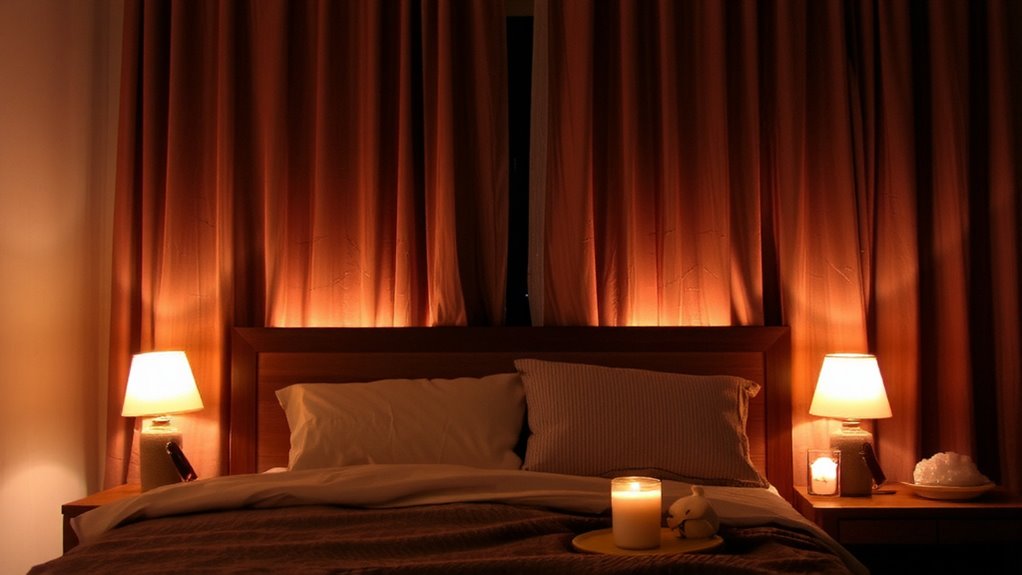
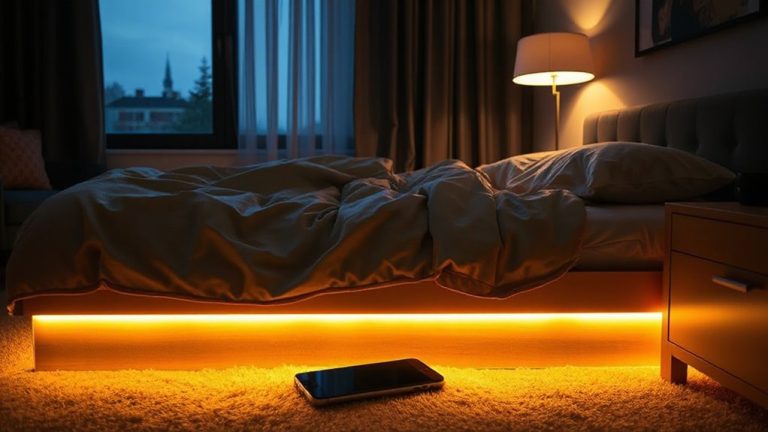
While your body’s internal clock may run on a delayed schedule, using evening light strategically can help align your rhythm over time. Evening lighting that’s warm and dim-around 2700K-supports circadian alignment by signaling your brain that nighttime is approaching. Avoid bright or blue-rich lights after sunset, as they can delay melatonin release. Instead, use lamps with adjustable brightness or smart bulbs you can program to gradually dim. Position lights lower in the room to reduce direct exposure and create a calming effect. Begin this lighting routine 2–3 hours before your intended sleep time. Consistency matters-using the same timing and setup nightly improves your body’s response. Some people find red or amber nightlights helpful during bathroom trips. This approach won’t fix DSPD overnight, but over weeks, it can gently shift your rhythm. It’s a low-risk, reversible method worth trying. A comfortable sleep setup, including a CPAP pillow for side sleepers, can further support restful sleep for those managing sleep disorders.
Keep Your Bedroom Cool and Quiet for Day-Late Sleepers
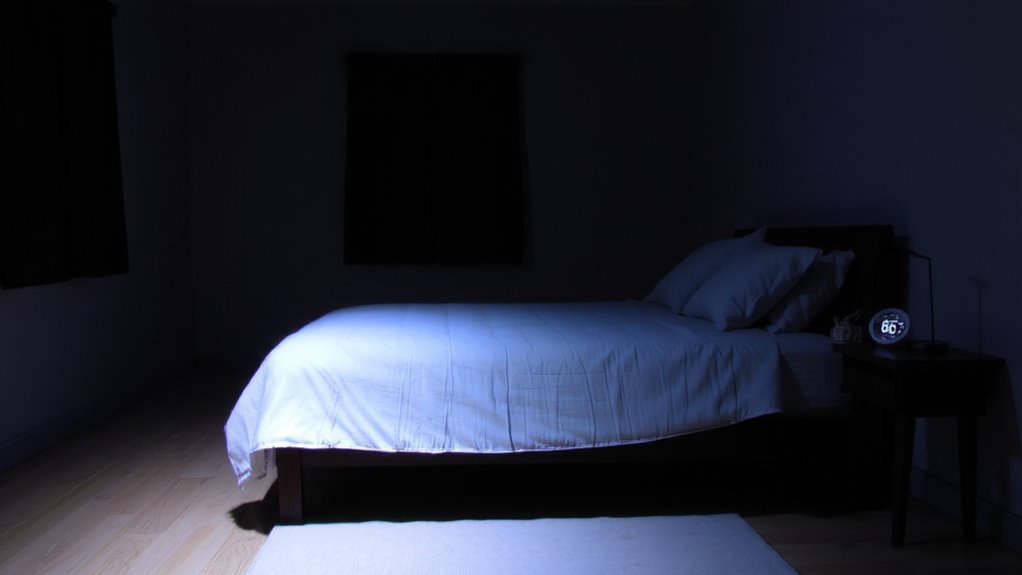
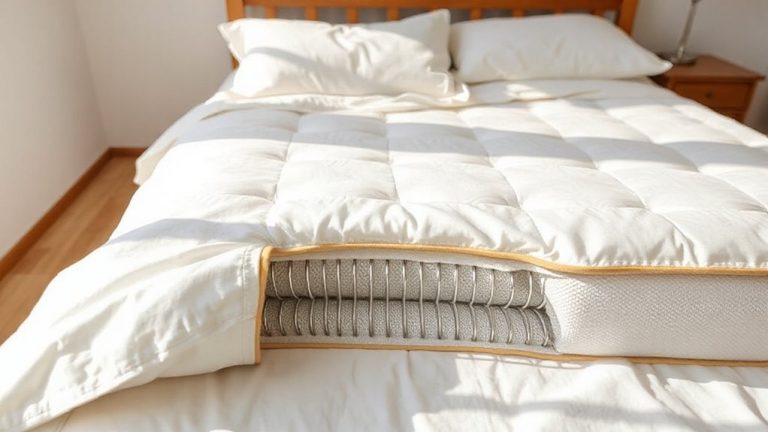
Your bedroom environment plays a key role in supporting sleep, especially when your schedule runs later than typical. Keeping the room cool helps signal your body it’s time to rest, so aim for 60–67°F (15–19°C). Good bedroom ventilation, like a quiet fan or open window with screens, maintains airflow without disturbing sleep. If outside noise is an issue, focus on noise insulation-double-paned windows, heavy curtains, or acoustic panels can reduce sound by up to 70%. Even small sounds can interrupt light sleepers, so consider a white noise machine as a backup. Look for models with timers and adjustable frequencies, often covered under a 1-year warranty. Test different settings to see what supports uninterrupted rest. Adding moisture to the air can also improve sleep quality, especially in dry climates, so consider using a cool mist humidifier with a quiet operation mode and adjustable humidity settings. Together, temperature control and noise insulation create a stable sleep foundation for day-late sleepers.
Minimize Blue Light and Screen Time at Night
Since blue light can interfere with melatonin production, especially in people with delayed sleep phase disorder, cutting back on screens in the evening makes it easier to fall asleep on a shifted schedule. Your screen exposure before bed, from phones, tablets, or TVs, emits blue light that tricks your brain into thinking it’s still daytime. This delay in natural sleep signals can worsen your sleep timing. Try reducing screen time at least one to two hours before bed. If you must use devices, enable night mode or use blue light filters-they reduce intensity and shift wavelengths. Consider using blue light-blocking glasses with amber lenses; they’re tested to help maintain melatonin levels. Look for models with anti-reflective coatings and durable frames that list filter performance, often blocking 90% of blue light. Test different options and track how they affect your sleep onset. These changes don’t cure DSPD but can support better sleep timing.
Track Your Sleep Patterns to Optimize Your DSPD Routine
How can you tell if your efforts to adjust your sleep schedule are actually working? Tracking your sleep patterns helps you see real progress. Start keeping a sleep diary each night-write down when you fall asleep and your wake times. This simple record reveals trends, like whether your bedtime is slowly shifting earlier. Consistency matters, so track for at least two weeks. Use this data to adjust your routine.
| Factor | Why It Matters |
|---|---|
| Sleep diary | Identifies patterns in your sleep onset and quality |
| Wake times | Shows how consistent you are, key for regulating your rhythm |
Over time, you’ll notice improvements or decide if changes are needed. No tools are perfect, but observation gives you control.
On a final note
You can support your delayed sleep phase by adjusting light, temperature, and habits. Block morning light with blackout curtains, use evening light to reinforce your rhythm, and keep your bedroom cool and quiet. Reduce blue light from screens before bed. Track your sleep to spot patterns and refine your routine. Trial small changes over weeks, noting effects. Many tools, like light therapy lamps, offer warranties-test what works without rushing decisions.