Sleep Management for Healthcare Workers on Rotating Shifts
Rotating shifts throw off your sleep, but you can manage it. Keep a consistent sleep schedule, even on days off, and use blackout curtains with rubber backing to block light. Add white noise or earplugs to reduce daytime noise. Get bright light during night shifts, but wear sunglasses afterward. Nap 20–30 minutes before work, or take a 90-minute recovery nap. Try these strategies to see what works best for your body’s needs.
Notable Insights
- Maintain a consistent sleep schedule, even on days off, to stabilize circadian rhythms disrupted by rotating shifts.
- Use blackout curtains, sleep masks, and white noise machines to create a dark, quiet environment for daytime sleep.
- Limit caffeine and screen time at least 60–90 minutes before bed to improve sleep quality and onset.
- Take strategic naps-20–30 minutes before a night shift or a 90-minute recovery nap afterward-to boost alertness and rest.
- Expose yourself to bright light during night shifts and wear sunglasses during morning commutes to regulate your internal clock.
Why Rotating Shifts Wreck Your Sleep (And How to Fix It)
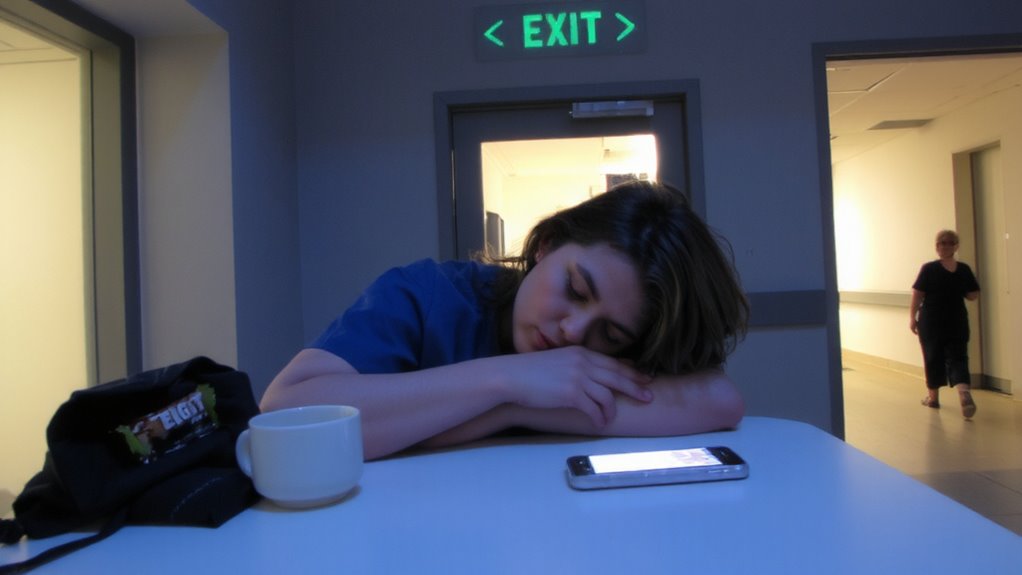
Why does shifting between day and night hours leave you feeling so worn out? Because rotating shifts disrupt your circadian rhythm, the internal clock that regulates sleep and wake cycles. When you switch shifts often, your body struggles to adjust, leading to poor sleep quality and daytime fatigue. Good sleep hygiene helps-keep a consistent sleep schedule as much as possible, even on days off. Avoid caffeine and screens before bed, and create a quiet, dark space to rest. Though challenging, planning meals and light exposure around your shifts can support your circadian rhythm. Consider speaking with a healthcare provider if sleep problems continue, as you may have a shift work sleep disorder. They can discuss safe options, including short-term sleep aids with clear instructions and trial periods. Tracking your sleep patterns helps identify what adjustments work best for you over time.
Block Light, Boost Dark: Control Your Sleep Environment
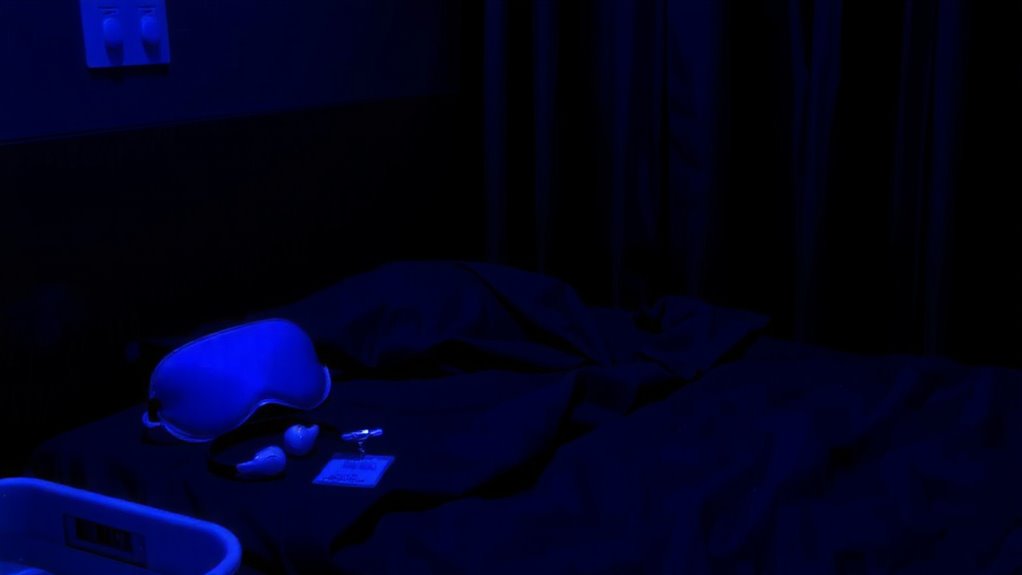
A dark, quiet bedroom makes a real difference when you’re trying to sleep during the day or stay asleep despite an off-hours schedule. Blackout curtains block sunlight completely, creating darkness even at noon. Look for triple-weave fabric with a rubber backing-it lasts longer and offers better light blockage than thin versions. Pair them with noise reduction strategies like white noise machines or earplugs to minimize disruptions from daytime sounds. Solid-core doors and weather stripping add extra noise reduction. Some blackout curtains come with a 5-year warranty, so check product details before buying. Test different combinations-curtains plus a sleep mask, for example-to see what helps you fall and stay asleep. Small changes in light and sound control can improve sleep quality over time, especially when your schedule shifts often. For budget-friendly options that don’t compromise on performance, consider best inexpensive blackout curtains.
Reset Your Clock With Strategic Light Exposure
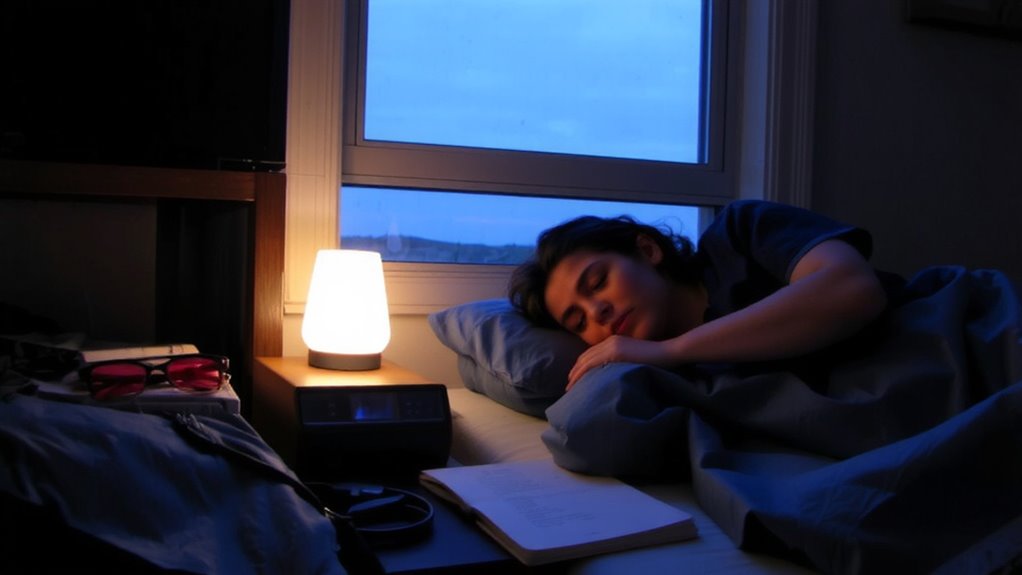
When your work schedule shifts between day and night, using light the right way can help your body adjust more smoothly. Exposure to bright light at the right times tells your internal clock when to stay alert and when to wind down. If you’re working nights, seek bright light during your shift-like using a light box or overhead lights-to stay alert. When your shift ends, avoid morning sunlight if you’re heading to bed; wear sunglasses on your commute home to prevent cues that delay sleep. On days you work daytime hours, get outside early and expose yourself to natural morning sunlight-it helps set your rhythm. Practice evening dimness by lowering lights at home and avoiding screens 60–90 minutes before bed. This gradual shift supports melatonin release and signals your body it’s time to sleep. Consistency strengthens your clock over time.
Time Your Naps for Maximum Shift Recovery
Building on your light exposure habits, adding well-timed naps can improve alertness and recovery between shifts. Nap timing matters-short naps (20–30 minutes) before a night shift help boost focus without grogginess, while longer naps of 90 minutes align with a full sleep cycle if taken before heading home. This makes recovery sleep more effective, especially when you’re catching up after overnight work. Avoid napping late in the shift, as it might interfere with post-shift sleep. Power naps support performance, but their benefit depends on when you take them. For rotating schedules, consistency in nap timing-even on days off-can stabilize your rhythm. Recovery sleep at home still takes priority, so don’t let naps reduce total nightly rest. Use naps as a tool, not a fix. Try different lengths and times to see what supports your alertness and recovery sleep best.
Build a Sleep Schedule That Adapts to Any Shift
How do you keep your sleep on track when your work hours keep changing? Start with consistent shift planning, mapping out your workdays and rest periods in advance. This helps your body adjust, even when shifts rotate. Stick to a core routine: go to bed and wake up at similar times, even on days off, to support better sleep hygiene. Use blackout curtains, white noise machines, and limit screen exposure before bed-small steps that improve sleep quality. Avoid caffeine and heavy meals near bedtime. When adjusting to night shifts, try a short nap before work and expose yourself to bright light during the early part of your shift. Over time, fine-tune what works. Everyone’s response varies, so trial and adjustment are key. Track your energy and rest to inform future scheduling. Consider using a high-quality best sleep masks for night shift workers to block out daylight and enhance rest during daytime sleep.
On a final note
You can manage sleep better on rotating shifts by controlling light, timing naps, and adjusting your schedule strategically. These steps support your body’s clock and improve rest. If sleep problems continue, consider whether a disorder might be involved and talk to a professional. Some find sleep aids helpful, but weigh benefits against side effects. Always test changes gradually and track results to see what works best for you.