How Melatonin Suppression Affects Advanced Sleep Phase Disorder
You feel sleepy early because evening light suppresses melatonin, worsening advanced sleep phase disorder by shifting your internal clock forward. When melatonin release is blocked, your body loses its natural cue for sleep timing, leading to early drowsiness and predawn awakenings. This mismatch disrupts daily routines and social life. Timed light therapy and morning melatonin supplements can gradually reset your rhythm. Consistency over a few weeks improves results. There’s more to explore about effective treatment strategies.
Notable Insights
- Melatonin suppression from evening light exposure worsens ASPD by shifting the circadian clock earlier.
- Blocking melatonin leads to earlier sleep onset, increasing misalignment with social schedules.
- Blue light from screens delays natural melatonin release, reducing sleep drive at desired bedtimes.
- Early melatonin suppression contributes to predawn awakenings and difficulty maintaining sleep.
- Using dim, red-toned light in the evening helps preserve melatonin and stabilize sleep timing.
What Is Advanced Sleep Phase Disorder (ASPD)?
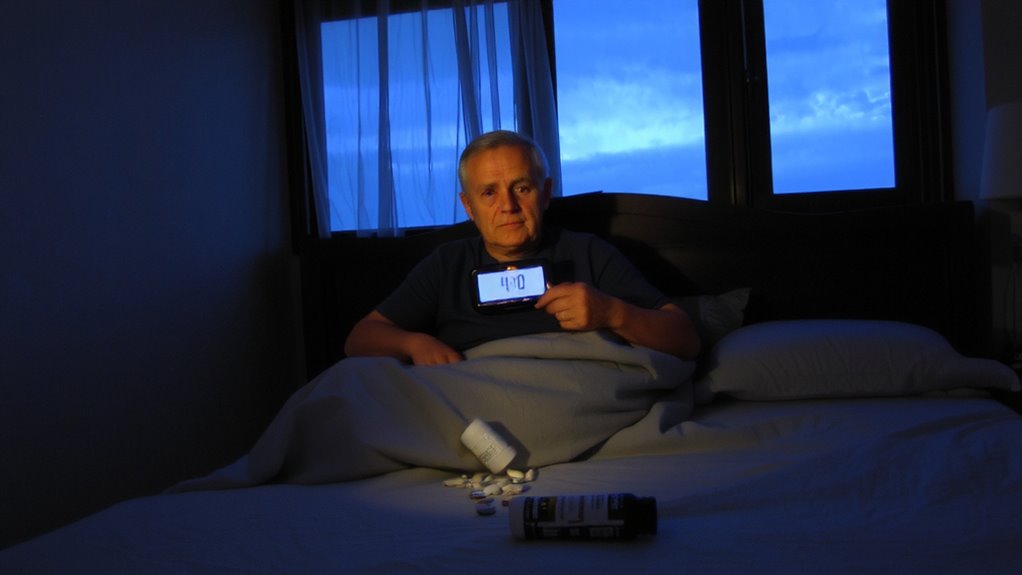
You might’ve noticed that when you start feeling sleepy earlier in the evening-say, around 7 or 8 p.m.-and then wake up too early in the morning, like 3 a.m., even if you don’t want to, it’s not just a habit. You could have Advanced Sleep Phase Disorder (ASPD), a condition tied to a genetic predisposition that shifts your internal clock forward. This causes circadian misalignment, meaning your body’s rhythm doesn’t match typical social or environmental cues. People with ASPD fall asleep and wake up much earlier than desired, which can disrupt work, social life, or evening activities. While it’s more common in older adults, it can appear earlier in life. Diagnosis usually involves sleep logs or actigraphy over one to two weeks. Treatment options exist, but understanding your pattern is the first step. You’re not alone, and identifying the cause helps guide effective choices.
Why Melatonin Controls Your Sleep Schedule
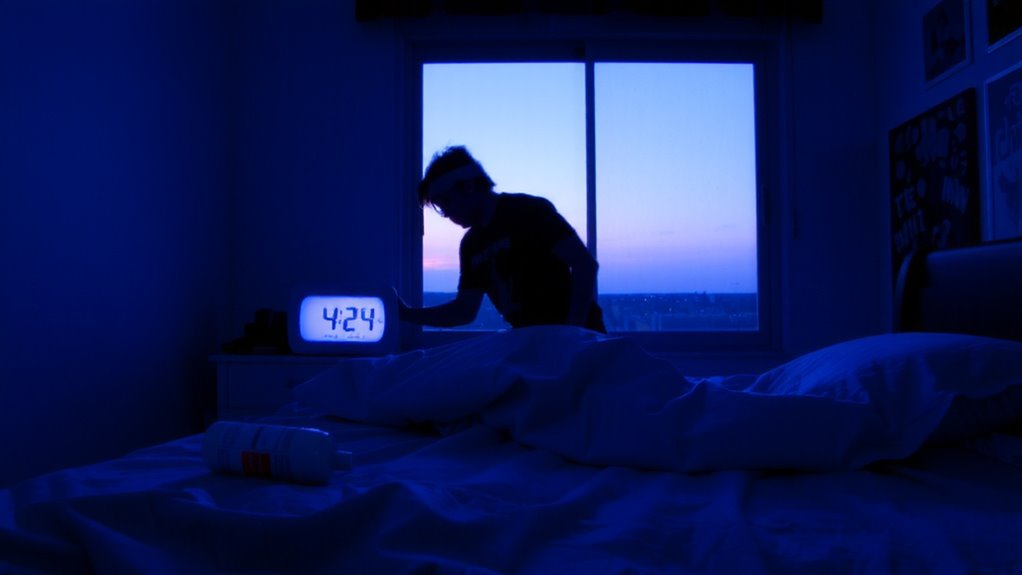
Although your body’s internal clock runs on a roughly 24-hour cycle, it relies heavily on signals from the environment to stay aligned, and one of the most important signals is melatonin-a hormone produced by the pineal gland in response to darkness. You feel sleepier as melatonin levels rise, directly influencing your sleep onset. This hormone helps regulate your circadian rhythm, maintaining sleep and wake times stay consistent. When melatonin release happens too early or too late, your sleep schedule can shift, affecting daily function. Light exposure, especially at night, can delay melatonin production, pushing back sleep onset. For those with irregular patterns, melatonin supplements-taken at the right time-can help reset the circadian rhythm. Timing matters: even small changes can improve sleep quality. Always check with a healthcare provider before starting supplements to maintain safety and proper dosing.
How Evening Light Worsens ASPD by Blocking Melatonin
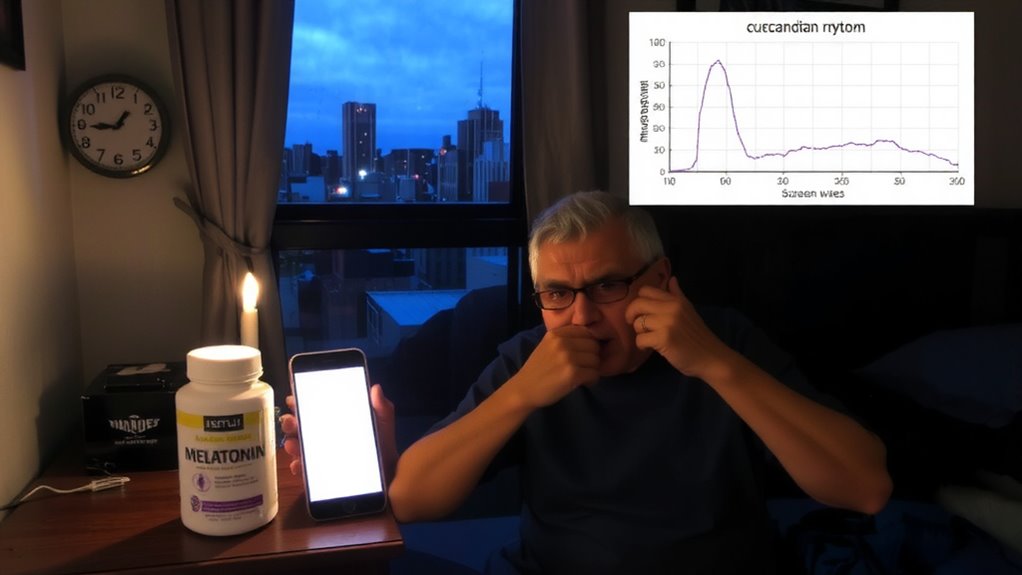
When evening light enters your eyes, especially the blue wavelengths from screens and LED bulbs, it signals your brain to halt melatonin production, delaying the natural rise of this sleep-regulating hormone. This light exposure can worsen Advanced Sleep Phase Disorder (ASPD) by reinforcing circadian disruption, making it harder for your body to align with typical nighttime sleep schedules. Even small amounts of evening light-like that from phones or overhead lamps-can suppress melatonin for up to 90 minutes. Over time, repeated exposure shifts your internal clock earlier, intensifying early evening sleepiness and predawn awakenings. Managing light exposure with amber-tinted glasses, screen filters, or dim red lights may help reduce melatonin suppression. These practical adjustments support your natural rhythm without medications or devices, offering a low-risk way to improve sleep timing. Consistency matters most-small changes, applied nightly, yield the best results. For effective protection, consider wearing blue light blocking glasses designed to filter harmful wavelengths during evening hours.
Why Melatonin Suppression Triggers Earlier Sleep in ASPD
Because your body relies on melatonin to signal bedtime, blocking its release in the evening throws off your internal clock more than you might realize-especially if you have Advanced Sleep Phase Disorder (ASPD). When light suppresses melatonin too early, it causes circadian misalignment, shifting your sleep cycle forward. This means your brain starts preparing for sleep much sooner, leading to sleep onset acceleration-falling asleep earlier than intended, often by several hours. Though this might seem harmless, it disrupts evening routines and social activities. Over time, the mismatch between your internal rhythm and external schedule worsens, making sustained, restful sleep harder to maintain. Recognizing this pattern helps you make informed choices about light exposure and bedtime habits. Monitoring when and how melatonin is suppressed gives you clearer insight into managing sleep timing without immediate reliance on supplements or medications.
Treating ASPD With Timed Light and Melatonin
If you’re dealing with Advanced Sleep Phase Disorder, timing matters just as much as treatment choice, and using light and melatonin the right way can gently shift your sleep cycle back into sync. Evening light therapy, using a 10,000-lux lamp for 30–60 minutes, helps delay your internal clock by suppressing melatonin naturally. Aim for sessions between 7 and 9 p.m. to support better sleep alignment. Meanwhile, taking low-dose melatonin (0.5–3 mg) in the morning can help reset your rhythm by reinforcing a later release cycle. The combination of timed light therapy and morning melatonin works best when applied consistently for several weeks. Results vary, so a trial period of 2–4 weeks helps assess effectiveness. Always consult your doctor before starting, especially to avoid overuse. This approach supports gradual, sustainable sleep alignment with minimal side effects.
On a final note
You can manage ASPD by timing light exposure and melatonin carefully. Bright light in the evening delays sleep onset, while controlled melatonin in the afternoon may help shift sleep later. Since light suppresses melatonin, reducing screen time at night supports treatment. These methods work best when used consistently. Talk with your doctor to find safe, effective options, especially if considering supplements. A sleep specialist might recommend light boxes or melatonin under supervision.