Innerspring Mattress Firmness Customization With Layered Toppers
Your innerspring mattress may feel too soft due to worn coils or low coil count, but adding a layered topper can restore support. A 2- to 3-inch high-density foam or latex topper resists sagging and improves spinal alignment. Side sleepers benefit from thicker cushioning, while back and stomach sleepers need firmer, thinner options. Hybrid toppers add durability and cooling. Most come with trial periods and warranties, so you can adjust firmness confidently-there’s more to discover about matching materials to your sleep needs.
Notable Insights
- Layered toppers add support to aging innerspring mattresses by counteracting coil sag and loss of firmness.
- High-density foam or latex toppers 2–3 inches thick provide durable reinforcement without bottoming out.
- Choose topper firmness based on sleep position: thicker for side, medium for back, thin and firm for stomach sleepers.
- Latex and hybrid toppers enhance airflow and longevity while improving pressure relief on soft innerspring bases.
- Start with one 2–3 inch layer, assess comfort, then add more if needed using trial periods to guide adjustments.
Why Your Innerspring Mattress Feels Too Soft
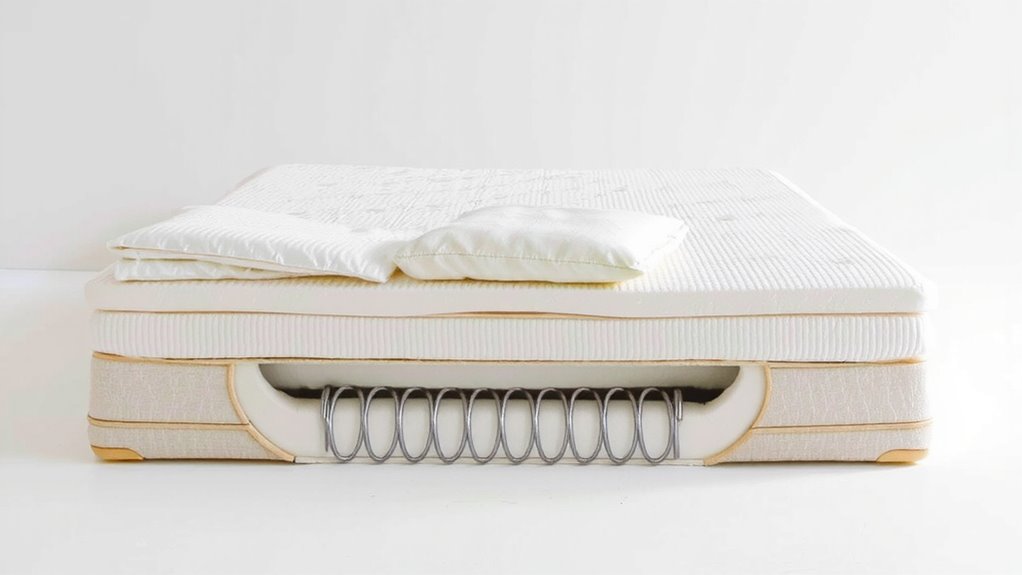
A common reason your innerspring mattress might feel too soft lies in the coil system’s design and wear. Over time, coils lose tension, especially if the mattress age exceeds seven to ten years, reducing support. Your body weight plays a key role-heavier individuals compress coils more, leading to deeper sinkage and a softer feel. Lighter sleepers may not notice this as much, but you might if you wake with stiffness or pressure points. Lower coil counts or thinner wires also contribute to less responsiveness and durability. As the foundation weakens, alignment suffers, potentially worsening sleep quality. Checking your mattress age helps determine whether wear is the culprit. Firmness isn’t just about comfort-it affects spinal support and long-term rest. Assess how your body weight interacts with the surface and consider whether the system still meets your needs. This evaluation guides smarter choices about maintenance, replacement, or adjustments. For a balance of support and comfort, consider models featuring high-quality spring coil mattresses designed to resist sagging and maintain firmness over time.
How Topper Layers Fix Firmness Without a New Mattress
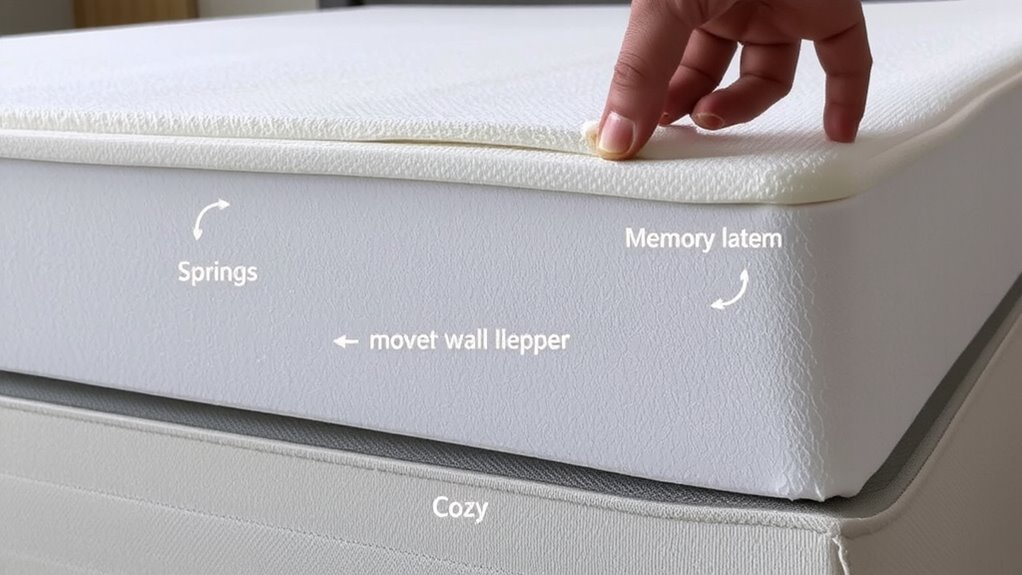
While your innerspring mattress may have softened over time, adding a topper layer can effectively restore firmness without the cost of a full replacement. You can slow further mattress sinking by choosing a high-density foam or latex topper, which resists body impressions better than softer materials. Though all toppers experience some topper compression over time, durable options maintain support longer-especially if you rotate them regularly. A 2- to 3-inch thickness usually balances comfort and structural reinforcement. These layers distribute weight evenly, reducing pressure points that disrupt sleep. Most quality toppers come with trial periods and warranties, letting you test firmness risk-free. This makes them a practical option if you’re adjusting for comfort without aggravating sleep issues. You’re not fixing the core mattress, but you are creating a more supportive sleep surface. Layering offers a low-risk way to delay replacement while improving rest quality.
Best Topper for Your Sleep Position and Innerspring Mattress
What if your sleep position could guide the right topper choice for your innerspring mattress? If you sleep on your side, you’ll need more pressure relief at the shoulders and hips-aim for a thicker topper that cushions these areas while supporting spinal alignment. Back sleepers usually get enough support from a medium-density layer that maintains sleep alignment without sinking too deeply. For stomach sleepers, a thinner, firmer option helps keep your spine neutral and prevents over-sinking, which can strain the lower back. No matter your position, check the topper’s compression depth and resilience to guarantee it complements your innerspring base. Look for models with trial periods and warranties so you can test comfort risk-free. Proper pressure relief and sleep alignment depend on matching thickness and firmness to your preferred position. A cost-effective solution for pain relief is choosing a best mattress topper for back pain under $100 that balances support and comfort.
Memory Foam vs. Latex vs. Hybrid: Which Topper Is Right?
You’ve already considered how your sleep position shapes the ideal thickness and firmness of a topper for your innerspring mattress, but the material you choose impacts comfort and durability just as much. Memory foam offers deep pressure relief by contouring closely to your body, which can help ease joint pain, though lower-density foams may sag over time, affecting material durability. Latex, especially natural or blended varieties, provides responsive support and better airflow, balancing pressure relief with long-term resilience. It resists mold and dust mites, adding to its material durability. Hybrid toppers, combining foam and innerspring coils or gel infusions, aim to merge the body-conforming feel of foam with cooler sleep and improved longevity. They often come with longer trial periods or warranties, letting you test comfort without risk. Each material has trade-offs in feel, performance, and upkeep, so your choice depends on which combination best supports your sleep needs. For side sleepers seeking temperature regulation, a best cooling mattress topper can significantly enhance comfort during rest.
Build Your Ideal Firmness in 5 Steps
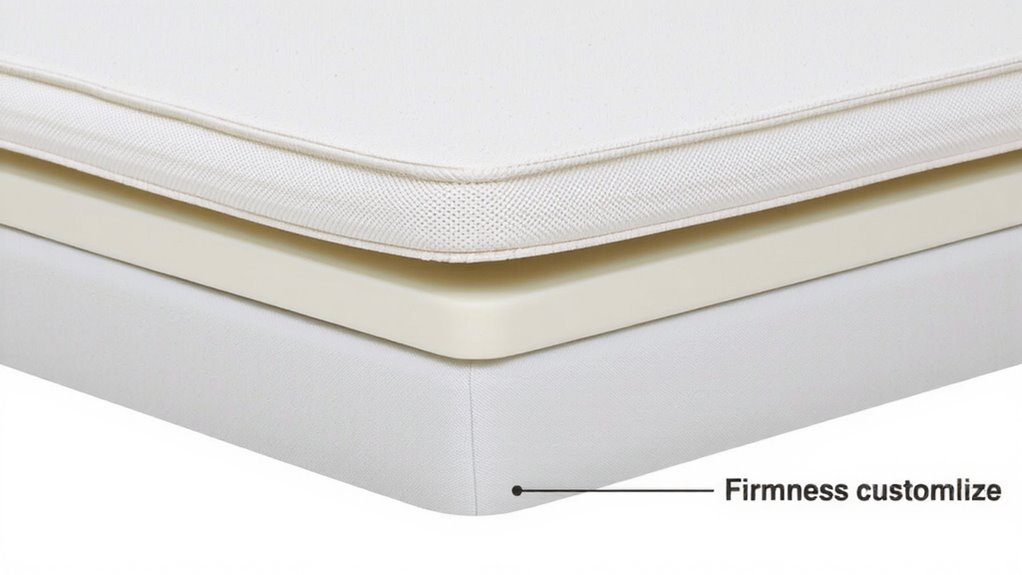
If you’re looking to fine-tune your innerspring mattress for better comfort, starting with firmness customization can make a real difference in how well you sleep. Over time, mattress sagging and material degradation can alter support, affecting spinal alignment and sleep quality. You can restore balance in five steps: assess your current firmness, identify pressure points, choose a compatible topper material, test thickness options, and monitor changes in comfort. Layered toppers let you adjust gradually without replacing the entire mattress.
| Step | Action |
|---|---|
| 1 | Evaluate your mattress for dips or wear |
| 2 | Pick a topper (memory foam, latex, hybrid) based on durability and feel |
| 3 | Add layers progressively, starting with 2–3 inches |
This method helps manage support shifts caused by long-term use while offering trial periods for smart decisions.
On a final note
You can adjust your innerspring mattress’s firmness without replacing it by adding the right topper. Memory foam contours well but may retain heat, while latex offers responsive support and better airflow. Hybrid toppers balance both traits. Match the topper’s thickness and density to your sleep position and comfort needs. Most quality toppers come with trial periods and warranties, letting you test firmness risk-free and make a practical, informed upgrade that suits your body and sleep pattern.