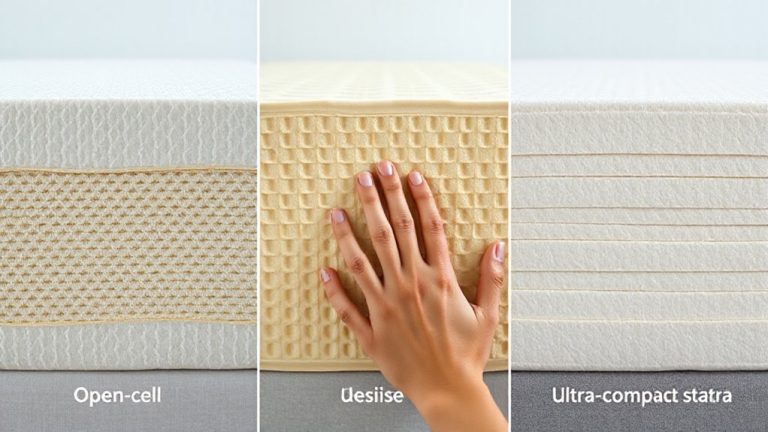
Isolating Noisy Spring Units With Soundproofing Insulation Below Mattress
You can stop squeaks by placing soundproofing insulation between your mattress and box spring, where coil friction from worn bearings or dry springs often causes noise. Foam padding or rubber mats absorb vibrations and need no tools to install. These materials usually don’t change firmness much, especially if thin and dense. Look for products with at least a one-year warranty and try them during a sleep trial. Solid bed frames and regular maintenance also help reduce noise over time-simple upgrades might be all you need for quieter rest.
Notable Insights
- Place high-density foam padding beneath the mattress to reduce spring coil friction and absorb vibrations.
- Use anti-slip rubber mats between the mattress and foundation to dampen noise and prevent shifting.
- Ensure full surface coverage when installing soundproofing insulation to maximize noise isolation.
- Choose thin, rigid insulation materials to minimize impact on mattress firmness and comfort.
- Combine insulation with a solid wood frame and secure bed joints to enhance long-term noise reduction.
Why Spring Mattresses Squeak (And How to Fix It Quietly)
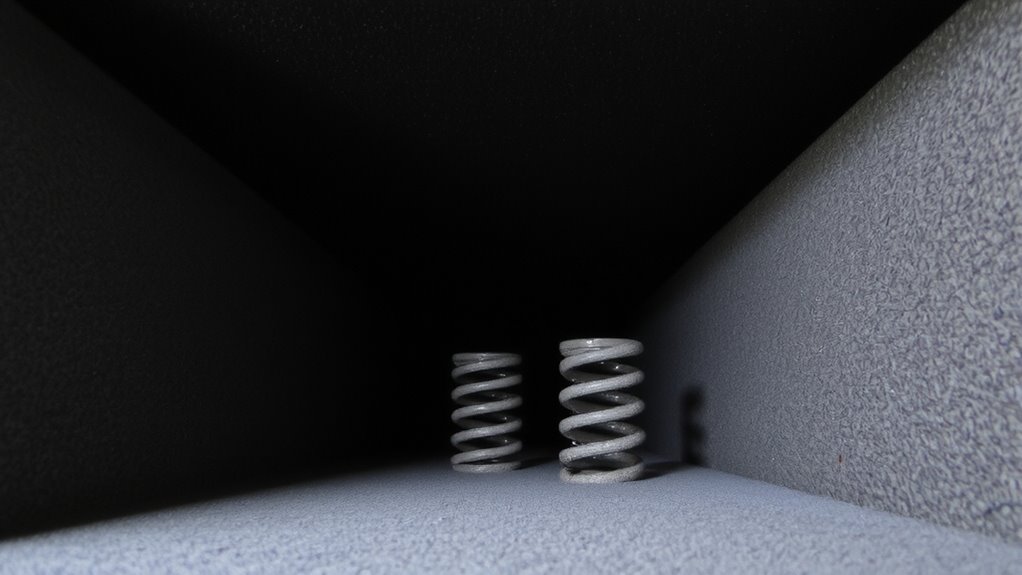
While it might seem like a spring mattress squeaking is just a minor annoyance, understanding why it happens can help you decide whether a quick fix or a longer-term solution makes more sense for your sleep setup. The sound usually stems from coil friction, where metal springs rub together during movement, especially if lubrication has dried out. Over time, worn bearings in the coil system lose stability, increasing noise and reducing support. This doesn’t always mean your mattress is failing, but persistent squeaks might disrupt sleep patterns or worsen existing sleep disorders. If you shift often at night, the noise can interrupt your sleep cycle. Some models come with trial periods-testing silence over weeks helps gauge long-term performance. Checking warranty terms is wise, as manufacturers may cover structural defects tied to coil friction or worn bearings. Simple fixes may help temporarily, but lasting quiet often depends on construction quality.
Best Materials to Silence a Noisy Spring Mattress
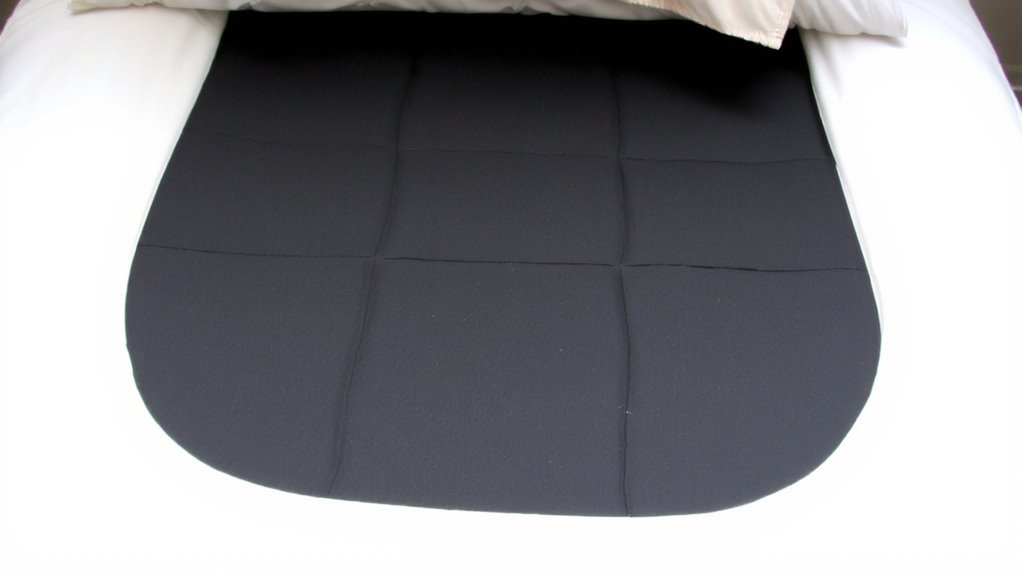
You can stop the squeaking in your spring mattress with the right materials, and some solutions work better than others depending on the cause. Foam padding absorbs vibrations between coils and reduces noise from friction, especially if the springs rub together. It’s lightweight, easy to cut to size, and fits snugly beneath the mattress cover or over the box spring. Rubber mats add a denser layer that dampens sound and prevents movement between the mattress and base. They’re durable and often used under box springs to block impact noise. Both materials install quickly, require no tools, and are safe for most sleep setups. Look for high-density foam padding or anti-slip rubber mats with warranties of at least one year. Try either option first, since they’re affordable and non-permanent fixes. Most users notice quieter movement within a few nights.
Will Adding Insulation Change How Your Mattress Feels?
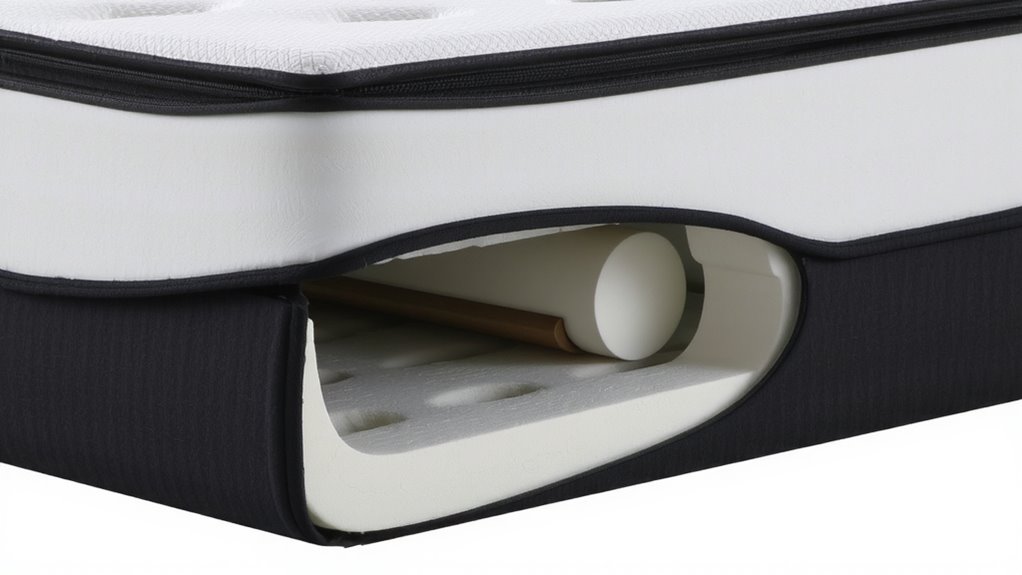
A quiet night’s sleep often depends on small changes, and adding insulation to your spring mattress is no exception. You might wonder if the extra layer affects how your bed feels. Most soundproofing materials are thin and dense, so they typically don’t alter mattress firmness much. However, soft or thick insulators can increase comfort layer compression slightly, making the surface feel a bit plusher. If you prefer a firmer feel, choose rigid foam or mass-loaded vinyl, which add noise control without changing support. Remember, even minor changes in surface feel can influence comfort, especially if you have joint issues or sleep disorders like insomnia. Always check product specs for thickness and flexibility. Many brands offer trial periods, letting you test the material without risk. This way, you can balance noise reduction and feel confidently.
How to Install Soundproofing Under Your Mattress
If you’re dealing with creaky springs that disrupt your sleep, placing soundproofing under your mattress can help-without requiring major changes to your bed setup. Start by lifting your mattress carefully to expose the box spring or foundation. Roll out a soundproofing mat or insulation pad evenly across the surface, ensuring full coverage. Re-position the mattress with care, maintaining proper alignment to avoid shifting noises-this mattress positioning plays a key role in performance. If your bed frame adjustments include slats, check that they’re secure and evenly spaced to minimize vibrations. Most soundproofing materials install in minutes and are non-permanent, so you can test comfort and noise reduction before committing. Look for products with trial periods or warranties to evaluate effectiveness. With proper placement and support, the difference in nighttime noise can be noticeable, offering a quieter sleep environment worth exploring.
Keep Your Bed Quiet: 5 Pro Tips That Last
While squeaky springs can wear down your sleep quality over time, lasting quiet starts with smart, sustainable fixes that go beyond quick patches. First, check your bed frame-metal frames often amplify noise, while solid wood designs absorb vibrations better. Tighten all bolts and joints regularly to prevent shifting. Second, consider your floor type; hardwood floors transfer more sound than carpet, so adding a non-slip rug pad helps. Third, place rubber or felt pads where the frame legs meet the floor to reduce movement noise. Fourth, use a soundproof under-mattress pad designed for spring isolation-it’s denser than standard toppers. Finally, rotate your mattress every few months to balance wear. These steps improve durability and noise control, supporting better sleep hygiene without invasive changes. Most quality pads and pads come with trial periods, letting you test effectiveness.
On a final note
You can reduce spring noise by adding soundproofing insulation beneath your mattress, like mass-loaded vinyl or acoustic foam. These materials absorb vibrations without altering firmness. Installation is simple-just slide the layer between the mattress and box spring. Most products are lightweight and won’t void warranties. Try options with trial periods to test effectiveness. This fix may improve sleep quality, especially if noise disrupts your rest or worsens sleep disturbances.