Testing Feasibility of Smart Garments That Deliver Gentle Kinesthetic Guidance During Sleep
You can now test smart sleep garments that use gentle kinesthetic feedback, like light pressure or vibration, to reduce restlessness and support deeper sleep. These clothes have sensors in soft, washable fabric that track movement and body signals, adjusting cues to help stabilize your sleep cycles. They’re made for comfort, with breathable materials and removable tech. Many offer a 30-night trial, so you can see how well they fit into your routine and whether they help you stay asleep longer. Learning more about their design and real-world performance could help you decide if they’re right for your sleep goals.
Notable Insights
- Smart sleep garments use embedded sensors to monitor body temperature, heart rate, and motion during sleep.
- Kinesthetic feedback mechanisms deliver gentle nudges to stabilize movement and support deeper sleep stages.
- Early trials show reduced nighttime awakenings and increased REM sleep with consistent kinesthetic guidance.
- Comfort hinges on soft, breathable fabrics and removable sensor modules for wearability and washability.
- Challenges include energy-efficient power sources and refining feedback intensity to avoid sleep disruption.
What Are Smart Sleep Garments?
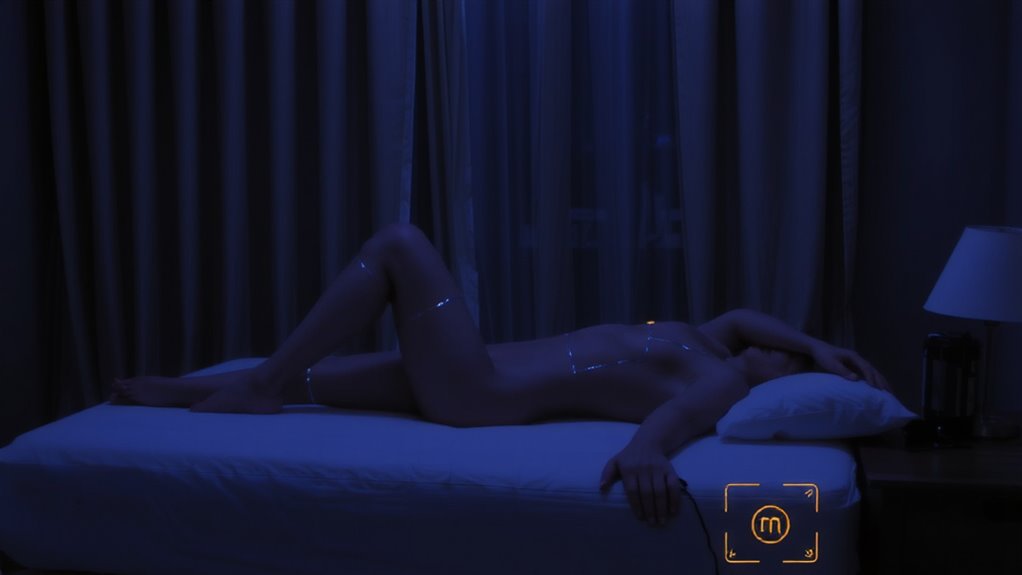
Smart sleep garments are clothing items-like pajamas, vests, or headbands-embedded with sensors or materials designed to monitor and support your sleep. You’ll find they use fabric conductivity to detect subtle changes in your body, such as temperature and heart rate, sending data to apps that track your patterns over time. Many also include motion tracking to record how much you move at night, helping identify restlessness or disruptions. These garments are made from soft, flexible textiles so you won’t feel restricted. Most connect wirelessly and are machine-washable with removable sensor modules. Some brands offer trial periods or warranties, letting you test comfort and performance. While they don’t diagnose sleep disorders, they provide insights that might help you decide whether to consult a specialist or adjust sleep aids. They’re a practical tool to understand your habits without replacing medical advice.
How Kinesthetic Feedback Improves Sleep
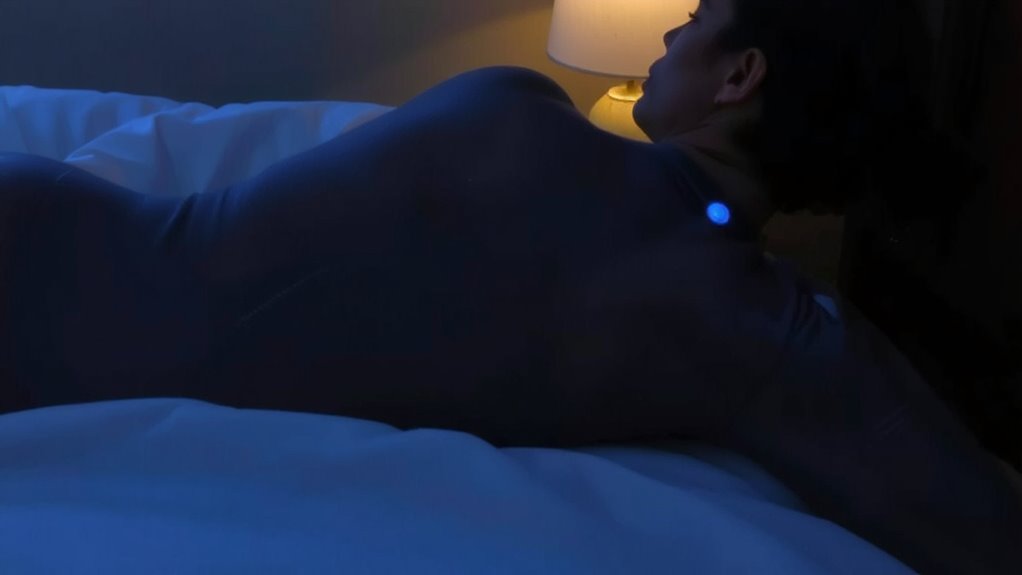
How does a gentle nudge help you sleep better? These subtle cues from smart garments support motion stabilization, reducing restless shifts that disrupt deep sleep. When your body stays aligned and calm, your brain cycles more smoothly through restorative stages. You’re also more likely to experience dream induction, as stable, uninterrupted sleep increases REM duration. The feedback isn’t jarring-it’s designed to guide, not wake you. Sensors detect micro-movements and respond with slight pressure, like a quiet reminder to relax. Early trials show users report feeling more rested, with fewer nighttime awakenings. Most garments use washable, breathable fabrics for comfort, and include adjustable settings so you can control intensity. While long-term effects are still being studied, short trials suggest benefits for those seeking non-medical sleep aids. Warranties typically cover electronics for one year. It’s a practical option if you value gentle, physical guidance over pills or sound-based systems.
Who Benefits Most From Smart Sleepwear
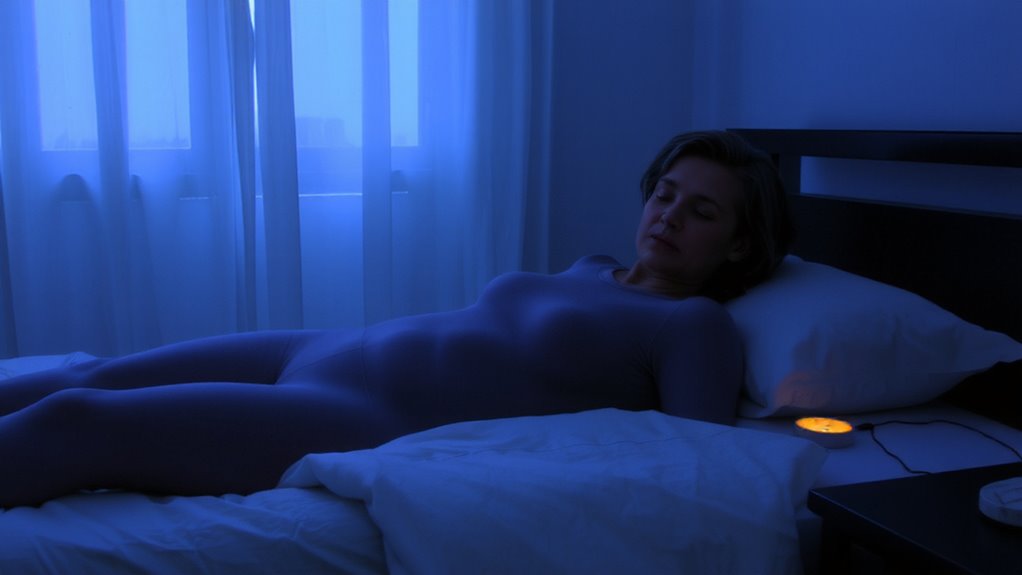
You might find smart sleepwear especially helpful if you struggle with frequent tossing and turning or mild insomnia. These garments use gentle kinesthetic cues to guide your body into more restful positions, which can improve sleep quality over time. Target populations include people with sleep onset difficulties, light sleepers, or those recovering from certain injuries that affect nighttime comfort. Shift workers and travelers adjusting to new time zones may also benefit from the stabilizing signals the garments provide. Long term benefits could include more consistent sleep patterns and less reliance on medication or external sleep aids. The fabrics are soft and breathable, designed to feel natural during extended use. Most models come with a 30-day trial and limited warranty, so you can test performance risk-free. While not a cure, this tech offers a practical tool for better sleep hygiene.
Testing Comfort: Can You Wear Them All Night?
Even if the idea of guided sleeping sounds helpful, you’ll probably want to know whether wearing these garments overnight feels manageable. You’ll be pleased to learn most users report they’re lighter than expected, with material breathability designed to prevent overheating. The fabric wicks moisture gently, so you’re less likely to wake up clammy. Seam durability has been tested through multiple wash cycles, and reinforced stitching keeps edges from fraying, even during restless sleep. You can wear them all night without chafing, thanks to flat seams and soft, flexible sensors woven in. Some models come with a 30-night trial, so if comfort doesn’t meet your expectations, returning or exchanging is simple. While individual fit varies, sizing charts and adjustable zones help guarantee a snug but not tight feel. If you value uninterrupted wear and skin-friendly design, these factors make overnight use realistic for many.
Vibration vs. Pressure vs. Heat: Feedback Compared
What kind of feedback helps you relax without jolting you awake? Vibration patterns offer precise cues but can feel abrupt if too strong. You might prefer subtle pulses that guide breathing or shifting positions without pulling you from deep sleep. Pressure feedback, like gentle compression, feels more natural to some, mimicking a calming touch. Then there’s heat-thermal gradients that slowly warm or cool areas of the garment. These shifts mirror your body’s natural temperature cycles, possibly easing your shift into deeper sleep stages. Each method has trade-offs: vibrations are controllable but less soothing, while heat feels organic but responds slower. Pressure fits in between, offering comfort but less precision. During trials, participants noted heat and soft pressure felt most integrated into sleep, while vibration required careful tuning. Choosing depends on your sensitivity and sleep goals.
Power, Sensors, and Washability: Smart Sleepwear Challenges
Smart fabrics that deliver feedback through vibration, pressure, or heat rely on integrated tech that brings its own set of practical concerns-power sources, sensor durability, and how well the garment holds up to cleaning. You’ll need to think about energy efficiency, since constant use during sleep means batteries must last through the night without frequent recharging. Some models use removable power packs for easier washing. Sensors embedded in the fabric must maintain accuracy over time, even after repeated use. Material durability is key-flexible circuits and conductive threads can weaken if not properly protected. Most smart sleepwear isn’t fully machine washable; hand washing or spot cleaning is often recommended to preserve electronics. A few brands offer modular designs so you can replace only worn or damaged parts. Check warranty terms for coverage on sensor failure or battery degradation. These factors directly affect how long and how well the garment supports your sleep routine.
The Future of Responsive Sleepwear
As sleep science advances, responsive sleepwear is evolving to meet your needs with more intuitive, adaptive features that go beyond simple tracking. You’ll find garments using neural integration to sync gentle kinesthetic cues with your sleep cycles, potentially improving rest quality. Some prototypes now support dream analysis by monitoring physiological signals linked to sleep stages, offering insights without invasive tools. These smart fabrics combine washable sensors with flexible circuits, maintaining comfort while delivering data. Performance varies by model, so check trial periods-many brands offer 30-day returns. Look for models with adjustable feedback and clear data privacy policies. While long-term benefits are still being studied, early users report easier nighttime shifts. If you’re exploring sleep aids for mild disturbances, this tech may complement other strategies. Warranty lengths differ; most cover manufacturing defects for one year.
On a final note
You can now try smart sleep garments that use gentle vibrations, light pressure, or subtle warmth to guide your movements during sleep. These wearables aim to support better rest without medication. They’re designed for comfort, with washable fabrics and built-in sensors, though battery life and durability vary. Many brands offer 30-day trials, letting you test performance firsthand. Consider your sleep needs and consult a specialist if you suspect a disorder. Useful, but not a fix-all.