How Sleep Cycle Tracking Helps Diagnose Insomnia Subtypes
Your sleep tracker uses movement and heart rate to map your sleep stages, spotting delays in falling asleep or frequent awakenings that signal insomnia subtypes. It flags poor REM or fragmented cycles, helping distinguish between sleep onset and maintenance issues. Doctors combine this data with your history for a clearer diagnosis. Apps like Sleep Cycle or Fitbit give actionable insights, and most offer free trials-checking them could help you better understand your sleep patterns.
Notable Insights
- Sleep cycle tracking identifies insomnia subtypes by detecting prolonged sleep onset, frequent awakenings, and disrupted sleep architecture.
- Devices use movement and heart rate data to flag delayed sleep onset, a sign of sleep onset insomnia.
- Fragmented sleep cycles with multiple nocturnal arousals indicate sleep maintenance insomnia.
- Reduced or shallow REM sleep suggests poor emotional regulation and points to specific insomnia-related imbalances.
- Long-term trend analysis helps clinicians correlate sleep patterns with symptoms for accurate subtype diagnosis.
What Is Insomnia: And Why Subtypes Change Treatment
Insomnia isn’t just trouble falling asleep-it’s a pattern that disrupts your life, and knowing the type you’re dealing with shapes how you treat it. You might struggle with sleep onset, lying awake for more than 30 minutes each night, or you might wake too early and can’t return to sleep, affecting your overall duration patterns. Some people have short sleep duration despite spending enough time in bed, while others get adequate hours but poor-quality rest. These differences matter because treatments aren’t one-size-fits-all. If you have trouble starting sleep, therapies might focus on timing and relaxation techniques. If duration patterns are the issue, approaches may target sleep consolidation or underlying conditions. Identifying your subtype helps guide decisions about behavioral changes, sleep aids, or medical support. Accurate identification means better results, fewer trials, and a clearer path to improved rest. Wearable devices like the best sleep-optimizing fitness trackers can provide detailed insights into your sleep architecture and help distinguish between insomnia subtypes based on sleep cycle tracking data.
How Sleep Trackers Detect Your Insomnia Type
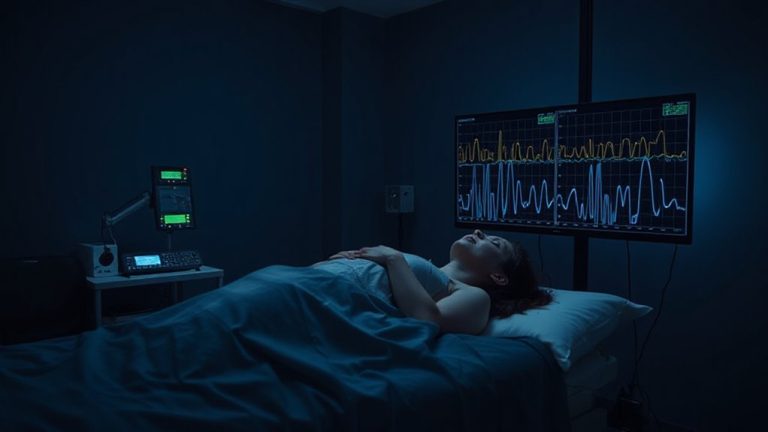
How does your sleep tracker know whether you’re struggling to fall asleep or just not staying asleep? It monitors your sleep architecture-tracking shifts between light, deep, and REM sleep-using movement and heart rate patterns. If you take over 30 minutes to enter light sleep, it flags sleep onset issues. Frequent awakenings trigger readings of nocturnal arousal, suggesting sleep maintenance insomnia. Some devices use sound analysis to detect restlessness or environmental disruptions. By compiling this data nightly, your tracker identifies consistent patterns across weeks. It doesn’t diagnose alone but provides evidence for clinical review. Accuracy varies by model-wearables with medical-grade sensors tend to perform better. Most offer trial periods, so test one for at least 14 days. Check warranty terms and compatibility with health apps before buying. This info helps guide conversations about treatments, whether behavioral, medicinal, or device-based.
How Restless Nights and Shallow REM Reveal Your Subtype
Why do you wake up still feeling drained, even after spending hours in bed? Your sleep tracker might hold the answer. Frequent nocturnal awakenings disrupt your sleep architecture, preventing deep, restorative rest. If you’re tossing and turning or waking up multiple times, your data likely shows fragmented cycles. Shallow REM sleep is another clue-when your brain doesn’t enter prolonged, stable REM stages, you miss out on emotional regulation and memory consolidation. These patterns point to specific insomnia subtypes, like sleep maintenance or REM-related issues. Your tracker logs how long you stay in each phase, highlighting imbalances. While it can’t diagnose alone, this info helps you and your provider evaluate sleep aids, behavioral changes, or timing adjustments. Pay attention to consistency in your sleep architecture over time. A device with reliable REM and movement detection offers the clearest picture for informed decisions. For accurate insights, consider a tracker recommended in expert-reviewed sleep tracker guides.
How Doctors Use Sleep Data to Diagnose Insomnia
When you bring your sleep tracker data to a doctor, it becomes a useful piece of the puzzle in identifying what’s really disrupting your rest. Clinicians analyze your sleep architecture-how much time you spend in light, deep, and REM stages-to detect imbalances. They also look for signs of circadian misalignment, like delayed sleep onset or frequent nighttime awakenings. Combined with your medical history, this data helps pinpoint insomnia subtypes. Wearable sleep tracking devices can provide continuous, objective sleep metrics that enhance clinical evaluations.
| Factor | What It Shows | Why It Matters |
|---|---|---|
| Sleep Architecture | Stage distribution and duration | Reveals fragmented or shallow sleep |
| Circadian Misalignment | Timing of sleep phases | Indicates irregular biological clock |
| Nighttime Awakenings | Frequency and length | Highlights sleep sustainability issues |
This assessment guides treatment decisions, from behavioral therapy to timing adjustments, helping you find sustainable solutions.
Best Sleep Cycle Tracking Apps for Accurate Insights
While not all sleep apps deliver clinical-grade accuracy, several stand out for offering reliable insights based on your unique sleep patterns. You’ll find that apps like Sleep Cycle, Fitbit Sleep Score, and Oura Ring provide strong data accuracy by combining movement tracking, heart rate, and sleep stage estimation. These tools monitor your sleep quality over time, spotting trends in deep, light, and REM sleep. Features like sleep onset latency and wake-up alerts align with your lightest phase, helping you feel refreshed. Most apps sync with smartphones or wearables, offering easy setup and daily feedback. While they’re not replacements for medical testing, their consistent tracking supports better self-awareness. Data accuracy improves when you use them nightly and calibrate inputs like bedtime habits. Try free trials before committing, and check warranty coverage for wearable-based systems. These tools won’t diagnose insomnia alone but give meaningful sleep quality insights when used thoughtfully.
Turning Your Sleep Data Into a Personalized Treatment Plan
How can you make your sleep data actually work for you? Start by reviewing your sleep patterns over two to three weeks-look for trends in when you fall asleep, wake up, or experience disruptions. Match these with your personal habits like caffeine use, screen time, or stress levels. This helps identify what might be worsening your insomnia. Once patterns emerge, adjust one habit at a time: maybe you go to bed 30 minutes earlier or cut out late-night screens. Track changes to see what improves sleep quality. Share this data with your doctor to discuss options, from cognitive behavioral therapy to temporary sleep aids. Many tracking apps let you export reports, which can support clinical decisions. Remember, the goal isn’t perfect data but clear insights that guide realistic, personalized treatment. Small steps, informed by your own patterns, lead to better long-term results.
On a final note
You can use sleep cycle tracking to spot patterns tied to your insomnia subtype, like delayed sleep onset or fragmented REM. Trackers give doctors objective data, improving diagnosis and treatment choices. Apps vary in accuracy, so pick one with clinical validation and easy data sharing. Reviewing trends over weeks helps adjust therapies safely. Many offer free trials and clear warranties, letting you test before committing. This data-backed approach supports smarter decisions about sleep aids and routines.