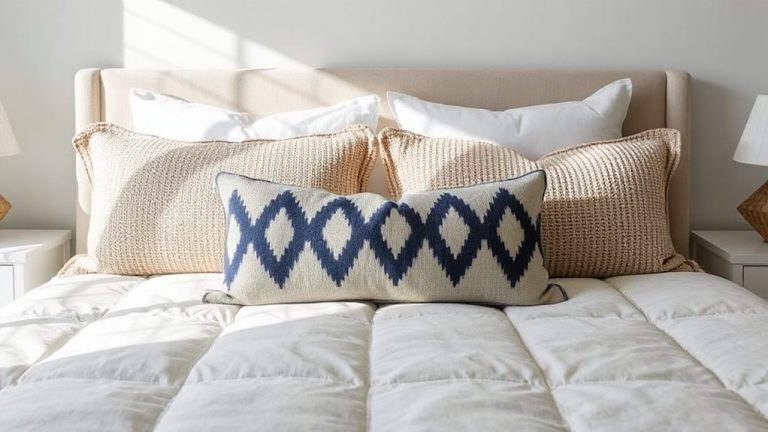
Why Cotton Netting Pillow Inserts Improve Airflow and Support
Cotton netting pillow inserts stay cooler than dense foams because their open weave lets air flow freely, helping your body release heat while you sleep. The breathable, natural fibers resist moisture and odors, making them a good choice if you overheat or have allergies. Firm yet flexible, the layered netting supports your head and neck without sinking. It adjusts to side or back sleeping and keeps its shape over time. You’ll find it especially comfortable if temperature matters to your sleep quality-there’s more to discover about how it compares long-term.
Notable Insights
- Cotton netting’s open weave enables continuous airflow, preventing heat buildup during sleep.
- Natural cotton fibers are lightweight and breathable, enhancing thermal regulation for cooler rest.
- Layered cotton netting offers firm support while evenly distributing head and neck pressure.
- The spring-like structure rebounds quickly, maintaining loft and spinal alignment over time.
- Cotton resists moisture, odors, and allergens, promoting a clean, comfortable, and breathable sleep surface.
Why Cotton Netting Keeps You Cooler Than Other Pillows
While many pillows trap heat and leave you waking up too warm, cotton netting inserts stay breathable by design, so you don’t have to sacrifice comfort for temperature control. The open breathable weave allows consistent airflow, helping maintain steady temperature regulation throughout the night. Unlike dense memory foam or synthetic fills, cotton netting doesn’t hold in body heat, making it a practical choice if you’re prone to overheating. Its natural fibers are lightweight and soft, offering gentle support without compression that limits air movement. You’ll find it especially useful if you’re sensitive to sleep disruptions from warmth. Most inserts come with removable covers, simplifying care and helping preserve the fiber’s performance. Manufacturers often include trial periods, so testing the pillow risk-free is possible. With durable stitching and washable materials, cotton netting balances comfort, function, and long-term use for cooler, more consistent rest.
How Airflow Prevents Nighttime Overheating
Because your body naturally loses heat through the skin during sleep, having a pillow that supports this process can make a real difference in how well you rest. Cotton netting inserts enhance airflow, aiding thermal regulation and preventing trapped heat. This boosts sleep comfort, especially if you tend to overheat at night. Proper ventilation helps maintain a consistent temperature, reducing disruptions.
| Feature | Traditional Pillow | Cotton Netting Insert |
|---|---|---|
| Airflow | Limited | High |
| Heat Buildup | Common | Reduced |
| Sleep Comfort | Decreases if warm | Consistently supportive |
You’ll notice fewer tosses and turns, thanks to steady thermal regulation. These inserts are breathable by design, so heat doesn’t linger. If you value sleep comfort and want a cooler night, consider trying one-many come with trial periods, letting you test the difference risk-free.
Firm, Flexible Support That Moves With You
When you shift positions at night, your pillow should keep up without losing its shape, and cotton netting inserts deliver just that-firm support with a slight give that adapts to your movements. The layered netting provides consistent pressure relief by evenly distributing your head and neck weight, reducing strain whether you’re a side, back, or stomach sleeper. Unlike rigid materials, cotton netting offers adaptive comfort, gently responding to your body’s contours without sinking too far. Its spring-like structure rebounds quickly, maintaining loft and alignment over time. You’ll notice less tossing and turning as the pillow moves with you, supporting natural spinal positioning. Most brands include a trial period, so you can test the feel risk-free. With proper care, these inserts retain resilience for months, making them a reliable choice for long-term comfort. No overheating, no flattening-just steady, breathable support.
Cotton Netting Vs. Memory Foam: Cooling Compared
If you’ve ever woken up too hot in the middle of the night, you know how much material matters when it comes to pillows. Cotton netting offers better cooling than memory foam, mainly due to its higher thermal conductivity and lower material density. This means heat escapes faster and air moves more freely through the fabric. Memory foam, while supportive, tends to trap body heat because of its tight cell structure and high density. You might notice you sleep warmer on it, especially in summer or if you’re prone to overheating. Cotton netting’s open weave helps regulate temperature by allowing constant airflow, which can improve comfort for people who want a cooler night’s sleep. If temperature affects your rest, switching to cotton netting could be worth a try. Many brands offer trial periods, so you can test the difference risk-free. For those seeking optimal comfort, choosing from the best cooling pillows can make a significant difference in sleep quality.
Cotton Netting’s Natural Moisture and Odor Resistance
Though cotton netting isn’t waterproof, it handles moisture better than many synthetic fills because it’s naturally breathable and wicks humidity away from your body. Its natural breathability allows air to circulate freely, helping regulate temperature and reduce dampness caused by night sweats or breathing. Unlike memory foam, which traps heat and moisture, cotton netting dries quickly and resists buildup of mold or mildew. The fibers also have inherent antimicrobial properties, meaning they naturally resist bacteria that cause odors over time. You won’t need chemical treatments to stay fresh, which is helpful if you’re sensitive to additives. Regular washing isn’t always necessary-airing it out often restores softness and cleanliness. This makes the insert practical for long-term use, especially if you value hygiene and low maintenance. A 30-night trial from most brands lets you test its performance before committing.
Best for Hot Sleepers, Allergy Sufferers, and Eco-Conscious Buyers
A cotton netting pillow insert could be a solid choice if you tend to sleep hot, deal with allergies, or prefer eco-friendly bedding. The breathable design promotes steady airflow, helping regulate temperature all night. Unlike synthetic foams, cotton resists trapping heat, making it easier to stay cool. Its natural fibers also resist dust mites and mold, a benefit if you have sensitivities. Plus, the open netting structure reduces moisture buildup, further limiting allergens. If you value sustainable materials, you’ll appreciate that cotton is biodegradable and often grown with fewer chemicals than conventional fibers. Most brands use organic or responsibly sourced cotton, minimizing environmental impact. Inserts usually come with a trial period, so you can test comfort and breathability risk-free. They’re machine washable, too, which helps maintain hygiene. While they may cost slightly more, the long-term benefits support better sleep and sustainability. For added protection against allergens, consider using a dust mite pillow cover designed to work seamlessly with breathable inserts.
On a final note
You’ll sleep cooler with cotton netting pillow inserts, as their open weave boosts airflow and prevents heat buildup. Unlike dense memory foam, they offer firm yet flexible support that adapts without trapping warmth. Naturally moisture-wicking and resistant to odors, they’re a breathable choice for hot sleepers or those with allergies. Eco-conscious buyers may appreciate the natural materials. Look for models with removable covers and trial periods to test comfort and support risk-free.