Why Irregular Sleep-Wake Rhythm Disorder Patients Benefit From Daytime Light Therapy
You benefit from daytime light therapy because it helps reset your internal clock, which is often out of sync in irregular sleep-wake rhythm disorder. Using a 10,000 lux light box within an hour of waking, for 15–60 minutes, strengthens circadian rhythms. Morning light suppresses melatonin, boosts alertness, and stabilizes sleep timing. Consistent use over at least three weeks improves energy, mood, and sleep quality. Pair it with a fixed wake time and outdoor light exposure for best results-and see how small changes add up over time.
Notable Insights
- Daytime light therapy helps realign the disrupted circadian rhythm common in Irregular Sleep-Wake Rhythm Disorder.
- Morning light suppresses melatonin, promoting alertness and reinforcing a consistent wake time.
- Regular exposure to bright light stabilizes the sleep-wake cycle by enhancing circadian entrainment.
- Light therapy improves daytime energy, cognitive function, and emotional well-being in affected individuals.
- Using a 10,000 lux light box for 15–30 minutes daily supports long-term sleep pattern normalization.
What Is Irregular Sleep-Wake Rhythm Disorder
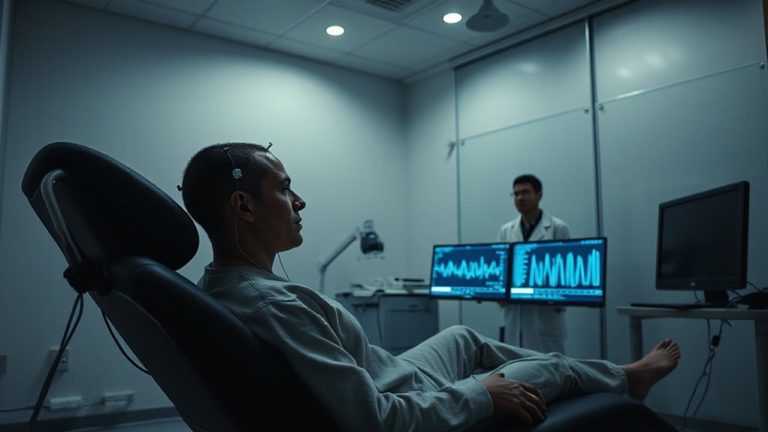
Think of your sleep pattern as a clock, one that runs without clear settings-this is irregular sleep-wake rhythm disorder. You might nap randomly throughout the day and night, never getting a solid sleep block. This happens because your body’s internal rhythms lack structure, leading to circadian misalignment. Without consistent cues like light and routine, your sleep timing scatters. Over time, this causes internal desynchronization-your brain, hormones, and body aren’t in sync with each other or the outside world. You may feel groggy often, struggle with focus, or have low energy. It’s common among people with irregular schedules or certain neurological conditions. Diagnosis usually involves sleep logs or actigraphy over one to two weeks. Treatment options include behavioral strategies, scheduled meals, and light exposure-but not all work the same for everyone. Trial periods and monitoring help determine what adjusts your rhythm most effectively. Using sleep-friendly lighting can support daytime alertness and nighttime melatonin production.
How Morning Light Resets Your Sleep Schedule
Why does stepping outside in the morning help you sleep better at night? Because morning light triggers circadian entrainment, your body’s natural way of syncing its internal clock to the 24-hour day. When light enters your eyes, it signals your brain to stop producing melatonin, the hormone that makes you sleepy. This melatonin suppression helps you feel more alert in the morning and promotes sleepiness later at night. For you, maintaining a consistent wake time and getting early light exposure strengthens this rhythm. Even on cloudy days, outdoor light is often brighter than indoor lighting, making it more effective. Over time, this daily cue stabilizes your sleep-wake cycle, especially if your schedule feels scattered. Morning light doesn’t require special equipment-just a walk or sitting near a window. It’s a simple, low-cost way to support your body’s timing system.
When to Use Light Therapy for Best Results
When should you use light therapy to get the most benefit? For irregular sleep-wake rhythm disorder, timing strategies are key. Use light therapy within an hour of waking, even if your wake time varies daily. Consistent morning exposure helps anchor your internal clock. Timing strategies that align with your natural wake time improve rhythm stability over weeks. Duration effects matter, too-15 to 30 minutes daily is typically effective, though some need up to 60 minutes based on light box intensity. Start with 20 minutes and adjust based on response. Use a light box emitting 10,000 lux, positioned at eye level without staring directly at it. Avoid use in the evening, as it may delay sleep. Stick with it for at least three weeks to assess real impact. Most devices offer a trial period, so test with patience.
Why It Helps: Sleep, Energy, and Mood
You’re most likely using light therapy in the morning because it helps set your body’s internal游戏副本, and over time, that consistency can make a real difference in how you sleep, feel, and function. Better sleep timing often leads to deeper rest, which boosts energy during the day. With steady exposure, you may notice improved cognitive clarity-like sharper focus and faster thinking-because your brain’s activity aligns more naturally with daylight hours. Mood also tends to stabilize, supporting emotional balance so you’re less likely to feel irritable or overwhelmed. These changes aren’t instant, but as your rhythm adjusts, the benefits build. You’re not just fixing sleep; you’re improving overall daily performance. Light therapy doesn’t replace other treatments, but it complements them by targeting the root of irregular patterns. Using the right type of lighting in the evening, such as best sleep-inducing lights, can further support your circadian rhythm by minimizing blue light exposure and promoting melatonin production.
How to Stay Consistent With Light Therapy
Most people find it easier to stick with light therapy when they build it into their morning routine, like brushing your teeth or making coffee, because consistency matters for resetting your body’s clock. Setting a fixed time each day helps maintain timing consistency, which is key for effective results. Aim for 20 to 30 minutes of exposure soon after waking, using a lightbox that delivers 10,000 lux. Place it at eye level, about 16 to 24 inches away, while eating breakfast or reading. Avoid looking directly at the light. Reminders or alarms can boost therapy adherence, especially at first. If you miss a day, resume as soon as possible-don’t wait for a “perfect” start. Choose a device with a clean, sturdy design and a two-year warranty for reliability. Some models include sunrise simulation or adjustable brightness, helping you adjust based on response.
On a final note
You can improve your sleep, energy, and mood by using daytime light therapy consistently. It helps reset your internal clock, especially when used each morning at the same time. Choose a lightbox that emits 10,000 lux, sit within 16–24 inches for 20–30 minutes. Most notice changes in 1–2 weeks. Check with your doctor, especially if you have eye concerns. Try it for at least three weeks to judge results.