Best Sleep-Inducing Lights for a Restful Night’s Sleep
Choose a red light therapy lamp with 670nm wavelengths, like the EPOE or Neporal REDIX, to support melatonin and avoid circadian disruption. Pair it with flicker-free amber bulbs at 1800K for night use. Opt for models with timers, USB-C charging, and dimmable settings for convenience. Devices like the Yogasleep Nod add soothing sounds and adjustable lighting. Consider trial periods and warranties to test what works best for your routine. You’ll find more details on matching features to your sleep needs just ahead.
We are supported by our audience. When you purchase through links on our site, we may earn an affiliate commission, at no extra cost for you. Learn more. Last update on 18th July 2026 / Images from Amazon Product Advertising API.
Notable Insights
- Red light therapy devices emitting 620–690nm wavelengths support melatonin production and minimize circadian disruption for better sleep.
- Amber night light bulbs with 1800K–2600K color temperature block blue light and create a warm, sleep-friendly environment.
- White noise machines with dimmable amber or red lighting combine soothing sounds and low-intensity light to enhance sleep quality.
- Multi-functional sleep devices offer red light therapy, 30+ sleep sounds, adjustable brightness, and timers for comprehensive sleep support.
- Rechargeable, portable sleep lights with USB-C, timers, and flicker-free designs provide convenience and visual comfort for bedtime routines.
Red Light Therapy Sleep Lamp with 670nm
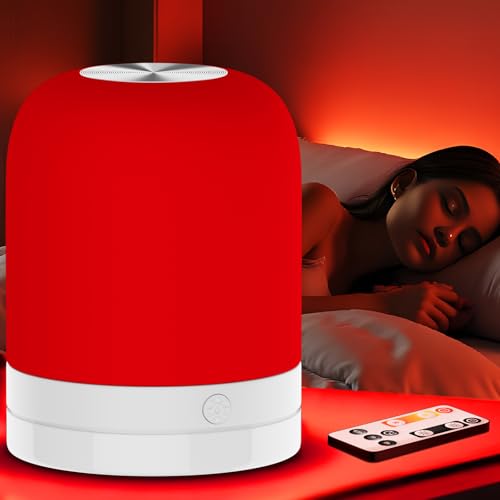
If you’re looking for a sleep aid that combines science-backed red light therapy with everyday practicality, the EPOE Red Light Therapy Sleep Lamp with 670nm wavelength might be your best match. I use it nightly to wind down, and its red light helps signal my body it’s time for sleep by supporting natural melatonin release. At 6.1 ounces and 3.1 inches wide, it’s portable, rechargeable, and works on a 5V USB-great for travel or bedside use. With touch and remote controls, I adjust brightness or set 30-, 60-, or 120-minute timers. It doubles as a nightlight or reading lamp, emits zero blue light, and fits neatly on any table, indoors or out.
Best For: Those seeking a portable, science-backed sleep aid that promotes melatonin production and circadian rhythm balance using 670nm red light therapy.
Pros:
- Emits 670nm red light shown to support natural melatonin release and improve sleep quality
- Rechargeable, lightweight, and cordless with USB power for convenient travel and bedside use
- Offers touch and remote control with adjustable brightness and timer settings for personalized comfort
Cons:
- Not waterproof, limiting use in humid environments like bathrooms
- Only one light source with no color variability beyond warm white and red therapy modes
- Battery-powered operation may require frequent recharging with regular use
Yogasleep Nod White Noise Machine

The Yogasleep Nod White Noise Machine stands out for parents and light sleepers who need a calming, consistent bedtime environment. I appreciate its 20 sound options, from white noise and nature sounds to lullabies and a heartbeat setting, which can ease both babies and adults into sleep. Its dimmable amber night light provides soft, sleep-friendly illumination, adjustable with a held button. I find the simple controls and sleek, neutral design easy to use and discreet in any bedroom. USB-powered and hand-assembled in the USA, it feels durable and reliable. With a 60-year legacy, Yogasleep builds trust through thoughtful design and lasting performance.
Best For: Parents, light sleepers, and anyone seeking a soothing, sleep-friendly environment with reliable sound and light features.
Pros:
- Offers 20 versatile sound options, including white noise, lullabies, and heartbeat, ideal for infants and adults
- Features a dimmable amber night light that supports sleep-friendly ambiance and easy nighttime visibility
- USB-powered and hand-assembled in the USA with durable, sleek design and intuitive controls
Cons:
- USB power only with no adapter included, requiring a separate purchase for outlet use
- Lullabies and sounds are fixed with no app or Bluetooth connectivity for customization
- Limited color options and modern design may not appeal to all decor preferences
Helight Red Light Therapy Sleep Device

I rely on the Helight Red Light Therapy Sleep Device when I need a non-invasive way to support my body’s natural shift into sleep, especially if I’m sensitive to light exposure at night. It emits 630 nm red light, mimicking sunset to help trigger relaxation. The light passes through my closed eyelids, signaling my body it’s time to wind down. It runs a 28-minute cycle, then shuts off-perfect for travel with its USB-C rechargeable battery. I keep other lights off and skip my sleep mask. It works with my CPAP and is safe for kids. Results can take up to 21 days.
Best For: Individuals seeking a non-invasive, science-backed method to improve sleep onset and quality, especially those sensitive to blue light or frequently traveling across time zones.
Pros:
- Emits 630 nm red light that mimics sunset, naturally supporting melatonin production and relaxation
- Compact, portable design with USB-C charging ideal for travel and use with CPAP or anti-snoring devices
- Automated 28-minute cycle that turns off automatically, promoting consistent sleep routines
Cons:
- Requires up to 21 days for full adaptation, so results may not be immediate
- Must be used in complete darkness without a sleep mask, which may not suit all sleep preferences
- Limited to red light therapy only, without additional features like sound or white noise options
Amber Sleep Light Bulbs 1800K (4-Pack)

You’ll want these amber bulbs if you’re looking for a sleep-friendly light that minimizes blue light exposure, especially in the hour before bed. I use them in my bedroom and nursery because they emit a warm 1800K glow that blocks 99.99% of blue light, helping signal my body it’s time to wind down. These 3W LED bulbs fit standard E26 fixtures, replace 25–40W incandescents, and provide flicker-free, quiet light without glare. Though non-dimmable, their soft output works well for bedtime reading or night feeding. I appreciate the energy savings, long life, and fact they support natural melatonin release-key for better sleep quality.
Best For: Individuals seeking sleep-friendly lighting that minimizes blue light exposure, especially for use in bedrooms, nurseries, or during evening hours to support natural melatonin production.
Pros:
- Emits a warm 1800K amber glow that blocks 99.99% of blue light, promoting better sleep quality
- Energy-efficient 3W LED replaces 25–40W incandescent bulbs with flicker-free, glare-free illumination
- Fits standard E26 fixtures and ideal for bedtime reading, night feeding, and children’s sleep support
Cons:
- Non-dimmable, limiting brightness control for different lighting preferences
- Lower lumen output (300 lumens) may be too dim for tasks requiring brighter light
- White casing may look out of place in certain decorative fixtures when the bulb is off
Baby Red Light Night-Light 670nm

A 670nm red light night-light stands out for anyone sensitive to light during sleep shifts-especially newborns, overactive kids, and adults struggling with melatonin disruption. I use it during nighttime feedings and diaper changes because the soft glow gives me enough light without disrupting sleep hormones. It boosts melatonin naturally, helping babies settle 30+ minutes faster from Day 1, with better results by Day 30. Two modes-670nm red and warm yellow-plus three brightness levels give me control. The 2000mAh battery lasts hours, charges fast via USB-C, and shuts off automatically. I place it anywhere, thanks to the hanging design and 360° light.
Best For: New parents, overactive children, and adults seeking a melatonin-friendly night-light to support natural sleep regulation and minimize light disruption during nighttime routines.
Pros:
- Utilizes 670nm red light scientifically shown to support melatonin production and faster sleep onset
- Offers dual light modes (red and warm yellow) with adjustable brightness for versatile nighttime use
- Portable, USB-C rechargeable design with auto-shutoff and hanging capability for convenience and safety
Cons:
- Red light mode may be too dim for users needing brighter illumination during nighttime tasks
- Limited color options may not appeal to those who prefer ambient or decorative lighting
- May require consistent daily use over 30 days to achieve optimal sleep-regulating benefits
Easysleep White Noise Machine with 30 Sounds

The Easysleep White Noise Machine with 30 sounds suits individuals seeking a customizable sleep aid that combines audio variety and adjustable lighting in one compact unit. I find it helpful because it offers 30 soothing options, like rain, white noise, and lullabies, with 32 volume levels for a personal touch. Its 12 color night lights, each with 10 brightness settings, let me create a soft, calming glow. I can set it to play continuously or use one of three timers, including 1- or 2-hour modes that fade out gently. The touch controls make switching sounds or colors easy, and it remembers my settings. If I have questions, customer support is ready to help.
Best For: Individuals seeking a versatile sleep aid with customizable sound and lighting options in a user-friendly, compact device.
Pros:
- Offers 30 soothing sounds and 32 volume levels for a highly personalized audio experience
- Features 12 color night lights with 10 brightness levels to create a relaxing ambient environment
- Includes timer modes with automatic fade-out and memory function to retain user preferences
Cons:
- May have a learning curve for users unfamiliar with touch controls
- Limited sound variety compared to high-end smart speakers or apps
- No battery option, requiring constant power source for operation
Red Light Therapy Sleep Night Light

Because it combines science-backed red light wavelengths with customizable sound options, the Red Light Therapy Sleep Night Light works especially well for people struggling with sleep onset, circadian disruption, or light sensitivity. I use its five red wavelengths-620 to 690nm-to support melatonin and relaxation. The app or touch control lets me adjust brightness, pick wavelengths, and set a 30–240 minute timer. Its 32 sleep sounds, like rain or white noise, help block distractions. The flicker-free light is safe for kids, travelers, and those sensitive to bright light. It works in nurseries or bedrooms without blue light exposure. Dhiedas backs it with solid support and a focus on science.
Best For: Individuals struggling with sleep onset, circadian rhythm disruption, or light sensitivity, including children, night-shift workers, and travelers.
Pros:
- Combines five science-backed red light wavelengths (620–690nm) to support melatonin production and relaxation
- Offers 32 customizable sleep sounds with adjustable timer (30–240 minutes) to block environmental noise
- Flicker-free, blue-light-free design makes it safe and soothing for children and light-sensitive users
Cons:
- Requires smartphone app for full functionality, which may be inconvenient for non-tech-savvy users
- Premium features and build quality come at a higher price point than standard night lights
- Limited to red light spectrum, which may not suit users who prefer variable color options for ambiance
Neporal REDIX 670nm Red Light Lamp

You’ll find the Neporal REDIX 670nm Red Light Lamp works best if you’re sensitive to light at night or struggle with falling asleep due to disrupted melatonin levels. It emits pure 670nm red light, free of blue and green wavelengths, to support your natural sleep cycle. With stepless dimming from 10% to 100%, you can adjust the brightness via touch or remote without leaving bed. The 4800mAh rechargeable battery offers cordless use for travel or power outages. It’s compact, lightweight, and ideal for bedrooms or nurseries. Just know it’s not waterproof, and one AAA battery powers the remote separately.
Best For: Individuals sensitive to light at night or those struggling with sleep due to disrupted melatonin levels who want a portable, circadian-friendly red light solution.
Pros:
- Emits pure 670nm red light free of blue and green wavelengths, supporting natural melatonin production and healthy sleep cycles
- Offers stepless dimming (10%–100%) with touch and infrared remote control for convenient, nighttime brightness adjustment
- Rechargeable and portable with a 4800mAh battery, making it ideal for travel, nurseries, and use during power outages
Cons:
- Not waterproof, limiting safe usage to dry, indoor environments
- Remote requires a separate AAA battery (not included), adding an extra cost and maintenance step
- May be too dim for users seeking brighter nighttime lighting for tasks like reading
Revive 670nm Red Night Light (2 Pack)

Red light around 670nm works especially well for anyone sensitive to brightness at night, making the Revive 670nm Red Night Light (2 Pack) a solid pick for people focused on better sleep hygiene. I’ve found it helps maintain melatonin levels by cutting out blue light, so it’s great for those of us winding down after dark. It shines softly in nurseries, hallways, or bathrooms, giving just enough glow to move around safely. The 670nm wavelength won’t jolt your brain awake, which matters if you’re a light sleeper or parenting on little rest. Gamma stands behind it with solid research and a warranty, so trying it feels low-risk.
Best For: Individuals seeking to improve sleep hygiene, especially those sensitive to light at night, parents managing nighttime routines, or anyone wanting to maintain melatonin levels in dark environments.
Pros:
- Emits 670nm red light that minimizes circadian disruption and supports natural melatonin production
- Provides low-intensity illumination ideal for nurseries, hallways, and bathrooms without stimulating the brain
- Backed by scientific research and comes with a warranty from a trusted, science-driven brand
Cons:
- Limited brightness may not suit those needing more visibility in larger or darker spaces
- Red light only may feel too dim for users accustomed to white or blue-tinted night lights
- Sold in a pack of two, which may be more units than needed for smaller households
White Noise Sleep Machine with Moon Lamp

Who hasn’t struggled to quiet the mind at bedtime or needed a gentle sensory nudge to unwind? I rely on the White Noise Sleep Machine with Moon Lamp when I need both soothing sound and soft light. It offers 24 sleep sounds, from rain to lullabies, and cycles easily with next/prev buttons. The 7-color RGB moon light adjusts in brightness and mode-perfect for a calming glow. I set the timer for 30 minutes, though it can run all night. It’s portable, recharges via Type-C, and shows battery status clearly. Lightweight and simple, it works well for travel or nightly use.
Best For: Those seeking a portable, dual-function sleep aid that combines soothing soundscapes with customizable ambient lighting for improved relaxation and sleep onset.
Pros:
- Offers 24 curated sleep sounds and adjustable 7-color RGB lighting for personalized sensory relaxation
- Rechargeable via Type-C with clear LED battery indicators and long battery lifespan (500 cycles)
- Compact, lightweight design with intuitive controls ideal for travel, nurseries, or bedside use
Cons:
- Limited sound customization options-no app control or ability to upload personal audio
- Light brightness may be too dim for some users seeking a nightlight function
- Timer maxes out at 60 minutes for auto-off, requiring manual restart for longer playback needs
Factors to Consider When Choosing Sleep Inducing Lights
You’ll want to take into account the wavelength of your sleep light, since warmer tones like red or amber support melatonin release better than blue or white light. Think about brightness control, timer settings, and whether you need something portable or plug-in, so it fits your bedroom setup and routine. A flexible power option or automation feature can make a big difference in how well you stick with using it night after night.
Wavelength For Sleep Support
While not all lights support restful sleep, choosing one with the right wavelength can make a noticeable difference in how quickly you fall asleep and how well you stay asleep. You’ll want to look for lights in the 620–690nm red spectrum, since that range-especially around 670nm-supports melatonin production and keeps your circadian rhythm on track. Red light at 630nm mimics sunset, gently signaling your body it’s time to wind down. This narrowband red light penetrates your closed eyelids, boosting relaxation without disrupting sleep hormones. Amber light at 1800K is also effective, blocking nearly all blue light to prevent interference with melanopsin receptors. These wavelengths are designed to minimize circadian disruption, so you can use them safely before bed. Choosing a light in this range gives you science-backed support for deeper, more natural sleep onset.
Light Intensity And Comfort
A well-chosen sleep-inducing light balances intensity and comfort to support your body’s natural wind-down process. You’ll want brightness under 100 lux at night, keeping it low enough to avoid disrupting melatonin. Look for dimmable lights that let you adjust output between 10% and 30%-this range often feels soothing without straining your eyes. Choose flicker-free models, especially if you’re sensitive to light changes, since they reduce eye fatigue and help maintain calm. The light should be diffused or shielded to eliminate glare, softening shadows and creating even illumination. Pair low intensity with warm color temperatures (1800K–2600K) to limit blue light, supporting your circadian rhythm. Together, these features create a comfortable environment that eases the shift into sleep, letting you fall asleep faster and stay asleep longer. Prioritize comfort, adjustability, and smooth, consistent output when choosing.
Power Source Flexibility
Since power outages or limited outlet access can disrupt your nightly routine, picking a sleep-inducing light with flexible power options makes sense. Choose a model with a rechargeable battery so you can keep using it even when the power’s out or an outlet’s not nearby. Look for USB-C charging-it recharges faster and works with most modern chargers, power banks, or laptops. A cordless design gives you freedom to place the light on your nightstand, tuck it in a hallway, or pack it for travel. Go for high-capacity batteries that last several nights on a single charge, reducing how often you need to plug in. Some lights even run continuously on AC power, so you don’t have to rely solely on battery life. This mix of power options guarantees your light stays on through the night, night after night, without surprises or interruptions.
Timer And Automation Options
How do you guarantee your sleep light turns off at just the right time? Use models with programmable timers that let you choose durations from 15 to 120 minutes, or even up to 8 hours for all-night use. Some lights offer adjustable increments between 30 and 240 minutes so you can fine-tune based on your sleep onset. Automatic shut-off prevents light exposure after you fall asleep, helping protect your melatonin levels and sleep cycles. Look for stepless dimming paired with timers, which gradually lowers brightness like a sunset. Many devices also include memory functions to save your preferred timer, brightness, and sound settings, so you don’t reset them each night. This consistency supports routine, which in turn helps regulate sleep patterns. These automation features make nightly use easier, more effective, and energy-efficient over time.
Portability And Design Fit
Look for sleep lights that combine compact size and lightweight build if you plan to move them between rooms or take them on trips. Models under 4 inches tall and under 10 ounces are easy to pack and reposition without strain. Choose ones with rechargeable USB-C batteries so you can use them during outages or travel without hunting for outlets. A stable base lets you set them safely on nightstands, nursery tables, or uneven camping ground without tipping. Since they run on energy-efficient LEDs, they stay cool and quiet through the night. Smooth, modern shapes with non-reflective finishes fit naturally into your bedroom aesthetic while reducing glare and light scatter. These design choices help maintain a calm atmosphere without drawing attention. Portability and visual harmony matter, especially if you value flexibility and subtle lighting across different spaces.
Dual Functionality Features
You’ve likely considered how size and design affect where you can use your sleep light, but don’t overlook models that do more than just emit calming light. Some combine red light therapy with built-in white noise machines, giving you both visual and auditory relaxation through 30+ soothing sounds and adjustable volume. You can choose color-tunable night lights with dimmable amber or red hues while playing nature sounds, lullabies, or pink noise. Advanced units offer wavelengths from 620–690nm, programmable sounds, and auto-off timers from 30 to 240 minutes. App control lets you tweak red light intensity and sound choice independently. Many have USB-C charging and portable builds, so you can use red light and sound therapy anywhere. These features work together to support consistent, restful sleep without needing multiple devices.
Frequently Asked Questions
Can These Lights Be Used With Smart Home Systems?
Yes, you can connect these lights to smart home systems like Alexa, Google Assistant, or Apple HomeKit. You control brightness, color, and schedules with voice or an app. They use Wi-Fi or Bluetooth, so setup’s quick and works reliably. Most brands offer a 30-day trial and a 1- to 2-year warranty. Check compatibility before buying, since not all models work with every system.
Are Red Light Therapy Devices Safe for Eyes?
yes, red light therapy devices are generally safe for your eyes when you use them as directed. most models emit low-level wavelengths that don’t damage eye tissue, and many include built-in eye protection features. you still should avoid staring directly at the light. look for brands that list safety certifications and offer trials, so you can test comfort and response. always follow the manufacturer’s guidelines for exposure time and distance to reduce any risk.
Do These Lights Work for Shift Workers?
Yes, these lights can help you regulate sleep when you work odd hours. You use them to signal your body when to stay alert or wind down. Red or amber lights work best at night since they don’t suppress melatonin much. Use them 30–60 minutes before your desired sleep time. Look for lights with low blue emission and adjustable brightness. Many brands offer trial periods, so you can test what fits your schedule without risk.
Can I Use These Lights During Pregnancy?
Yes, you can use these lights during pregnancy-you’re likely seeking safer sleep support, and they’re non-invasive. Most emit low blue light and run cool, reducing risks. They don’t enter your bloodstream like pills, so doctors often consider them pregnancy-safe. Still, check with your provider first, especially if you have sensitivities. Look for models with a timer, dimming, and warm tones. Many offer a 30-day trial, so you can test comfort and results without risk.
Are Replacement Bulbs Available for These Devices?
Yes, you can find replacement bulbs for most of these devices, though availability depends on the model and brand. You’ll want to check the manufacturer’s website or contact support to confirm compatibility. Many use standard LED or incandescent bases, making swaps easier. Always power off the unit before changing bulbs. Some newer models have built-in, non-replaceable LEDs, so verify that detail before purchase to avoid surprises later.