Why Shift Work Sleep Disorder Patients Benefit From Scheduled Light Exposure
You benefit from scheduled light exposure because it helps reset your body’s internal clock, improving alertness during night shifts and sleep quality afterward. Using bright light early in your shift boosts wakefulness, while avoiding morning light afterward protects daytime rest. Blackout curtains and blue light filters support deeper sleep. Timed light therapy lamps with 10,000 lux and adjustable brightness make routines more effective. Consistency matters most. Smart timing works with your biology, not against it-there’s more to aligning your schedule for long-term health.
Notable Insights
- Scheduled light exposure helps realign the circadian clock with atypical sleep times in shift workers.
- Bright light during night shifts boosts alertness and supports adaptation to nighttime work.
- Avoiding morning light after night shifts prevents unwanted phase delays and protects daytime sleep.
- Consistent timing of light and darkness strengthens circadian entrainment and improves sleep quality.
- Light therapy upon waking for morning shifts enhances alertness and stabilizes the sleep-wake cycle.
What Is Shift Work Sleep Disorder (And How Light Can Help)
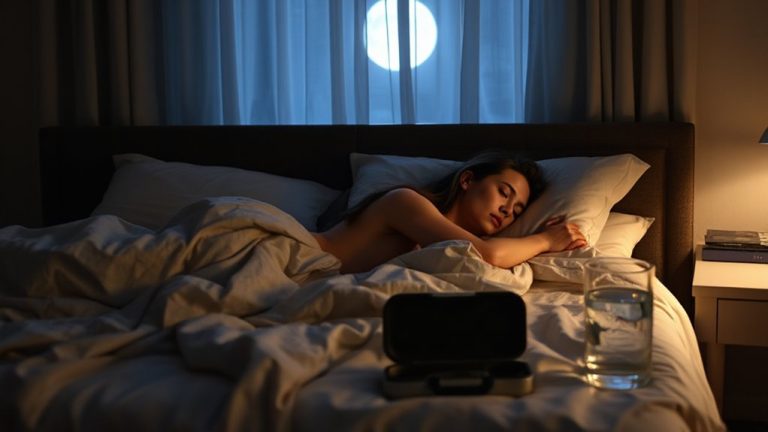
Ever wonder why sleeping during the day feels so much harder if you work nights? You’re likely experiencing circadian disruption-your body’s internal clock is misaligned with your sleep schedule. This confusion suppresses melatonin when you need it most, leading to melatonin suppression from daylight exposure during your rest period. That makes falling and staying asleep tough, even when exhausted. Shift work sleep disorder (SWSD) happens when this pattern becomes chronic, affecting alertness and health over time. Light plays a key role: timed exposure can help shift your rhythm, but poorly timed light worsens the disruption. Managing light isn’t a fix, but a tool. Blackout curtains, blue-light-blocking glasses, and dark, cool bedrooms support better daytime sleep. No product replaces good habits, but they can help. Consider trying light-blocking aids with a sleep diary to track what works-for a few weeks, consistency matters most.
When to Use Light to Adjust Your Shift Work Sleep Schedule
How can you time your light exposure to best support a shifting sleep schedule? Use bright light during your wakeful hours to signal alertness, especially at the start of a night shift. This helps your body adjust when natural morning light isn’t an option. If you work nights, expose yourself to strong artificial light early in the shift to mimic daylight. Avoid morning light on your way home-wear sunglasses to protect your sleep. Prioritize night darkness when trying to sleep during the day; blackout curtains and eye masks support this. Consistent timing strengthens your rhythm over time. Even on days off, try to keep light exposure patterns close to your work routine to minimize disruption. Your body responds best when light and darkness come at predictable times. With regular practice, scheduled light exposure improves sleep onset and alertness when needed.
How to Avoid Light That Ruins Daytime Sleep After Night Shifts
Your post-shift morning sunlight exposure can disrupt the quality of your daytime sleep, so blocking outdoor light becomes essential after night work. Blackout curtains are your best option-they’re made with tightly woven, opaque materials that stop nearly all sunlight from entering. Look for ones with thermal lining and a magnetic seal around the edges to prevent light gaps. Install them snugly to guarantee full coverage. Once indoors, reduce exposure to screens emitting blue light. Use blue light filters on phones, tablets, and computers before and during your wind-down routine. These filters limit blue wavelengths that signal wakefulness to your brain. Combine filtered screens with darkened rooms for best sleep prep. Test different blackout curtain brands and check warranty length-many offer 1–3 years. Try blue light settings at various intensities to find what supports your sleep onset without frustration. Using best light bulbs for sleep can further support your circadian rhythm by minimizing blue light exposure indoors.
Best Light Therapy Lamps for Shift Workers
A well-chosen light therapy lamp can make a real difference in managing your sleep-wake cycle when working nights. Look for models that balance light intensity, portability, and ease of use. A minimum of 10,000 lux is recommended for effective exposure in shorter sessions. Proper lamp placement-about 16 to 24 inches from your face, slightly above eye level-helps maximize benefits without strain.
| Feature | Recommendation |
|---|---|
| Light Intensity | 10,000 lux for effective circadian reset |
| Lamp Placement | 16–24 in front, angled slightly downward |
| Trial Period | Choose brands offering 30-day trials |
Many lamps use LED panels, which stay cool and last longer. Units with adjustable brightness let you ease into sessions. Look for a wide light surface to maintain coverage with natural movement. Check warranty length-some include two to three years of protection.
How to Build a Personalized Light Routine for Shift Work
Picking the right light therapy lamp matters, but using it at the right times makes all the difference in resetting your body clock. To build your routine, start by matching the light intensity to your shift-10,000 lux is standard for fast effects, but lower intensities may work with longer exposure. If you work nights, use bright light early in your shift to boost alertness and avoid it before bedtime. For morning shifts, sit under the lamp for 20–30 minutes after waking. Timing consistency is key; using light at the same times every day helps stabilize your sleep-wake cycle. Try to keep exposure periods free of distractions so you stay focused on the light. Test different schedules for a few days and track changes in sleep quality and energy. Most therapy lamps come with warranties, so consider a model you can return if it doesn’t fit your routine.
Why Light Resets Your Body Clock (And What Science Says)
What makes light so powerful in shifting your sleep schedule? It’s because your brain uses light to guide circadian entrainment-the natural alignment of your body clock with the environment. Light exposure at the right time suppresses melatonin, the hormone that signals sleep, a process called melatonin suppression. This helps reset your internal clock, especially useful if you work nights or irregular shifts.
| Effect | Outcome |
|---|---|
| Morning light | Boosts alertness, strengthens circadian entrainment |
| Evening light | Delays sleep, reduces melatonin |
| Bright light therapy | Enhances wakefulness, supports schedule shifts |
| Darkness | Promotes melatonin release, aids sleep |
Use timed light exposure to gradually adjust your rhythm. Consistency matters more than intensity. Try light boxes with 10,000 lux for 20–30 minutes, ideally during desired wake periods. Most units are easy to use and come with a warranty. Trial and error helps find what works.
On a final note
You can manage shift work sleep disorder by using scheduled light exposure to align your body clock with your schedule. Bright light therapy in the early part of your shift helps reset your rhythm, while avoiding daylight after night shifts supports daytime sleep. Choose a lamp with 10,000 lux, a broad spectrum, and a proven design. Many offer 30-day trials, so test what fits your routine.