Best Light Bulbs for Sleep That Won’t Disrupt Your Routine
Choose amber or red LED bulbs with color temperatures between 1600K and 1900K to support your natural sleep cycle. These bulbs emit minimal blue light-less than 0.1% in amber models and zero in 630nm red variants-helping protect melatonin production. Most are dimmable down to 0.1%, use 3W–9W of power, and fit standard E26 sockets. They’re ideal for bedrooms or nurseries but aren’t suited for bright task lighting. Look for flicker-free performance, a 25,000-hour lifespan, and models with a 1-year warranty. More details on specific features and top options follow.
We are supported by our audience. When you purchase through links on our site, we may earn an affiliate commission, at no extra cost for you. Learn more. Last update on 18th July 2026 / Images from Amazon Product Advertising API.
Notable Insights
- Choose bulbs with 1600K–1900K color temperatures to mimic sunset light and support natural melatonin production.
- Opt for amber or red bulbs that block 99.9%+ of blue light to minimize circadian disruption.
- Select flicker-free, dimmable LEDs with 0%–100% range for smooth brightness control and nighttime comfort.
- Use 9W LED bulbs (800 lumens max) for energy-efficient, sleep-friendly lighting equivalent to a 60W incandescent.
- Install A19 E26-base bulbs in bedrooms or nurseries; ensure compatibility with LED dimmers and indoor fixtures.
Sleep Light Bulbs Amber 1900K 2 Pack

If you’re sensitive to blue light or struggle with winding down at night, these Sleep Light Bulbs Amber 1900K 2 Pack are a solid choice. I use them in my bedroom lamps, and they emit a warm 1900K amber glow-free of 99.9% blue light, helping support natural melatonin levels. At 750 lumens, they’re bright enough to read by but soft enough to relax. I notice less eye strain, thanks to the flicker-free, glare-free LED. They fit any standard E26 socket, so they work in bedside or nursery fixtures. Energy-efficient and long-lasting, they cut power use without sacrificing comfort, making nighttime routines smoother and more consistent. I’ve kept using them for weeks, and the difference feels real.
Best For: People sensitive to blue light or those seeking a calming, sleep-supportive lighting solution for bedrooms, nurseries, or evening relaxation spaces.
Pros:
- Emits 1900K amber light free of 99.9% blue spectrum, promoting natural melatonin production and better sleep quality
- Flicker-free and glare-free LED design reduces eye strain, ideal for reading and prolonged evening use
- Energy-efficient 60W equivalent A19 bulb with universal E26 base fits most lamps and cuts long-term energy use
Cons:
- Amber light may be too dim or warm for users who prefer brighter, daylight-like illumination in the evening
- Only available in a 2-pack, limiting flexibility for those needing a single bulb
- Not ideal for tasks requiring high color accuracy due to the heavy warmth and blue-light-free spectrum
Amber Sleep Light Bulb 2-Pack

I’ve found the Amber Sleep Light Bulb 2-Pack especially helpful for parents creating a calming nighttime environment for infants and toddlers, since the warm 1800K amber light blocks nearly all blue spectrum wavelengths that can interfere with melatonin production. These 9W LED bulbs use flicker-free, glare-free technology to provide soft, dimmable light ideal for nurseries or bedtime routines. With an E26 base, they fit most lamps and fixtures, and their 60W-equivalent brightness offers enough illumination without overstimulation. I appreciate that they’re energy-efficient, long-lasting, and require no batteries. The set includes two A19 bulbs from mfxmf, built for indoor use, with a design that blends into any room.
Best For: Parents and caregivers seeking a sleep-friendly lighting solution for infants, toddlers, and anyone sensitive to blue light during nighttime hours.
Pros:
- Blocks 99.9% of blue light to support natural melatonin production and healthy sleep cycles
- Dimmable, flicker-free amber illumination provides a calm, soothing ambiance ideal for nurseries and bedtime routines
- Energy-efficient 9W LED with 60W-equivalent brightness fits standard E26 fixtures and requires no batteries
Cons:
- Limited to 1800K ultra-warm amber light, which may be too dim or warm for general daytime use
- Not suitable for outdoor or enclosed fixtures requiring higher voltage or heat tolerance
- Plastic construction may feel less durable compared to glass bulbs
Amber Sleep Light Bulbs 2 Pack

The Amber Sleep Light Bulbs 2 Pack delivers a warm 1800K amber glow that’s ideal for anyone seeking a sleep-friendly lighting solution, especially those sensitive to blue light or struggling with sleep onset. I use them in my bedroom lamps, and they emit a soft, flicker-free light that’s easy on the eyes. At 9W, they’re energy efficient yet bright enough for reading. With nearly zero blue light, they support melatonin production and won’t disrupt my circadian rhythm. The sturdy A19 bulbs fit standard E26 sockets and work well in floor and desk lamps. They come with a one-year warranty and round-the-clock support, giving me peace of mind.
Best For: Individuals seeking sleep-friendly, low-blue-light illumination, especially those sensitive to blue light or struggling with sleep onset.
Pros:
- Emits a warm 1800K amber glow that’s 99.9% free of blue light, supporting natural melatonin production and circadian rhythm
- Energy-efficient 9W LED design provides flicker-free, glare-free light suitable for reading and nighttime use
- Fits standard E26 sockets and comes with a 1-year warranty and 24/7 customer support
Cons:
- Slight yellow tint may appear when viewed directly, which could be distracting in certain fixtures
- Lower color temperature may not appeal to users who prefer brighter, daylight-like illumination
- Limited to ambient and low-task lighting; not ideal for areas requiring high visibility or color accuracy
Amber Sleep Light Bulbs 1600K (4-Pack)
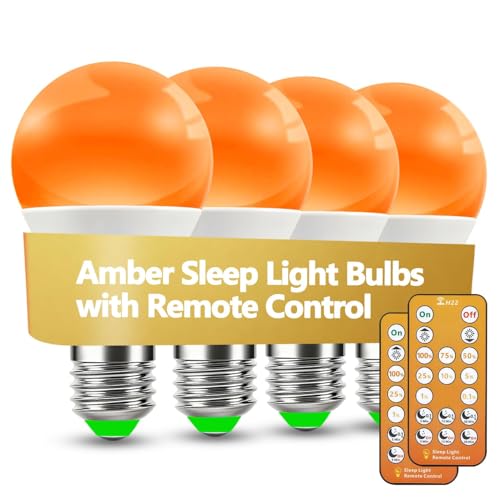
These amber sleep light bulbs work especially well for people sensitive to blue light, since Wivety’s 1600K LED bulbs emit 99.95% less blue light than standard LEDs, which helps support natural melatonin release in the evening. I use these 9W bulbs in my bedroom and nursery because they give off only 0.04% blue light, creating a truly sleep-friendly environment. At 800 lumens and 1600K, the warm amber glow feels calming, and the flicker-free design reduces eye strain. With the remote, I adjust brightness down to 0.1% and choose from six sleep modes that dim gradually. They’re pediatrician-recommended, easy to install, and energy-efficient.
Best For: Individuals seeking sleep-friendly lighting who are sensitive to blue light, including parents creating a calming nursery environment or adults supporting natural melatonin production.
Pros:
- Emits 99.95% less blue light, promoting melatonin release and supporting circadian rhythm
- Flicker-free design and remote-controlled brightness down to 0.1% for personalized, eye-friendly ambiance
- Pediatrician-recommended with six pre-set sleep modes and gradual dimming for improved sleep readiness
Cons:
- Limited to indoor use and requires AC power between 100–120V, reducing portability
- Amber 1600K color temperature may be too dim or warm for daytime or task lighting needs
- Remote control functionality may not appeal to users preferring smart home integration or app control
Neporal Amber Sleep Light Bulbs (4-Pack)
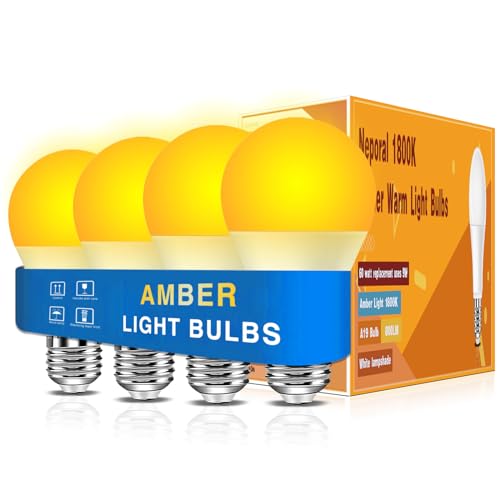
You’ll want amber light if your evenings involve screen use or trouble winding down, and the Neporal Amber Sleep Light Bulbs deliver with a 1800K warm orange glow that blocks 99.94% of blue light, helping signal your body to produce melatonin naturally. I find these bulbs easy to use-just screw them into any E26 socket, like bedside or nursery lamps. They give off 800 lumens, so they’re bright enough to read by, without straining your eyes, thanks to flicker-free, glare-free light and a CRI above 80. At 9W, they use way less power than old 60W bulbs, costing about $1.02 a year. They’re a practical swap for anyone wanting better sleep, especially if you or your kids stay up late reading or using devices.
Best For: Individuals seeking to improve sleep quality by reducing blue light exposure in the evening, especially those who read or use screens at night.
Pros:
- Blocks 99.94% of blue light, promoting natural melatonin production and healthier sleep cycles
- Flicker-free, glare-free warm 1800K light with 800 lumens supports comfortable nighttime reading and reduces eye strain
- Energy-efficient 9W LED uses minimal power (equivalent to 60W incandescent) with a low annual operating cost of $1.02
Cons:
- Amber tint may be too dim or warm for users needing bright, color-accurate lighting for tasks
- Not suitable for settings requiring daylight or neutral white light, such as home offices or kitchens
- Limited to E26 fixtures, which may not fit all global socket types without adaptors
Amber Sleep Light Bulb 2-Pack

Want a sleep-friendly light that won’t disrupt your nightly rhythm? I’ve found the Amber Sleep Light Bulb 2-Pack helps by blocking 99.99% of blue light, which supports melatonin release and keeps your circadian rhythm on track. At 1800K, the warm amber glow feels calming, and the 3W LED uses way less energy than old 25–40W bulbs. It’s flicker-free, glare-free, and emits no UV or harsh light, so it’s gentle on eyes. I use these in my bedroom and nursery-they fit standard E26 sockets. Just check your fixture size. Each bulb lasts about 25,000 hours, and if you have questions, support’s available.
Best For: People seeking a sleep-friendly lighting solution that supports melatonin production and circadian rhythm, especially for use in bedrooms, nurseries, or during nighttime routines.
Pros:
- Blocks 99.99% of blue light to promote natural melatonin release and improve sleep quality
- Energy-efficient 3W LED consumes less power than traditional 25–40W incandescent bulbs
- Flicker-free, glare-free, and emits no UV or harsh blue light, making it safe for eyes and ideal for nighttime use
Cons:
- Non-dimmable, limiting lighting control options for users with dimmer switches
- Amber light may be too dim or warm for tasks requiring brighter or more natural lighting
- Requires E26 base fixtures, which may not be compatible with all lamps or sockets
UNILAMP Amber Sleep Light Bulbs (2 Pack)

If you’re looking to support healthier sleep by reducing exposure to blue light in the evenings, the UNILAMP Amber Sleep Light Bulbs (2 Pack) offer a practical solution designed with both biology and comfort in mind. I use these 9W LED bulbs in my bedroom and nursery because they emit a warm 1900K amber glow, are 99.94% free of blue light, and help signal my body to wind down. They’re dimmable, non-flickering, and work well in table and floor lamps, creating a calm atmosphere. With 300 lumens and an E26 base, they fit most fixtures, use little energy, and last a long time-ideal for anyone prioritizing restful sleep without sacrificing functionality.
Best For: Individuals seeking to improve sleep quality by minimizing blue light exposure in the evenings, especially those using bedroom or nursery lighting for a calming, restful environment.
Pros:
- Emits a warm 1900K amber glow that’s 99.94% free of blue light, supporting natural melatonin production and healthy sleep cycles
- Dimmable and non-flickering with 300 lumens of soft light, ideal for creating a cozy atmosphere in bedrooms or nurseries
- Energy-efficient 9W LED with E26 base fits most lamps and fixtures, offering long-lasting, low-cost operation
Cons:
- Lower brightness (300 lumens) may not be sufficient for tasks requiring strong illumination
- Amber-tinted light may feel too dim or warm for users preferring neutral or bright lighting in the evening
- Only available in a two-pack, limiting flexibility for single-bulb needs or varied lighting setups
LED Red Sleep Light Bulbs (4-Pack)

Because red light at 630nm has been shown to support natural melatonin production by blocking sleep-disrupting blue and green wavelengths, I find these LED red sleep bulbs especially helpful if I’m sensitive to light at night or trying to strengthen my circadian rhythm. They emit zero blue or green light, which helps reduce eye strain and signals my brain it’s time to wind down. With smooth dimming from 0% to 100%, they work well in bedside lamps or nurseries, and fit standard E26/E27 bases. The 5W LED uses far less energy than older incandescent bulbs but still gives warm, calming light. I’ve used them for nighttime reading and baby care without disrupting sleep. They’re built to last, and if anything goes wrong, support responds quickly-making them a reliable choice for better sleep habits.
Best For: People who are sensitive to light at night or looking to support melatonin production and strengthen their circadian rhythm with red light that blocks sleep-disrupting blue and green wavelengths.
Pros:
- Emits 630nm red light that blocks 100% of blue and green spectrum, promoting better sleep and reducing eye strain
- Fully dimmable from 0% to 100% and compatible with most LED dimmers and standard E26/E27 bases
- Energy-efficient 5W LED design provides long-lasting performance and reliable support for nighttime use without disrupting sleep cycles
Cons:
- Red light may not be ideal for tasks requiring true color visibility or bright white light during evening hours
- Dimming performance may vary with incompatible or low-quality dimmer switches
- Limited use outside of nighttime applications due to the specialized red spectrum output
630nm Red Sleep Bulb (4-Pack)
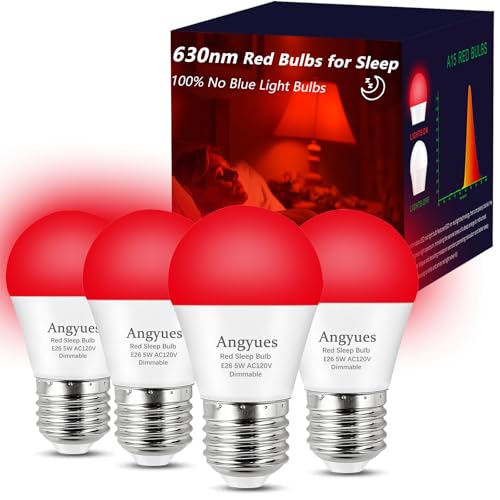
The 630nm Red Sleep Bulb (4-Pack) works best for people sensitive to light at night, especially those supporting a natural sleep cycle or caring for infants. I use these bulbs because they emit pure red light that blocks blue and green wavelengths, helping my body produce melatonin naturally. Each 5-watt LED gives 130 lumens-dim but enough for nighttime visibility without disruption. They’re dimmable, flicker-free, and fit standard E26 sockets in lamps or nightlights. I’ve tried them in bedrooms and nurseries with smooth, instant-on results. They’re energy-efficient, plastic-bodied, and work on 110–120 volts. I appreciate the 30-day return option through Amazon if they don’t suit your space.
Best For: People sensitive to light at night, including those supporting a natural sleep cycle or caring for infants.
Pros:
- Emits 630nm pure red light that blocks sleep-disrupting blue and green wavelengths, promoting melatonin production
- Dimmable 0%–100% with flicker-free, instant-on performance and energy-efficient 5-watt operation
- Fits standard E26 sockets in bedrooms, nurseries, and ambient fixtures; compatible with most LED dimmers
Cons:
- Low brightness at 130 lumens may not suit tasks requiring clear visibility
- Plastic construction may feel less durable compared to glass bulbs
- Only suitable for 110–120 volt systems, limiting use in regions with higher voltage standards
Amber Sleep Light Bulbs 4-Pack
I rely on amber light to wind down, and these Amber Sleep Light Bulbs 4-Pack deliver exactly that with their 1800K ultra-warm glow-blocking 99.9% of blue light to support natural melatonin release. They’re dimmable from 100% to 0%, work with most LED dimmers, and run flicker-free, so I can adjust brightness without eye strain. At 5W, they save energy while giving off light like a 40W incandescent. The A15 size with E26 base fits my bedside and nursery lamps. I use them nightly for reading or calming activities, and they’ve helped keep my sleep routine steady. They come with a 12-month warranty and direct support if needed.
Best For: People seeking a blue light-free lighting solution to support melatonin production, improve sleep quality, and maintain circadian rhythm in bedrooms, nurseries, or nighttime reading environments.
Pros:
- Emits 1800K warm light, blocking 99.9% of blue spectrum to support natural melatonin release and healthy sleep
- Fully dimmable from 100% to 0% with flicker-free, glare-free performance compatible with most LED dimmer switches
- Energy-efficient 5W LED equivalent to 40W incandescent, with A15 size and E26 base for wide fixture compatibility and 12-month warranty
Cons:
- Limited to warm ambient lighting, not suitable for tasks requiring bright, cool, or natural daylight illumination
- Dimming performance may vary with incompatible or low-quality dimmer switches
- A15 size may be smaller than expected for fixtures requiring larger bulb shapes
Factors to Consider When Choosing Light Bulbs for Sleep
You’ll want to pick bulbs with a warm color temperature, usually below 2700K, since cooler tones can interfere with your body’s melatonin production. Look for options that cut blue light entirely and offer smooth dimming, so you can lower brightness in the evening without flickering. A flicker-free design and a color spectrum that supports your natural sleep-wake cycle can make a real difference, especially if you’re sensitive to light or managing sleep issues.
Color Temperature Selection
Many sleep-friendly bulbs offer a color temperature between 1600K and 1900K, closely resembling the warm glow of a natural sunset and reducing exposure to blue light. You’ll find this range helps your body wind down by signaling retinal melanopsin receptors, which regulate circadian rhythms. Bulbs below 2000K minimize blue spectrum light, supporting natural melatonin production. For evening use, avoid anything above 2200K-higher temperatures can suppress melatonin and delay sleep onset. At 1600K–1900K, you still get enough light for quiet activities like reading or relaxing without disrupting your sleep cycle. These warmer tones create a calming ambiance that aligns with your body’s natural shift into rest mode. Look for labels clearly stating color temperature, and if possible, test bulbs with a dimmer to customize brightness. Many come with trial periods, so you can assess how well they fit your routine.
Blue Light Elimination
Bulbs that cut out blue light work by limiting the specific wavelengths that interfere with your body’s ability to prepare for sleep. You’ll want bulbs emitting less than 0.1% blue light to minimize melatonin suppression. Look for models with color temperatures between 1600K and 1900K, giving off warm amber or red light that mimics sunset. These hues reduce circadian disruption, especially when both blue and green wavelengths are removed-critical because your eyes’ melanopsin receptors react to both, slowing melatonin release. For best results, choose flicker-free, glare-free LEDs designed to avoid neural stimulation. Some bulbs use 630nm red light, blocking 100% of blue and green for maximum melatonin protection. These features are built into durable, low-heat LED designs, many with solid warranties. Test them in bedside or nightlights first to gauge comfort.
Dimmability For Evening Use
While winding down in the evening, choosing dimmable bulbs gives you control over light intensity, letting it fall as low as 0.1% brightness to match your body’s natural shift toward sleep. You can smoothly lower light levels from 100% to mimic sunset, supporting your circadian rhythm. Opt for dimmable amber or red bulbs with color temperatures below 1900K-they cut blue light while letting you adjust brightness for reading or moving at night. Look for bulbs labeled as compatible with LED dimmer switches; mismatched components can limit dimming range or cause unstable performance. Quality models use flicker-free dimming tech for stable output, though that topic deserves its own focus. Test bulbs in your setup, as real-world performance varies. Many come with trial periods or warranties, so you can verify dimming behavior in your home without risk.
Flicker Free Performance
Though you might not see it, flicker in LED bulbs can still affect your sleep and comfort, so choosing flicker-free models makes a real difference when winding down. These bulbs eliminate rapid brightness shifts that strain your eyes and may disrupt rest, even if you don’t notice them. Flicker-free LEDs use stable current drivers to prevent the 100–120 Hz flashes common in cheap or dimmed lights. Prolonged exposure can lead to headaches, fatigue, and poorer sleep quality, especially at night. Since inconsistent light can interfere with your body’s natural wind-down process, aim for bulbs with a flicker index below 0.05 and less than 5% flicker. These specs mean smoother, more reliable performance. Look for brands that list flicker metrics or offer trial periods, so you can test them risk-free. High-quality flicker-free bulbs support visual comfort and steady routines, helping you stay relaxed and ready for sleep.
Circadian Rhythm Support
When winding down in the evening, the color and quality of your light play a key role in supporting your body’s internal clock, so choosing bulbs that align with your circadian rhythm makes a meaningful difference. You’ll want bulbs with a color temperature between 1600K and 1900K-amber or red-toned lights that mimic sunset and reduce melatonin disruption. Look for options emitting less than 0.05% blue spectrum to minimize stimulation of light-sensitive melanopsin receptors. Pair this with dimmable bulbs that go as low as 1% brightness, letting you gradually ease into rest. Flicker-free and glare-free performance remains essential, too, since even subtle visual disturbances can delay sleep onset. These features work together to support natural alertness decline. When shopping, check product specs for color tuning and dimming range-many offer trial periods, so test what fits your nightly routine best.
Frequently Asked Questions
Do These Bulbs Work With Dimmer Switches?
Yes, you can use these bulbs with dimmer switches, but only if both the bulb and dimmer are labeled as compatible. Most LED sleep bulbs require trailing-edge dimmers to work smoothly. Using an incompatible setup may cause flickering or shorten bulb life. Always check the packaging or manufacturer’s website for dimmer compatibility lists. Some brands offer a trial period, so test them in your fixture. If issues arise, you can return them-just confirm warranty terms before buying.
Can I Use Them in Enclosed Fixtures?
Yes, you can use them in enclosed fixtures, but only if the bulb packaging or specs list “enclosed fixture rated.” Heat builds up in enclosed spaces, and not all LEDs handle it well. Check the product details for thermal tolerance and safety certifications. Using a non-rated bulb in an enclosed fixture shortens its lifespan and may void the warranty. When in doubt, choose a model clearly labeled for enclosed use-it’s safer and saves you money long term. Try a single bulb first to test performance.
Are They Safe for Children’s Rooms?
Yes, they’re safe for children’s rooms. You’ll find they emit low blue light, which helps protect natural melatonin levels. Most use LED tech with cool-to-touch surfaces, reducing burn risks. They’re encased in shatter-resistant materials, too. You can use them in standard or enclosed fixtures without overheating. Look for bulbs with ETL or UL certification to guarantee electrical safety. Try brands offering 1- to 2-year warranties for peace of mind.
Do They Emit Any UV Radiation?
No, they don’t emit UV radiation-you can use them safely around skin and eyes. Most are LED-based, which means no ultraviolet output by design. Their construction filters out harmful wavelengths, focusing instead on warm, low-blue light that supports natural melatonin release. Since they’re built for evening use, performance stays consistent without degrading materials over time. Check warranty terms, but many brands offer 3–5 year coverage, so you can test them risk-free in kids’ rooms or bedrooms.
How Long Do These Bulbs Typically Last?
They typically last between 15,000 and 25,000 hours, so you won’t replace them often. Built with durable LED components, they handle daily use well and maintain consistent light output over time. Most come with a 3- to 5-year warranty, letting you test them safely. Since they use little energy and generate minimal heat, they’re both efficient and safe near bedtime. Check reviews for real-world performance, especially dimming quality and color accuracy.