How Advanced Sleep Phase Disorder Affects Social Engagement in the Evening
You might feel a strong urge to sleep by 8 p.m. due to Advanced Sleep Phase Disorder, making evening social events hard to join. Your body releases melatonin earlier, so staying awake feels exhausting, no matter how much you want to participate. This early rhythm can lead to missed dinners or gatherings, slowly reducing invitations. Others may misunderstand your absence as disinterest, not a biological need. You can still connect through early meetups or video chats-finding a better balance is possible, and there’s more to discover about managing this pattern effectively.
Notable Insights
- People with ASPD feel overwhelming fatigue by early evening, making it hard to stay awake for social events.
- Sleep onset occurs between 6 p.m. and 9 p.m., limiting availability for typical evening gatherings.
- Early wake times, often by 3 a.m., disrupt plans and reduce energy for nighttime activities.
- Frequent absence from evening events leads to fewer social invitations and increased isolation.
- Misunderstanding by others about the condition can result in stigma or assumptions of disinterest.
What Is Advanced Sleep Phase Disorder (ASPD)?
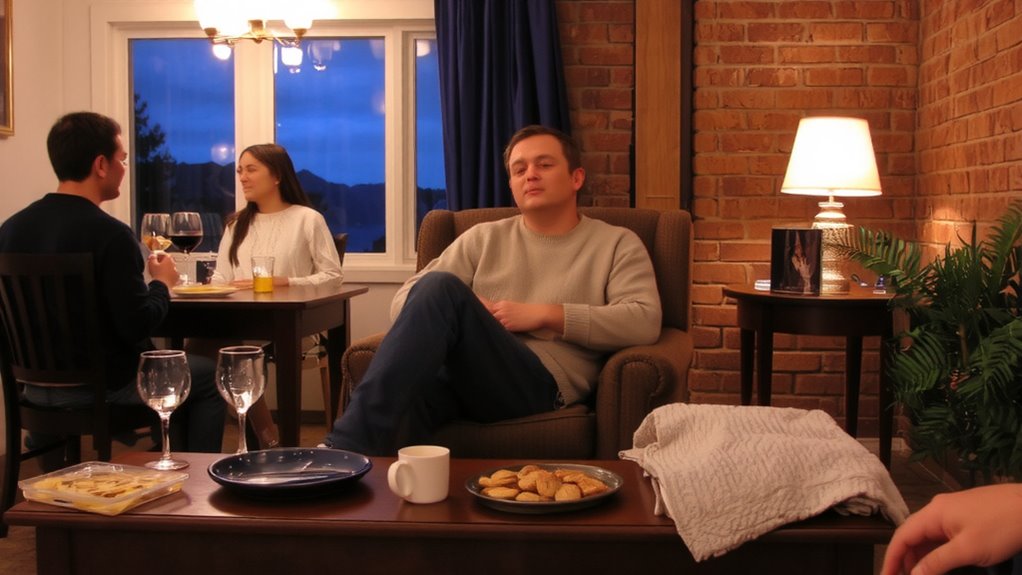
Ever wonder why you’re feeling exhausted by 8 p.m. while others are just starting their evening? You might have Advanced Sleep Phase Disorder (ASPD), a condition where your circadian rhythm shifts earlier than typical. This means your body naturally signals sleep onset in the late evening-often between 6 p.m. and 9 p.m.-and you wake up extremely early, like 2 a.m. or 3 a.m. Unlike occasional tiredness, ASPD is consistent and can disrupt social plans, work routines, and relationships. It’s linked to genetics and more common in older adults, though it can appear earlier. Light therapy in the evening, timed melatonin use, and behavioral adjustments may help delay sleep onset. These options target the circadian rhythm gently. Talk to a sleep specialist to confirm diagnosis and explore treatments. Understanding your sleep pattern helps you make informed choices about managing your nights and days.
Why Staying Up Past 8 PM Feels Physically Impossible
Fatigue isn’t just a feeling when you have Advanced Sleep Phase Disorder-it’s a biological signal your body can’t ignore. By 8 PM, you’re already battling overwhelming biological fatigue, a deep exhaustion driven by your body’s internal clock shifting forward. Your melatonin rises earlier, making sleepiness feel urgent and unavoidable. This isn’t laziness-it’s circadian misalignment, where your sleep-wake cycle runs out of sync with societal norms. Trying to stay awake past your natural rhythm is like swimming against a current. Lights, screens, or caffeine might help temporarily, but they don’t reset your core clock. Light therapy in the morning or carefully timed melatonin supplements could help adjust timing, though results vary. Discussing options with a sleep specialist guarantees safer, personalized choices based on your biology and lifestyle needs.
How ASPD Causes Social Isolation
Why does an early bedtime gradually shrink your social circle? Your sleep patterns shift so early that by 7 PM, you’re fighting exhaustion while friends are just starting evening plans. Over time, you decline dinners, concerts, and gatherings-not by choice, but because your body won’t cooperate. This consistent absence leads to fewer invitations and weaker social ties. Even when present, you may leave early, reinforcing a pattern of withdrawal. A misunderstood condition like Advanced Sleep Phase Disorder (ASPD) often carries a social stigma; others assume you’re disinterested or antisocial, not that your biology drives the need to sleep. Misinterpretations strain relationships. To manage, consider structured light therapy in the evening, which can mildly delay melatonin release. Discuss prescription options with a sleep specialist. Some treatments include timed melatonin supplements, backed by clinical trials and covered under certain insurance plans with proper diagnosis.
Why People Misjudge Your Early Bedtime
How is it that something as natural as feeling tired by 8 p.m. can be seen as unusual or even rude? Others may not understand your biology and instead apply personal judgment, mistaking your need for rest as disinterest or laziness. This misunderstanding fuels social stigma around early bedtimes, especially when evening events are the norm. You’re not choosing to opt out-your body clock is simply set differently.
| What They Assume | What’s Actually Happening |
|---|---|
| You’re bored | You’re battling sleep signals |
| You’re antisocial | You’re managing a sleep disorder |
| You’re lazy | You’re responding to biology |
Recognizing this gap helps clarify that criticism often comes from ignorance, not evidence. Sleep isn’t a choice for everyone-sometimes, it’s a biological timeline you can’t reset.
How to Stay Connected Without Fighting Your Body Clock
You can still enjoy time with friends and family even if your body starts winding down early. Planning around your natural rhythm helps you stay engaged without strain. Consider attending early events, like dinners or gatherings that start before 7 PM-many people appreciate the earlier schedule. You’ll be more alert and present, making the experience better for everyone. Virtual hangouts are another smart choice. You can join a video call from home at 8 or 9 PM without fighting drowsiness, and still feel included. These online moments let you maintain connections with little physical effort. Some find scheduling social time earlier in the week helps, too. By aligning social plans with your body clock, you support both rest and relationships. It’s about working with your biology, not against it.
When to Seek Help for Advanced Sleep Phase Disorder
| Symptom | Impact | Action |
|---|---|---|
| Falling asleep before 8 PM | Missed dinners or gatherings | Discuss sleep therapy |
| Waking before 4 AM | Daytime fatigue | Seek medical consultation |
| Inability to stay awake past 9 PM | Strained relationships | Evaluate treatment options |
| Persistent for months | Reduced quality of life | Consider professional help |
On a final note
You might feel isolated if your body forces you to sleep early, but understanding ASPD helps you make smarter choices. Adjusting social plans to fit your rhythm, not fighting it, keeps connections strong. Simple changes-like prioritizing daytime gatherings or using bright light therapy-can improve balance. If symptoms disrupt your life, talk to a doctor about evaluations or treatment options, including light boxes or melatonin, often covered under medical plans with a diagnosis.