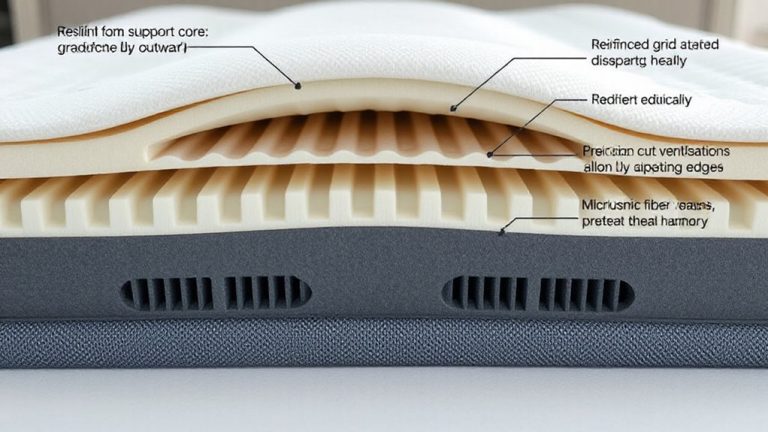
Why All-Foam Models Outperform Traditional Springs in Continuous Lumbar Hugging
You get better lumbar support from all-foam mattresses because they hug your spine evenly, not just at one point like sagging coils often do. Memory and polyfoam layers adapt to your body’s shape, keeping your lower back aligned all night. They resist sinkage over time, unlike springs that wear out and lose support. With consistent contouring and strong edge support, these models help reduce aches. Choose one with a long warranty and trial to test durability and comfort for your sleep style. You’ll discover even more benefits the more you explore.
Notable Insights
- All-foam mattresses maintain consistent lumbar support by conforming closely to the spine’s natural curves.
- Foam materials like memory and latex adapt dynamically, ensuring uninterrupted spinal alignment during sleep.
- Unlike coils, high-density foams resist sagging and retain structural integrity for long-term lumbar hugging.
- Foam evenly distributes body weight, reducing pressure on the lower back and minimizing misalignment.
- All-foam designs eliminate sleep-disrupting motion transfer, supporting stable, continuous lumbar support.
Why Lumbar Support Is Crucial for Pain-Free Sleep
While you’re likely aware that poor sleep can worsen back pain, you might not realize how much your mattress’s lumbar support affects your rest. Proper support maintains sleep posture and guarantees correct back alignment, reducing strain on muscles and joints. When your spine stays neutral through the night, you wake with less stiffness and fewer aches. Without it, even side sleeping can pull your lower back out of position. Memory foam and latex models contour closely, supporting your body’s natural curves better than layered coils. These all-foam designs respond to your shape without sagging quickly, offering consistent relief. Many come with trial periods and long warranties, letting you test comfort risk-free. Choosing a mattress isn’t just about feel-it’s about long-term spinal health. Prioritizing lumbar support means better alignment, which supports deeper, uninterrupted sleep. Small differences in firmness or material can make a big impact on how you feel each morning. For those suffering from sacroiliac joint dysfunction, the right mattress can significantly reduce discomfort, with top models specifically designed for SI joint pain relief.
Why Spring Mattresses Fail Your Lower Back
Spring mattresses often fail to deliver the consistent lumbar support your lower back needs, especially over time. As coils wear down, coil degradation sets in, reducing the mattress’s ability to maintain proper spinal alignment. You might not notice it at first, but over months or years, sagging areas form, particularly where support matters most. This uneven surface can strain your lower back muscles and ligaments, especially if you sleep in the same position nightly. Traditional springs also transfer movement easily, meaning poor motion isolation-your partner’s shifts can disrupt your sleep and affect spinal stability. Unlike models with responsive materials, coil systems often lack conformity to your body’s unique curves. Over time, this leads to discomfort, not relief. If you’re seeking consistent support and minimal sleep disruption, it’s worth considering how construction impacts long-term performance. Check trial periods and warranties to assess durability claims.
How Foam Mattresses Hug Your Spine Just Right
Ever wonder why so many people wake up feeling more rested on foam? It’s because foam mattresses contour closely to your body, supporting natural spinal alignment no matter your sleeping position. Unlike springs, foam responds evenly, delivering consistent pressure distribution across your back and hips. This means less strain on your lower spine and fewer chances of waking stiff or sore. High-density foams, especially memory and polyfoam layers, adapt to your shape without sinking too deeply. They cradle your curves just enough to keep your spine neutral, which is key for long-term comfort and healthy sleep posture. Most all-foam models maintain this support for years, with many offering 10–15 year warranties. You can also try them risk-free during extended sleep trials, usually 100 nights or more. That gives you time to really assess how well they hug your spine and improve rest.
Why Foam Eliminates Pressure Points All Night
What if your mattress could actually reduce the aches that keep you awake? All-foam models do just that by evenly distributing your weight through consistent body contouring. Unlike springs, foam cradles pressure points like hips and shoulders, easing strain without pushing back too hard. This means less tossing and turning, especially if you sleep on your side or back. Foam’s structure also provides excellent motion isolation, so if someone else shares the bed, you won’t feel their movements. That’s key for uninterrupted sleep cycles and managing insomnia. High-density foams maintain support all night, while softer layers conform closely without sagging. Look for models with CertiPUR-US-certified foams for durability and low off-gassing. Most come with sleep trials and warranties, letting you test comfort risk-free. With steady support and fewer disturbances, foam helps maintain restful sleep from nightfall to morning. Top-rated best foam mattresses deliver this advanced pressure relief and long-term comfort.
How to Choose a Foam Mattress That Truly Supports You
You’ve likely noticed how foam minimizes pressure and keeps sleep undisturbed, but the real difference shows when you pick a model built for your body’s needs. Look for foam density and layering that match your weight and sleep position. Higher-density foams offer better durability and support, especially for back and stomach sleepers. Side sleepers benefit from softer top layers that cradle joints. Check edge support-stronger edges help you sit or sleep near the perimeter without sagging. Motion isolation is key if you share the bed; quality foam absorbs movement so you’re less likely to wake each other. A good trial period and warranty protect your investment. Top-rated models often feature all-foam construction for enhanced spinal alignment and pressure relief.
On a final note
You’ll sleep better when your spine stays aligned, and all-foam mattresses often do this more consistently than spring models. They contour closely, reduce pressure on your lower back, and limit motion transfer. Look for memory or polyfoam with a supportive core, a trial period of at least 100 nights, and a warranty of 10 years. These features help you test comfort safely and make a long-term choice that supports both your back and your sleep quality.