How to Use Light Blocking Curtains To Minimize External Interference During Slumber
You can minimize light disruption during sleep by choosing light blocking curtains with tight-weave, opaque fabrics like blackout polyester or triple-weave materials that stop external light effectively. Install the rod several inches beyond the frame, ensuring full coverage and floor-length overlap to block gaps. Use side flaps or blackout tape to seal edges and prevent leaks. Look for models with warranties or trial periods to test performance. Better darkness supports natural melatonin release, so pairing these curtains with consistent sleep habits improves overall sleep hygiene-especially if you’re sensitive to early light.
Notable Insights
- Install curtains with rods extending beyond the window frame to prevent light gaps on the sides.
- Choose high-density, blackout-rated fabrics like triple-weave polyester for complete light blockage.
- Ensure curtains are wide and long enough to fully cover the window and reach the floor.
- Seal edges using built-in flaps, velcro, or blackout tape to eliminate light leaks at the sides.
- Test the room at night with external lights to identify and fix any remaining light seepage.
Why Light Blocking Curtains Improve Sleep Quality?
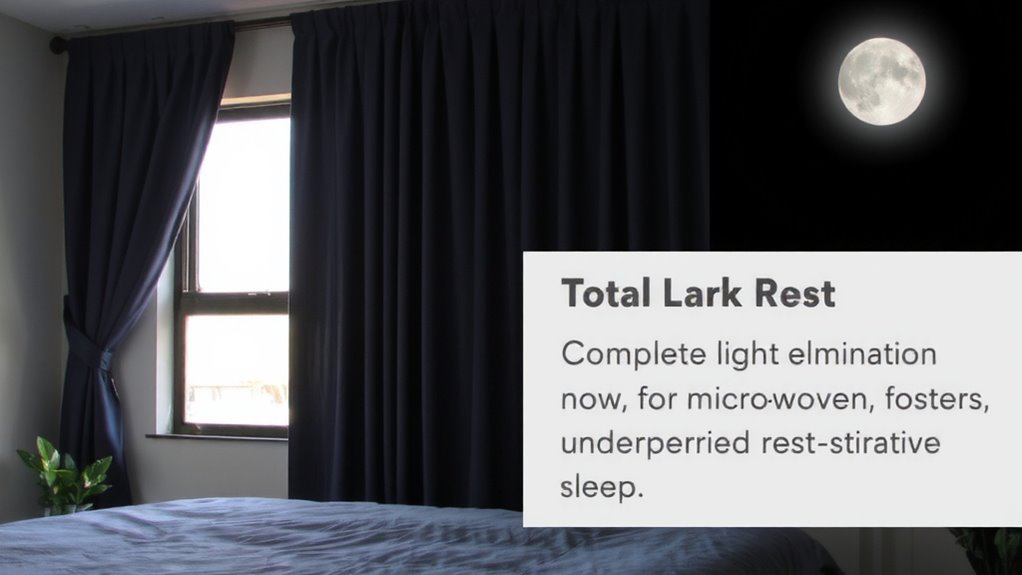
Have you ever wondered why sleeping in a pitch-dark room feels so much more restful? That’s because darkness supports your circadian rhythm, your body’s internal clock that regulates sleep and wake cycles. When your environment stays dark at night, your brain boosts melatonin production, the hormone that signals it’s time to sleep. Even small amounts of light-like from streetlights or early morning sun-can disrupt this process, making it harder to fall or stay asleep. Light blocking curtains help by creating near-total darkness, improving conditions for natural melatonin production. They’re typically made with tightly woven, layered fabrics that stop light from seeping through. Unlike regular drapes, they’re designed for performance, often including a backing layer that enhances insulation too. Many come with trial periods, so you can test their impact on your sleep. Using them supports healthier sleep patterns without medication or complex routines. For best results, consider choosing the best blackout curtains based on fabric density and light-blocking certifications.
Pick the Right Light Blocking Curtains for Your Room?
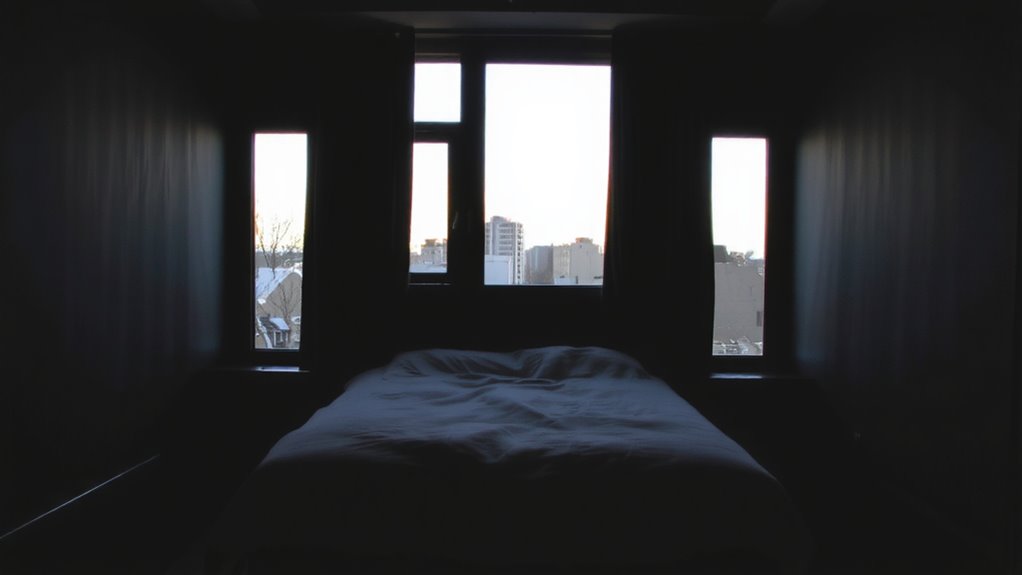
How do you find light blocking curtains that truly work for your bedroom? Start by measuring your window size and checking for side gaps that might let light sneak in. Look for curtains with a tight weave and a blackout backing-these block light most effectively. You’ll want multiple color options so the curtains match your room aesthetics without clashing. Deeper hues often absorb more light, but lighter shades work if layered properly. Make sure the fabric isn’t too thin; hold it up to a lamp-if you see bright spots, it might not be enough. Many brands offer trial periods or warranties, so test them in your space. Check if they require special care, since durability affects long-term use. The right fit and finish help support consistent sleep, especially if you’re managing sensitivity to light. For maximum effectiveness, consider best blackout curtains designed specifically for creating a dark, quiet sleeping environment.
Best Materials That Actually Block Light?
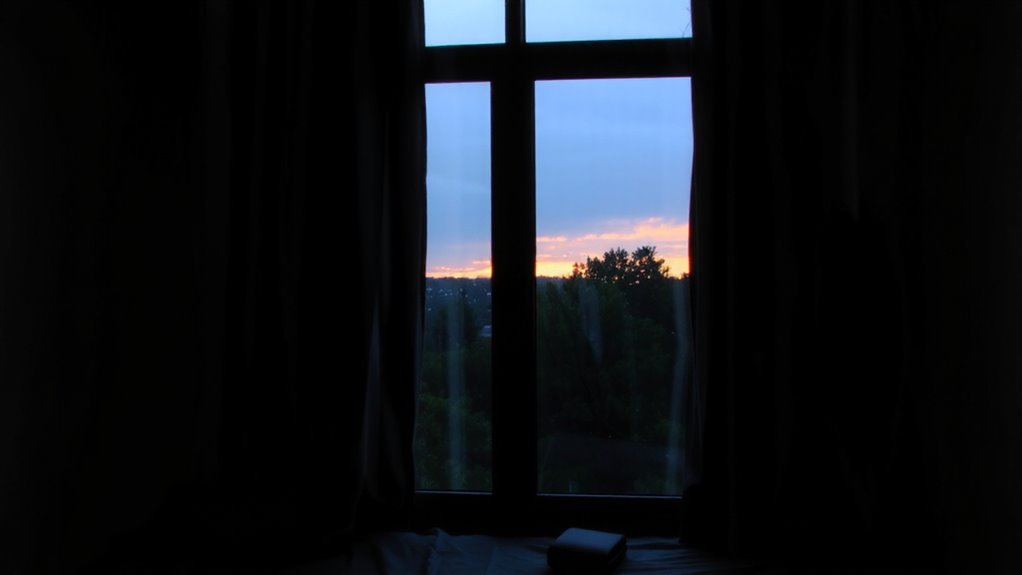
While you might think all thick curtains block light equally, the truth depends on the material’s construction and layers. For real darkness, you need high fabric density and full material opacity. Blackout polyester or triple-weave fabrics are top choices-they’re tightly woven to stop light leaks. Many also include a special coating that boosts opacity without sacrificing drape. Thermal-backed options add insulation, which can help regulate room temperature for better sleep. Look for curtains labeled “100% blackout,” but remember that small variances in weave or thickness affect performance. Some brands offer sample swatches or trial periods, so you can test opacity before committing. Machine-washable materials save time, but check care labels-some coatings degrade with harsh detergents. A warranty of at least one year suggests confidence in durability. Choose based on your need for darkness, ease of care, and sensitivity to early light exposure. The right blackout curtain rods can significantly enhance light blockage by ensuring proper coverage and minimizing gaps at the edges.
Install Curtains for Full Window Coverage?
You’ve picked the right fabric, but even the best blackout material won’t help if it doesn’t cover the window completely. Proper window frame alignment guarantees no light sneaks in around the edges. Mount the curtain rod a few inches beyond the frame on each side, so the fabric overlaps when closed. This boosts light blockage, especially during early sunrise. For maximum coverage, pay close attention to curtain length. Too short, and light enters at the sill; too long, and pooling fabric can trap moisture or create tripping hazards. A length that just kisses the floor or has a slight break is ideal. Full coverage supports better sleep hygiene, especially for those managing light-sensitive sleep disorders. Test different placements if needed-many brands offer trial periods, so you can adjust without risk. Proper installation enhances performance, making your sleep space more consistent and restful.
How to Seal Gaps and Stop Light Leaks?
A well-sealed sleep environment starts with closing the gaps that let light creep in around the edges of your curtains. Edge sealing is key-look for curtains with built-in side flaps or attachable velcro strips that press against the wall or window frame, blocking slivers of light. Side flaps extend the curtain’s coverage beyond the rod, sealing off gaps at the edges where light often leaks. Some models include weighted hems or magnetic strips for tighter closure. Make sure the fabric overlaps the window frame by at least 2–3 inches on all sides. If your curtains don’t come with flaps, you can add them using adhesive blackout tape or separate side channels. Test the seal at night with lights on outside or passing cars. A snug fit means less visual disruption, which may help reduce nighttime awakenings. Check warranty details-some brands offer trial periods so you can test performance before committing.
Pair Curtains With Other Sleep Aids for Better Results?
Many people find they sleep better when combining light blocking curtains with other sleep aids, since darkness alone isn’t always enough to support deep, uninterrupted rest. Smart lighting and sound integration can enhance your sleep environment by syncing with your circadian rhythm and masking disruptive noise. Consider pairing your curtains with a dimmable smart bulb that mimics sunset or a white noise machine for consistent background sound.
| Sleep Aid | Benefit |
|---|---|
| Smart lighting | Gradually reduces light to signal bedtime |
| White noise machine | Improves sound integration for steady ambiance |
| Blackout curtains | Blocks 99% of external light |
| Sleep tracker | Monitors rest patterns and effectiveness |
Using these tools together creates a controlled, calming bedroom. Most devices offer trial periods, so test combinations to see what works best for your sleep routine.
On a final note
You’ll sleep better when light is fully blocked, and the right curtains make a real difference. Choose tightly woven, thick fabrics like polyester or blackout-lined materials that stop light leaks. Make sure they extend beyond the window frame and touch the floor to seal gaps. Proper installation matters-use overlap and side tracks if needed. Pair them with earplugs or a white noise machine if you’re sensitive to sound. Test models with a warranty so you can compare performance risk-free.