Sleep Aids That Promote Restful Nights Without Side Effects
You can get restful sleep without harsh side effects by choosing natural aids that work with your body. Valerian root and passionflower help calm your mind, while magnesium relaxes nerves and melatonin supports your sleep-wake cycle. Doses like 200–400 mg of magnesium or 0.5–5 mg of melatonin are common starting points. Pair these with habits like limiting screens and keeping a consistent bedtime. Devices like blue light blockers or sleep trackers may also help-options with long battery life and comfortable wear tend to work best over time. More details on matching solutions to your routine follow.
Notable Insights
- Natural sleep aids like valerian root and passionflower support restful sleep without next-day grogginess or dependency.
- Magnesium calms the nervous system and helps regulate brain chemistry for improved sleep quality.
- Low-dose melatonin (0.5–5 mg) helps signal nighttime, aligning your natural sleep-wake cycle.
- Herbal remedies increase GABA levels or reduce awakenings, promoting deeper, uninterrupted sleep.
- Consistent bedtime routines and blue light blockers enhance sleep hygiene without side effects.
Why Natural Sleep Aids Are a Safer Choice

A natural sleep aid might be your best option if you’re looking for relief from occasional sleepless nights without the risk of next-day grogginess or dependency. You probably want something that supports rest without harsh side effects. Unlike prescription medications, many natural options show better long term safety, making them suitable for occasional use over time. You won’t face the same risk of chemical dependency, which is a concern with some stronger sleep drugs. These aids often rely on body-friendly ingredients that work with your natural sleep cycle. They’re designed to gently encourage relaxation, not force sedation. While results can vary, trying one with clear labeling and a solid return policy lets you assess it without pressure. Always check with your doctor, especially if you have existing conditions or take other meds. It’s about finding balance-effective support without overreliance. Popular options include best natural sleep aids that combine herbal extracts and melatonin for enhanced effectiveness.
Herbal Remedies That Promote Calm Sleep
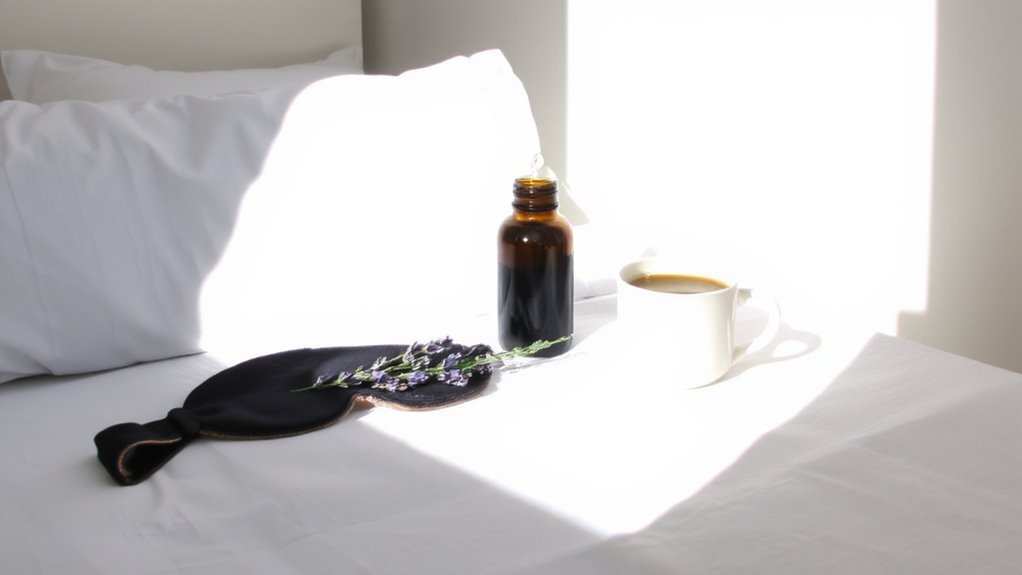
You’ve probably considered natural sleep aids because they tend to be gentler on your system, and now it’s worth looking at specific herbal options that support a calm, restful night. Valerian root has been studied for its ability to improve sleep quality, often helping you fall asleep faster and stay asleep longer. It works by increasing levels of GABA, a brain chemical that helps regulate nerve impulses. Passionflower extract is another herb shown to reduce nighttime awakenings and support deeper sleep, especially in people with mild sleep disturbances. Both are available in teas, capsules, or tinctures, allowing you to choose your preferred form. Though results can take a few days to become noticeable, many find these herbs effective with regular use. Always check with your doctor before starting any new supplement, especially if you take other medications. For trusted options, consider checking out Top Herbal Supplements recommended by experts.
How Magnesium and Melatonin Help You Sleep
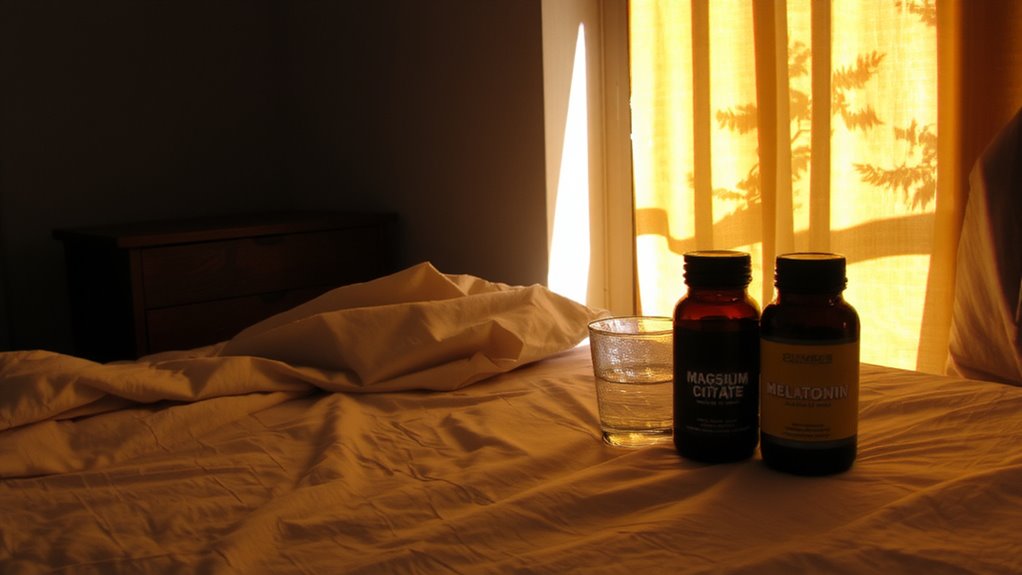
While your body relies on natural rhythms to signal bedtime, magnesium and melatonin play key roles in making that process run smoothly. Magnesium supports brain chemistry by calming nerve activity, helping you unwind. Melatonin, a hormone involved in sleep-wake cycles, aids hormone regulation, especially when your internal clock is off. Together, they promote rest without harsh side effects. For best results, understand how each supplement works in your body. High-quality melatonin supplements can make a significant difference in sleep consistency and overall effectiveness.
| Supplement | Role in Sleep | Typical Use |
|---|---|---|
| Magnesium | Eases muscle tension, stabilizes brain chemistry | 200–400 mg before bed |
| Melatonin | Signals nightfall, supports hormone regulation | 0.5–5 mg, low dose first |
| Both | Complementary support | Take together if needed |
| Trial Period | 1–2 weeks | Monitor sleep patterns |
| Warnings | Minor digestive upset or drowsiness | Discontinue if effects persist |
Consult a provider before starting any new sleep aid.
Daily Habits That Improve Sleep Quality
What if better sleep started with the choices you make long before bedtime? Improving sleep hygiene begins with consistent daily habits that set the stage for rest. You don’t need supplements or devices to see results-just small, intentional shifts. Stick to a regular bedtime routine, like dimming lights and reading, to signal your body it’s time to wind down. Avoid heavy meals and caffeine in the evening, and try to finish work tasks earlier in the day. Exposure to natural light in the morning helps regulate your sleep-wake cycle. Even slight changes, like reducing screen time or keeping your bedroom cool and quiet, support deeper rest. Over time, these habits enhance sleep quality without side effects, making it easier to fall and stay asleep. Consistency matters more than perfection-start small and adjust as needed.
Sleep Tech That Actually Works (Like Blue Light Blockers)
How well you sleep might depend on the devices you use before bed, especially those glowing screens that keep you wired when you should be unwinding. Blue light blockers, like amber-tinted glasses or screen filters, reduce exposure that can delay melatonin release, helping you fall asleep faster. They’re simple, affordable, and easy to test-many brands offer 30-day returns. Pair them with sleep tracking apps that monitor your cycles, so you understand your patterns better. Some wearables use this data to time smart alarms, waking you during lighter sleep stages for a gentler start. These alarms won’t cure sleep disorders, but they can improve how you feel in the morning. Sleep tracking isn’t foolproof-accuracy varies by device-but it offers useful insights over time. When choosing tech, look for models with clear data sharing, battery life over two nights, and comfortable fit for consistent use.
On a final note
You’ve got options when it comes to better sleep, from magnesium and melatonin to calming herbs like valerian or chamomile. These aids often have fewer side effects than prescription drugs, but results vary, so start low and go slow. Pair supplements with solid habits-consistent bedtime, screen limits, and dark, cool rooms-for best results. Try blue light blockers a few hours before bed, and check return policies when testing new products.