Exploring the Relationship Between Snoring and Breathing Patterns During Slumber
Snoring often signals restricted airflow due to airway narrowing or tissue vibration during sleep. It can point to breathing disruptions like mouth breathing or, in some cases, obstructive sleep apnea, especially if pauses or gasps occur. Poor breathing efficiency may lower oxygen levels and disturb sleep quality. Nasal strips, CPAP, or anti-snore pillows might help improve airflow. Tracking snoring patterns with wearable sensors can guide whether a deeper look at your sleep health is needed.
Notable Insights
- Snoring often results from restricted airflow due to airway narrowing, causing soft tissue vibration during breathing.
- Breathing efficiency declines when airway resistance increases, particularly during sleep when muscles relax.
- Obstructive sleep apnea involves repeated breathing pauses and gasps, often accompanied by loud snoring.
- Anatomical factors like a deviated septum or enlarged tonsils can disrupt normal breathing patterns and promote snoring.
- Monitoring tools like wearable sensors or audio apps help identify abnormal breathing patterns linked to snoring.
What Snoring Says About Your Breathing at Night
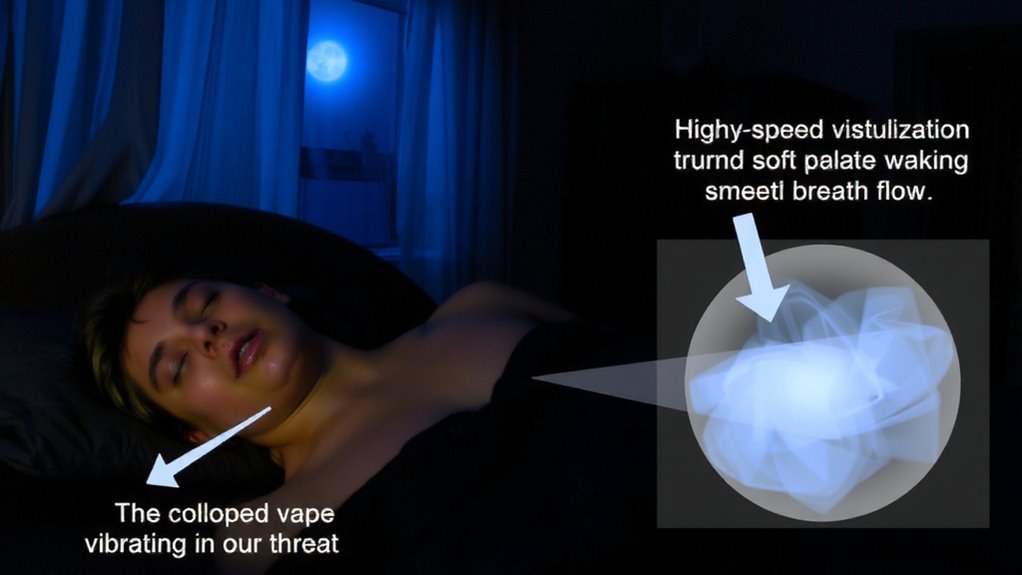
Have you ever wondered why snoring happens in the first place? It often points to reduced breathing efficiency during sleep. When your airway relaxes, airflow resistance increases, disrupting smooth breathing. This causes the familiar snoring sound. It’s not just noise-it can signal how well oxygen moves through your system at night. Poor breathing efficiency may affect sleep quality, leaving you tired even after a full night’s rest. Monitoring your snoring patterns helps assess airflow resistance over time. Some sleep aids, like nasal strips or positional pillows, aim to improve airflow and reduce resistance. Devices such as CPAP machines enhance breathing efficiency for those with sleep-disordered breathing. Many come with trial periods and warranties, so testing one is low-risk. Consider discussing breathing changes with a sleep specialist. Identifying issues early supports better decisions about sleep health, improving rest without overstatement or urgency. Side sleepers may benefit from using best pillows for side sleepers to maintain proper spinal alignment and reduce airway obstruction.
How a Narrow Airway Causes Snoring

When your airway is narrower than normal, even slight relaxation of throat tissues during sleep can restrict airflow enough to cause snoring. This narrowing, often due to your natural anatomical structure, increases airflow resistance as you breathe. The tighter space means air must move faster, causing soft tissues to vibrate and produce that familiar snoring sound. Conditions like a deviated septum, enlarged tonsils, or a recessed jaw can all contribute. These features don’t always block breathing fully, but they do make airflow resistance more likely during sleep. You might not realize how much your anatomy affects your breathing until symptoms arise. Being aware helps you make informed choices-like adjusting sleep position or trying a device designed to keep the airway open. Some products offer trial periods, so testing options can be low-risk. Understanding your airway’s role guides better decisions for restful, quieter sleep. An effective way to support better alignment and reduce snoring is by using anti-snore pillows, which are specifically designed to promote optimal neck and head positioning during sleep.
Can Snoring Be a Sign of Sleep Apnea?
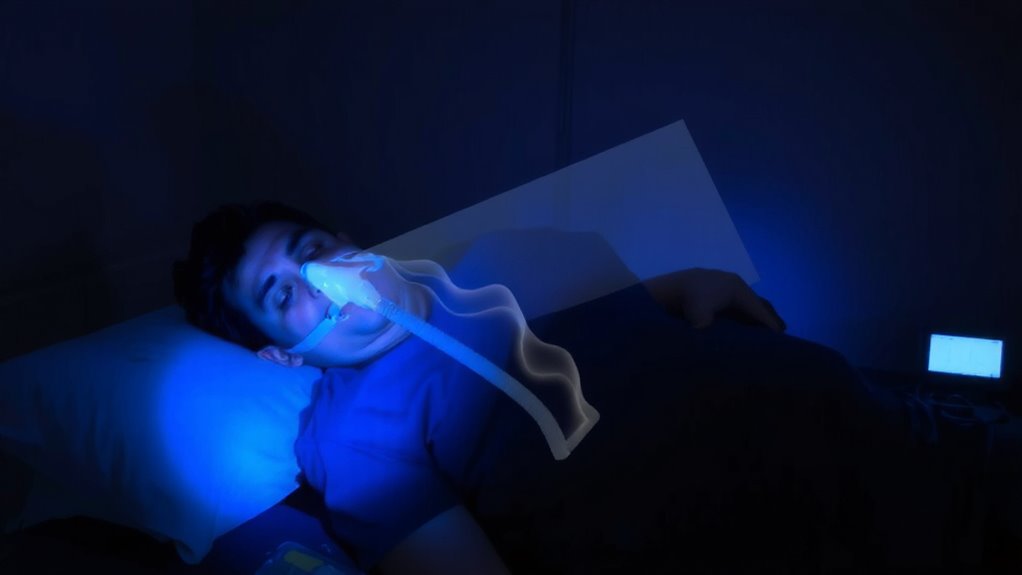
Snoring isn’t always a sign of something serious, but it can sometimes point to sleep apnea, especially if your airway is already narrow from anatomy like a deviated septum or recessed jaw. You might not realize it, but frequent breathing interruptions during the night can disrupt your sleep patterns, leaving you tired even after a full night’s rest. These pauses in breathing often last a few seconds and happen many times an hour, usually followed by choking or gasping. Unlike regular snoring, this pattern suggests your brain is briefly waking to restart breathing. If this sounds familiar, a sleep study could help identify what’s happening. Treatments like CPAP machines are effective, often coming with adjustable settings, humidifiers, and trial periods so you can test comfort. Warranties and mask-fit support make starting easier. Watching for these signs helps you make informed choices about your sleep health. A non-CPAP option for mild to moderate cases is using a sleep apnea mouthpiece designed to keep the airway open.
Types of Breathing Disruptions in Snorers
Though not all snoring involves breathing disruptions, it’s helpful to know the differences so you can decide whether what you’re experiencing might need closer attention. You might notice that nasal congestion leads to mouth breathing, which can make snoring louder and more frequent. Some people mainly breathe through their mouths due to blocked nasal passages, especially during colds or allergies. Others experience brief pauses in breathing, followed by gasps-common in obstructive sleep apnea. Mouth breathing often dries the throat and worsens snoring intensity. Nasal strips or dilators might help if nasal congestion is your main issue, improving airflow without major lifestyle changes. These options are easy to try and often come with satisfaction guarantees. Recognizing your pattern-whether it’s simple vibration or more serious disruption-helps you choose the right next steps for better rest.
How Snoring Lowers Oxygen and Disturbs Sleep
If you’re regularly snoring through the night, chances are your breathing isn’t as steady as it should be, and that can quietly reduce your oxygen levels over time. When your airway partially collapses, each snore may signal a breath that’s weaker or blocked, leading to brief drops in blood oxygen. Even small, repeated dips can disrupt your sleep quality without waking you fully. Your brain notices these shifts, triggering micro-arousals that hinder deep rest. Over time, poor oxygen flow may affect brain function, making concentration or memory recall harder during the day. You might not realize how tired you are. These disruptions don’t just leave you groggy-they can impact long-term health. Improving airflow during sleep can support steadier breathing and better rest. Simple changes or devices designed to keep airways open may help maintain consistent oxygen levels and support both sleep quality and brain function.
Tools to Track Snoring and Breathing Problems
How can you tell whether your snoring points to something more serious? Tools like wearable sensors and audio analysis can help you track patterns over time. Wearable sensors, such as smartwatches or chest straps, monitor your breathing rate, heart rate, and movement during sleep. They’re easy to use nightly and often sync with smartphone apps to record data. Audio analysis apps, placed nearby on a nightstand, record sounds while you sleep and use software to detect snoring episodes and breathing pauses. While not medical-grade, they offer a clear picture of nightly trends. Some devices allow you to review weekly summaries, spot irregularities, and determine whether changes in sleep position or habits help. Most come with free trials or money-back guarantees, letting you test them risk-free. These tools work best when used consistently for several nights.
When to See a Doctor About Snoring
What does it mean when your snoring goes beyond a nightly rumble? It could signal disrupted breathing during sleep, especially if your bed partner concerns grow louder or your mornings bring consistent daytime fatigue. If you wake often, feel unrested, or gasp mid-sleep, these are red flags. Loud, frequent snoring paired with pauses in breathing might point to obstructive sleep apnea. A doctor can evaluate your symptoms, possibly recommending a sleep study. Early assessment helps rule out serious conditions and guides treatment-ranging from lifestyle changes to CPAP machines or oral devices. Many sleep aids offer trial periods, so testing options under medical guidance improves success. Don’t wait until fatigue affects work or safety. Addressing snoring early supports better health, stronger sleep, and peace of mind-for you and your partner.
On a final note
You’re not alone if you snore, but it’s worth paying attention to your breathing patterns at night. Snoring can signal a narrowed airway or even sleep apnea, affecting your oxygen levels and sleep quality. Tracking tools like sleep monitors or apps may help identify disruptions. Consider seeing a doctor if snoring is loud, frequent, or paired with daytime fatigue. Some find relief with positional changes, oral devices, or CPAP therapy-options worth discussing with a professional.