How to Prevent Sleepwalking Injuries With Non-Slip Flooring and Padding
You can prevent sleepwalking injuries by installing non-slip flooring like textured vinyl or rubber mats with a COF of 0.5 or higher in hallways and bathrooms-they offer strong grip and durability, often with warranties. Use foam or rubber edge protectors on furniture to cushion sharp corners, securing them with lasting adhesive. Pair these with anchored rugs and clear pathways to reduce fall risks. Add night lighting to guide movement safely. Smart upgrades like these improve safety while allowing easy testing and adjustment. There’s more to explore about creating a fully protected space.
Notable Insights
- Install non-slip flooring with a COF rating of 0.5 or higher in hallways and bathrooms to prevent falls during sleepwalking.
- Secure loose rugs with low-profile, non-damaging anchors to eliminate tripping hazards on walking paths.
- Apply foam or rubber edge protectors to sharp furniture corners to reduce injury risk from accidental bumps.
- Use textured vinyl, rubber mats, or anti-slip tiles that provide reliable grip even in low-light conditions.
- Combine non-slip surfaces with clear, unobstructed pathways to ensure safe movement during sleepwalking episodes.
Assess Sleepwalking Injury Risks at Home
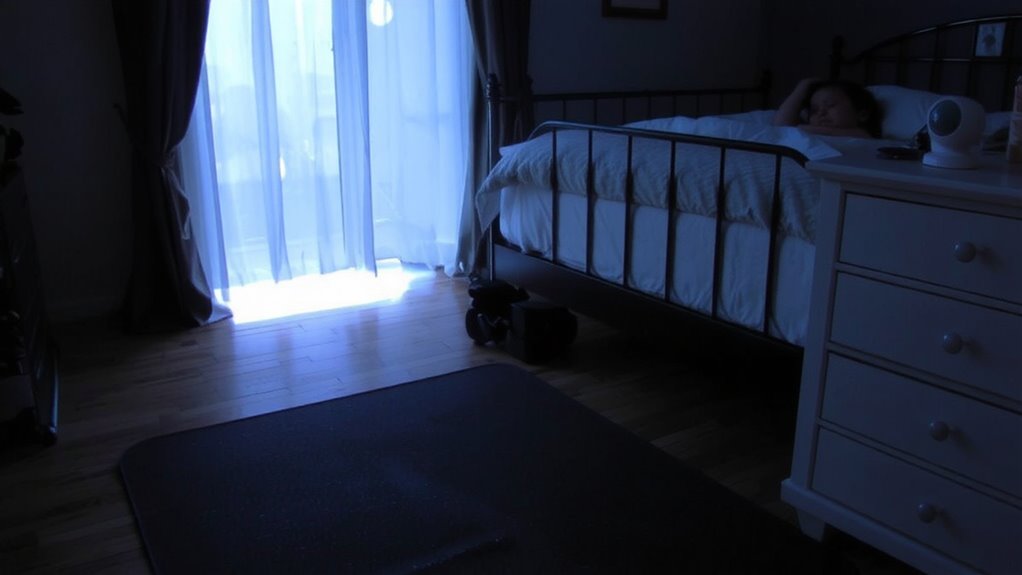
Where could your home become dangerous during a sleepwalking episode? Your bedroom layout might create hazards you haven’t noticed. Sharp corners, cluttered floors, or furniture in high-traffic paths increase injury risk. Rearranging the space for clear, direct routes to the door reduces obstacles. Consider anchoring heavy furniture to prevent tipping. Window safety is another key factor-especially on upper floors. Secure windows with locks or stops so they can’t open more than a few inches. Avoid placing chairs or beds near windows, which could help someone climb out. Night-lights also help guide movement without waking. Evaluating these features helps identify risks and improves overall safety. Understanding your environment allows better decisions about sleep aids, routines, or consulting a specialist. Small changes now support safer sleep patterns over time, with lasting benefits.
Install Non-Slip Flooring in Key Areas
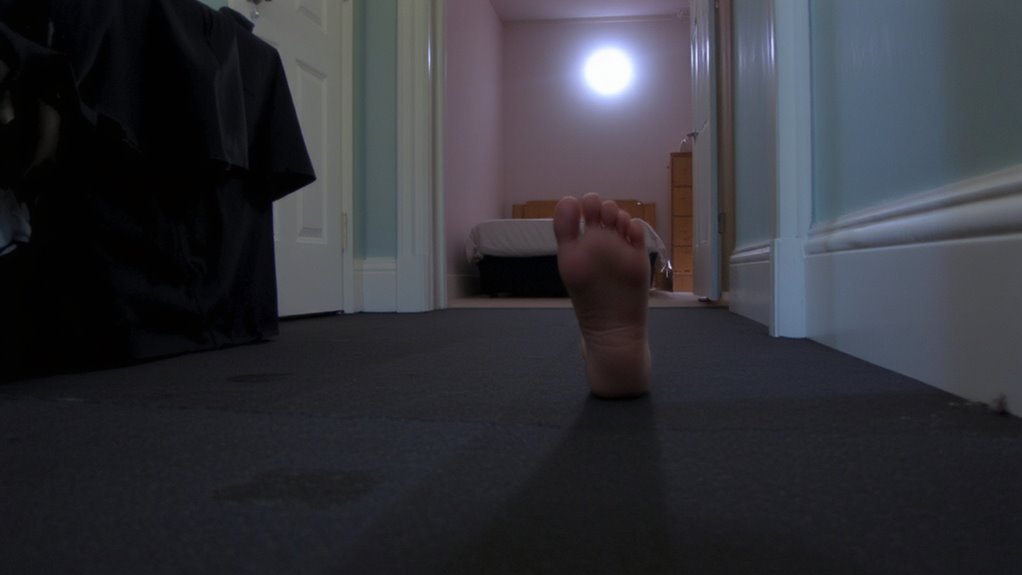
You’ve already taken steps to clear pathways and secure windows, but another layer of safety means looking down-specifically at what’s underfoot. Installing non-slip flooring in key areas like hallways, stairs, and bathrooms can reduce fall risks during sleepwalking episodes. Choose materials with enhanced floor texture and strong surface grip, such as textured vinyl, rubber mats, or anti-slip tile finishes. These surfaces provide traction even when bare feet touch cold or damp floors. Look for certified slip-resistant ratings (like COF 0.5 or higher) when comparing options. Some products come with warranties testing durability over time. Consider samples to test under real conditions-you want reliable grip without discomfort. While no flooring eliminates all risk, better floor texture improves stability. Make your choice based on where sleepwalkers move most. With improved surface grip, you’re adding a quiet but effective safeguard where it matters most.
Anchor Rugs and Eliminate Trip Hazards
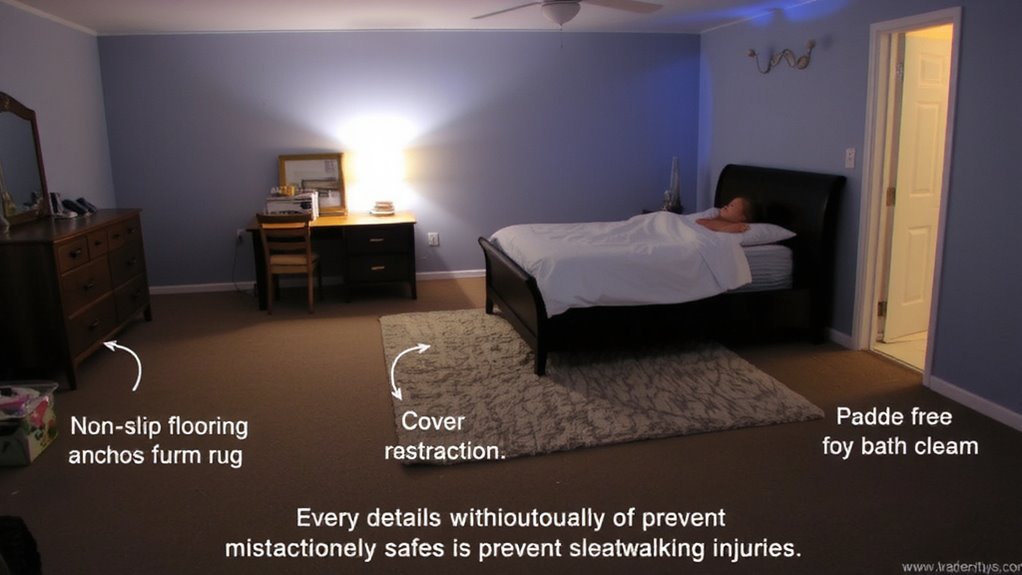
A single loose rug or cluttered corner can turn a quiet night into a risky moment for someone who sleepwalks, so securing floor coverings is a simple but essential step. You can easily prevent accidents by using rug anchors, which grip both the floor and the rug to keep it firmly in place. These anchors work well on hardwood, tile, or laminate and won’t damage surfaces when removed. For best results, choose low-profile options that stay flat and invisible. Along with securing rugs, clear hallways and sleeping areas of cords, furniture, and clutter to support effective trip prevention. Smooth pathways let sleepwalkers move with less risk. Regularly check that anchors stay strong and rugs remain flat. Some brands offer trial periods or warranties, letting you test performance. Simple changes like these enhance safety without major renovations.
Add Cushioning to Sharp Furniture Edges
Securing your floor coverings reduces trip risks, but another smart step is softening sharp furniture edges that could cause injury during an episode. You can easily prevent bumps and cuts by applying edge protectors to tables, shelves, and counters. These guards are made from flexible rubber or foam and stick on with strong adhesive, staying in place under daily use. Furniture padding comes in various thicknesses and corner designs, fitting everything from coffee tables to bunk beds. Look for options with hypoallergenic materials and rounded construction to maximize comfort and safety. Most brands offer a trial period, so you can test fit and performance. While they’re not a fix for sleepwalking itself, edge protectors and padding reduce harm during unplanned nighttime movements. They’re a low-cost addition that works quietly, letting you focus on broader sleep solutions.
Guide Sleepwalkers With Night Lighting
Night lighting’s role in reducing sleepwalking risks lies in its ability to gently illuminate paths without disrupting sleep cycles. You can use low-level blue lighting, which provides visibility while minimizing impact on melatonin production. Place lights along walkways and near bedsides so sleepwalkers navigate safely. Opt for plug-in models with motion sensors-they turn on only when needed, conserving energy and reducing light pollution. Some systems pair with silent alarms that alert caregivers without startling the sleepwalker. These alarms detect movement and send notifications to smartphones or monitoring devices. Choose lighting with adjustable brightness and color temperature for better personalization. Most come with warranties of one to three years, and many are energy-efficient LED designs. Test different placements to find what works without causing glare. Proper night lighting supports safer navigation and reduces injury risk during episodes.
Create a Clear Path to the Bathroom
When guiding a sleepwalker safely through the night, keeping the route to the bathroom free of obstacles is key. You can reduce risks by adjusting bed placement-position the bed so the most direct path to the bathroom stays clear. Avoid clutter like furniture, cords, or toys that could cause trips. Choose simple layouts that allow smooth movement, even in unconscious states. Installing door alarms on the bathroom or bedroom door gives an added layer of awareness; they alert you if someone gets up during the night. These alarms are easy to set up and often come with battery backups and adjustable sensitivity. Combined with non-slip flooring, a clear path improves safety without restricting movement. You don’t need major changes-small, thoughtful adjustments make a lasting difference. Test the path in low light to guarantee it’s truly accessible.
Keep Floors Clean and Accident-Free
You’ve already cleared the path to the bathroom, and that same attention to layout should carry across the entire floor space. Keeping floors clean and free of hazards is essential for preventing sleepwalking injuries. Regular floor maintenance helps guarantee surfaces stay safe and slip-resistant over time. Dirt, dust, and small objects can create tripping risks, so consistent debris removal matters-especially in high-traffic areas. Sweep or vacuum daily, and wipe spills immediately to maintain traction. Area rugs should be secured or avoided, since loose edges can cause trips. Non-slip padding adds protection, but only if the floor above stays clutter-free. Consider washable, low-pile flooring that’s easy to clean and less likely to trap debris. Simple habits, like putting items away and checking floors before bed, support long-term safety. These steps won’t stop sleepwalking, but they reduce injury risks markedly.
On a final note
You can reduce sleepwalking risks by choosing non-slip flooring and adding padding to sharp edges. Anchor rugs and keep pathways clear to prevent trips. Night lights guide movement safely, especially to the bathroom. These fixes improve safety without major renovations. Many products offer trial periods, so test what works. Consider both performance and ease of installation. Small changes now may prevent injuries later.