Best Anti-Snore Pillows for a Quiet, Restful Sleep
You’ll sleep quieter and more comfortably with an anti-snore pillow that supports your neck and keeps your airway open. Look for contoured or wedge designs with a 9.5- to 15-degree incline to reduce snoring caused by blocked airways. Memory foam pillows with medium-firm support help align your spine, while cooling covers and breathable materials improve comfort. Many top options include adjustable heights, washable covers, and trial periods. Choosing the right one means balancing support, sleep position, and personal preference. You’ll find how each model meets specific needs as you explore further.
We are supported by our audience. When you purchase through links on our site, we may earn an affiliate commission, at no extra cost for you. Learn more. Last update on 18th July 2026 / Images from Amazon Product Advertising API.
Notable Insights
- Contoured memory foam pillows with a 10- to 15-degree incline help keep airways open to reduce snoring.
- Wedge-shaped designs elevate the upper body using a 7.5 to 10-inch incline for improved breathing.
- Adjustable pillows with removable inserts allow personalized loft and angle for optimal airway alignment.
- Cooling features like Q-Max covers and breathable foam reduce heat buildup, enhancing comfort and sleep quality.
- CertiPUR-US and Oeko-Tex certified materials ensure safe, non-toxic construction for long-term health and comfort.
Ultra Pain Relief Cooling Cervical Pillow

If you struggle with snoring and neck discomfort, the Ultra Pain Relief Cooling Cervical Pillow might be the best choice for improving your sleep posture and reducing nighttime breathing issues. I’ve found its 15-degree angled design keeps my spine aligned, no matter if I’m on my back, side, or stomach. The six contour zones ease pressure, while the Q-Max cooling cover lowers skin temperature by 5℃-great for staying comfortable. Made with 98% breathable, non-toxic memory foam, it’s safe and stays cool. I adjusted the height by flipping it or removing the insert. It took a couple nights to get used to, but with a 100-night trial, there’s no risk.
Best For: People seeking relief from neck pain, snoring, and overheating during sleep who want customizable, ergonomic support.
Pros:
- Ergonomic 15-degree design promotes spinal alignment for back, side, and stomach sleepers
- Q-Max cooling cover reduces skin temperature by 5℃ with highly breathable 3D mesh fabric
- Adjustable height and firmness with removable insert and 100-night risk-free trial
Cons:
- May require an adjustment period of a couple of nights to get used to the feel
- Slight initial odor from memory foam, though it dissipates after airing out
- Manual measurement deviations of up to 1 inch may affect size expectations
Derila Ergo Cervical Neck Pillow

The Derila Ergo Cervical Neck Pillow stands out for adults who need consistent support whether sleeping on their back, side, or switching between positions, thanks to its butterfly-shaped design and high-density memory foam that maintains alignment of the head, neck, and spine. I find it fits well in most sleep setups, weighing just over two pounds with a compact shape that works at home or while traveling. The memory foam core adapts gently to my shape, and the breathable, moisture-wicking cover helps me stay cool. It’s machine washable, hypoallergenic, and designed for long-term use, offering balanced support without pressure points.
Best For: Adults seeking a supportive, travel-friendly cervical pillow that promotes proper spinal alignment for back, side, and combination sleeping positions.
Pros:
- Ergonomic butterfly design with high-density memory foam provides balanced support and adapts to individual neck and head contours
- Breathable, moisture-wicking, and hypoallergenic cover enhances comfort and is machine washable for easy maintenance
- Compact, lightweight design makes it ideal for home use and travel, while maintaining durability and consistent performance
Cons:
- Medium firmness may feel too firm for users who prefer plush, soft pillows
- Solid blue color and limited design options may not appeal to those seeking aesthetic variety
- Memory foam may retain heat slightly despite cooling features, potentially affecting hot sleepers
Ultra Pain Relief Cooling Neck Pillow
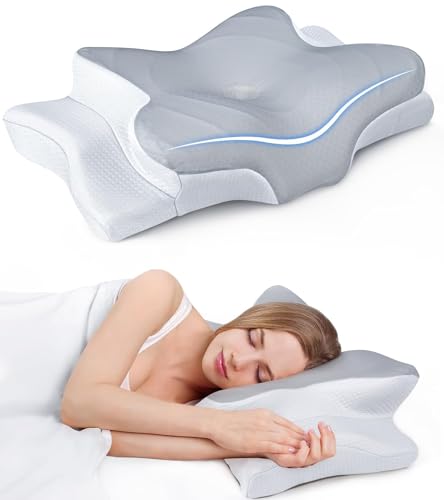
I rely on the Ultra Pain Relief Cooling Neck Pillow when neck tension and overheating keep me from resting well, especially if I shift between side, back, or stomach sleeping. Its 15-degree ergonomic tilt supports natural spine alignment, while six contour zones cushion my head, neck, and shoulders. The 98% breathable memory foam core stays cool, and the Q-Max 0.4 Arc-Chill cover reduces skin heat by 5℃. I adjust height by flipping it or removing the base insert. At 23.2 inches long and machine-washable, it’s practical. Cozyplayer includes a 100-night trial, so testing it risk-free makes sense.
Best For: Individuals seeking relief from neck pain and overheating during sleep, especially those who switch between side, back, and stomach sleeping positions.
Pros:
- Ergonomic 15-degree tilt and six contour zones support natural spine alignment and provide targeted pressure relief
- Q-Max 0.4 Arc-Chill fabric and breathable memory foam effectively reduce skin temperature by up to 5℃
- Adjustable height and machine-washable design enhance comfort and convenience with a 100-night risk-free trial
Cons:
- Slight measurement variations of up to 1 inch may affect size expectations
- Cooling effect may diminish over time with prolonged use and washing
- May require a 100-night adjustment period to achieve optimal comfort and benefits
Anti-Snoring Pillow for Side Sleepers
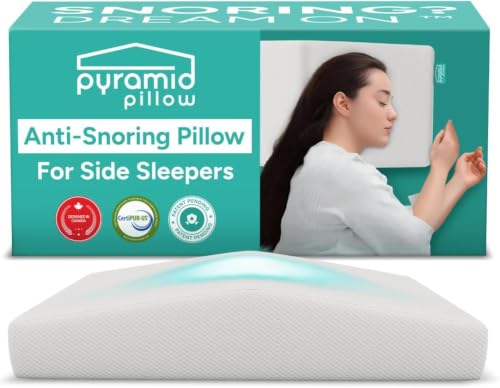
When side sleeping is your preferred position and snoring interrupts your rest or bothers your partner, a well-designed anti-snore pillow like the Pyramid Pillow makes a meaningful difference. Its 9.5-degree incline uses gravity to keep your airway open by preventing your tongue from blocking it, while medium-firm memory foam supports proper neck alignment. Created by a lifelong snorer, this original design helps reduce snoring without invasive solutions. I can adjust my position-center for thickness or edge for lower height-and the removable, washable cover keeps things fresh. Backed by a 90-day guarantee, it’s a practical choice for better sleep.
Best For: Side sleepers seeking a non-invasive, comfortable solution to reduce snoring and improve sleep quality.
Pros:
- Unique 9.5-degree incline promotes open airway positioning using gravity to prevent tongue blockage
- Medium-firm memory foam provides proper neck support and allows customizable positioning for comfort
- Removable, washable cover and 90-day satisfaction guarantee enhance convenience and buyer confidence
Cons:
- Designed specifically for side sleepers, limiting effectiveness for back or stomach sleepers
- May require adjustment period to get used to the angled sleeping position
- Higher price point compared to standard pillows due to specialized design
Kolbs Bed Wedge Pillow for Sleep

If you’re dealing with snoring, sleep apnea, or acid reflux, the Kolbs Bed Wedge Pillow for Sleep offers targeted relief by elevating your upper body with a firm 7.5-inch incline that supports natural breathing and reduces nighttime reflux. I find its high-density foam core gives solid support, while the memory foam top adds comfort. The removable, machine-washable polyester cover stays clean easily. At 24 by 24 inches, it fits most beds and works well for sitting up to read or recover post-surgery. With a 4.4-star average from thousands of buyers and FSA eligibility, it’s a practical pick, backed by a manufacturer warranty.
Best For: Individuals seeking relief from snoring, sleep apnea, acid reflux, or post-surgery discomfort who need a supportive, elevated sleeping position for better breathing and comfort.
Pros:
- Provides a firm 7.5-inch incline to effectively reduce acid reflux and improve breathing during sleep
- Features a high-density foam core with a plush memory foam top layer for durability and comfort
- Comes with a removable, machine-washable polyester cover for easy maintenance and hygiene
Cons:
- May be too short for taller individuals seeking full upper body support
- Firm incline might not suit users preferring a gentler slope
- Some users may find the memory foam retains heat during warmer months
Cervical Neck Pillow for Pain Relief

The Cervical Neck Pillow for Pain Relief stands out as a smart pick for anyone chasing restful sleep while managing chronic neck discomfort or tension. Its contoured design has a hollow center and dual heights-5.1 inches for side sleeping, 4.5 for back or stomach-with ergonomic support that keeps your spine aligned. I love how the high-density memory foam molds to my neck and shoulders, reducing pressure points without flattening over time. It’s CertiPUR-US and Oeko-Tex certified, so I sleep knowing it’s safe and odorless. The breathable ice silk cover stays cool and zips off for easy washing, and with solid customer support, trying it feels risk-free.
Best For: Side, back, and stomach sleepers seeking pain relief and spinal alignment from a contoured, supportive memory foam pillow.
Pros:
- Ergonomic design with dual-height layers supports natural neck curvature and spinal alignment for all sleep positions
- High-density, slow-rebound memory foam molds to the body, reduces pressure points, and resists flattening over time
- CertiPUR-US and Oeko-Tex certified for safety, with a breathable, removable ice silk cover that enhances cooling and is machine washable
Cons:
- May require an adjustment period for users new to contoured pillows
- Dual-height design might not suit individuals who switch sleep positions frequently during the night
- Ice silk cover, while cooling, may feel less plush to those who prefer a softer pillow surface
Anti-Snoring Memory Foam Pillow for Side Sleepers
You’ll get the most benefit from an anti-snoring memory foam pillow if you’re a side sleeper looking to improve airflow and reduce snoring caused by poor neck alignment. I’ve found the contoured design keeps my spine aligned and my airway more open. The high-density foam supports my head and neck without sinking too much, which helps me stay in place all night. It feels breathable, thanks to the soft, washable cover that wicks moisture. I appreciate how easy it is to clean and that it holds up well over time. While it’s not a medical fix, it’s a practical aid for better sleep-especially if you shift positions slightly but stay mostly on your side.
Best For: Side sleepers seeking improved spinal alignment and reduced snoring caused by poor neck positioning during sleep.
Pros:
- Ergonomically contoured memory foam promotes proper spinal alignment and helps keep airways open
- High-density foam provides medium-firm, pressure-relieving support that minimizes nighttime movement
- Removable, breathable, and moisture-wicking cover is machine-washable for easy maintenance
Cons:
- Not a medical treatment and may not help with severe snoring or sleep apnea
- Designed specifically for side sleepers, so it may not suit back or stomach sleepers
- May feel too firm initially until the foam fully conforms to the user’s shape
Osteo Sustained Neck Pillow for Pain Relief

Though I sleep on my back, side, or stomach, the Osteo Sustained Neck Pillow keeps my spine aligned and breathing clear, making it a strong choice for anyone whose snoring is tied to poor neck support or discomfort. It uses a contoured, hollow-core design to ease pressure, support blood flow, and keep my airway open. With 5 adaptive zones and high-density, temperature-neutral memory foam, it holds its shape and supports movement all night. The honeycomb foam and 3D mesh cover keep me cool, while the 10-year warranty and 100-night trial reduce the risk of trying it.
Best For: Individuals seeking pain relief and proper spinal alignment during sleep, especially those whose snoring or discomfort stems from poor neck support.
Pros:
- Ergonomic contour design with hollow-core and 5 adaptive zones supports all sleeping positions while maintaining spinal alignment
- Temperature-neutral, high-density memory foam with CertiPUR-US certification ensures durability, safety, and consistent comfort
- Dual cooling system with honeycomb foam and 3D mesh cover promotes airflow and prevents overheating
Cons:
- May require adjustment period for users unaccustomed to contoured neck pillows
- Limited color/size options with only dark gray Queen size currently available
- Premium price point may be a barrier for budget-conscious buyers
Osteo Cervical Pillow for Neck Pain Relief
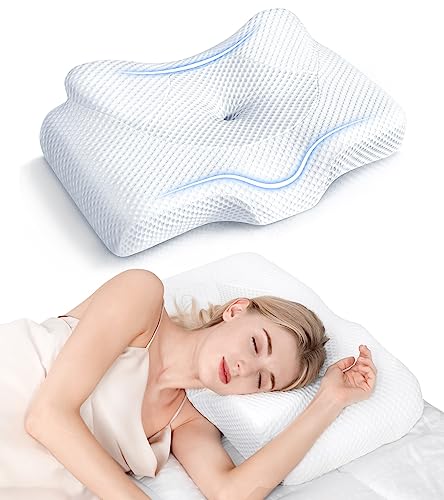
Looking for relief from neck pain that stems from poor sleep posture? I found the Osteo Cervical Pillow helps by supporting your neck’s natural curve with its hollow center design, which aligns vertebrae and eases pressure. It’s great for side, back, or stomach sleepers, and you can rotate it for higher or lower lift. A removable insert lets you tweak the height. Made with CertiPUR-US memory foam and an Oeko-Tex cover, it’s safe and odorless. The breathable mesh case keeps you cool. It’s machine-washable, backed by easy support-no returns needed if it’s not right.
Best For: People seeking a supportive, adjustable pillow to relieve neck pain and improve spinal alignment during sleep.
Pros:
- Ergonomic design with a hollow center promotes natural cervical curvature and reduces neck and shoulder pain
- Adjustable loft with dual-height configuration and removable insert for personalized comfort
- Made with CertiPUR-US certified foam and Oeko-Tex cover for safety, breathability, and cool, hypoallergenic sleep
Cons:
- May require a 48-hour off-gassing period despite being largely odorless
- Limited to Queen size, which may not suit all bed setups or preferences
- Higher price point compared to standard memory foam pillows without advanced features
Memory Foam Cervical Pillow for Neck Pain

If you struggle with neck pain or snoring due to poor spinal alignment, the CHxxy Memory Foam Cervical Pillow offers targeted support that adapts to your sleeping position. Its ergonomic butterfly shape, with a thickened neck contour and massage point, keeps your spine aligned whether you sleep on your back, side, or stomach. I can adjust the height by flipping it or adding the removable insert, which helps reduce snoring and neck strain. The CertiPUR-US and Oeko-Tex certified memory foam stays supportive, while the Ice Silk cover feels cool and washes easily. It’s a solid choice if you want customizable comfort and better sleep posture.
Best For: People seeking customizable neck pain relief and improved spinal alignment during sleep, especially those who snore or experience discomfort from improper pillow height.
Pros:
- Ergonomic butterfly design with adjustable height and removable insert for personalized support
- Certified memory foam and breathable Ice Silk cover offer comfort, safety, and temperature regulation
- Suitable for all sleeping positions and backed by strong customer support and market performance
Cons:
- May feel too firm or high for users not accustomed to cervical pillows
- Queen size may not fit all standard pillowcases snugly
- Premium price point compared to traditional pillows
Factors to Consider When Choosing Anti-Snore Pillows
You’ll want to match the pillow to your sleep position since side, back, and stomach sleepers need different support levels. Look for adjustable fill or contour designs that let you tweak the height or firmness, and don’t overlook breathable materials like gel-infused foam or bamboo covers that help manage heat. Strong neck support matters, but so does a trial period-many brands offer returns if the pillow doesn’t improve your comfort or snoring over a few weeks.
Sleep Position Compatibility
Since your sleeping position affects airflow and neck alignment, choosing an anti-snore pillow that matches how you sleep makes a meaningful difference in reducing snoring. If you’re a side sleeper, look for designs that support your neck and keep your spine straight, as this position naturally helps prevent airway blockage. Many anti-snore pillows include a 9.5-degree incline to gently lift your head, using gravity to keep breathing passages open. Some models feature contoured zones that work for back, side, or stomach sleepers, offering versatility without sacrificing support. Proper alignment of your head and neck is key to minimizing snoring, so pick a pillow that encourages a neutral posture. Adjustable loft options let you fine-tune height and angle, helping you find the best fit for your body and sleep style.
Pillow Firmness Level
A medium-firm pillow often offers the best balance for reducing snoring, providing enough support to keep your neck aligned without feeling too rigid or too soft. You’ll find that a medium-firm foam density stabilizes your neck if you sleep on your side, helping maintain an open airway. If the pillow’s too soft, it won’t support proper alignment; too firm, and it creates pressure points that can worsen breathing. Contoured designs with medium-firm memory foam adapt gradually to your shape, supporting consistent spinal alignment all night. The right firmness keeps your head elevated at a 7 to 10-degree angle, using gravity to keep your airway clear. High-density foam holds up over time, resisting compression so your pillow stays effective. Look for models with trial periods to test firmness risk-free.
Material Breathability Features
While staying cool at night might seem like a comfort issue, it’s closely tied to how well an anti-snore pillow performs. You’ll want a pillow with high-density memory foam that uses open-cell or honeycomb structures-they help airflow and pull heat away so you don’t overheat. Look for 3D mesh fabric covers, which boost surface breathability and keep air moving all night. Cooling textile blends made of nylon, polyester, and spandex wick moisture and help maintain a dry, comfortable feel. Some models use Q-Max rated materials, like fabrics with a 0.4 rating, to create a quick, noticeable cooling effect by transferring heat from your skin. Removable, machine-washable covers made from breathable fibers help preserve airflow and hygiene over time. These features work together to support consistent comfort and better sleep conditions without trapping heat.
Neck Support Design
Proper neck support starts with a contoured design that keeps your head and neck aligned, reducing snoring by maintaining an open airway. The recessed center supports your neck’s natural curve while preventing strain. Look for a 10- to 15-degree incline-this gentle slope uses gravity to stop your tongue and soft tissues from collapsing backward. If you sleep on your side, dual-height profiles give you better elevation control, keeping your spine straight. High-density memory foam offers medium-firm support, holding its shape all night without sagging. You’ll get stable alignment and less chance of airway blockage. Ergonomic shapes also cradle your neck and support your shoulders, making it harder to roll onto your back-a position that often worsens snoring. These features work together to support healthy breathing. When testing a pillow, check if it includes a trial period so you can confirm comfort and effectiveness over time.
Adjustability Options Available
How do you find the right fit when your comfort needs change night to night? Look for anti-snore pillows with smart adjustability. Some offer dual-height designs-you just flip them 180 degrees to switch elevation, giving you control over neck support. Others include removable inserts, so you can add or take away loft to match your neck length and preferred sleep position. Adjustable firmness helps keep your airway open at an ideal angle, usually between 9 and 15 degrees, which reduces snoring from obstructed breathing. These height and firmness tweaks also help align your spine, especially if you have broader shoulders or a larger frame. Fine-tuning your pillow makes it easier to stick with side sleeping, a common fix for snoring. Adjustable options boost long-term comfort, so you’re more likely to stay consistent with your sleep routine.
Wedge Or Contour Shape
Shape plays a key role in how well an anti-snore pillow supports your breathing and spine through the night. A wedge-shaped pillow gives you a steady incline, usually 7.5 to 10 inches high, lifting your upper body so gravity keeps your airway open. Many use a 9.5-degree angle to stop your tongue from blocking your throat, a common cause of snoring. Contour pillows have a curved design with a dip for your head and a raised neck zone, supporting neutral spine alignment. Their 15-degree tilt helps maintain cervical traction, useful whether you sleep on your back or side. Both shapes stop your neck from bending too far forward or to the side, helping keep your airway open. Choosing between them? Think about your sleep position and how much elevation feels comfortable.
Frequently Asked Questions
How Long Do Anti-Snore Pillows Typically Last?
They usually last about 18 to 36 months, depending on how often you use them and how well you care for them. You’ll want to check the materials-memory foam holds up longer than down or poly-fill. Most keep their support for at least a year and a half if you rotate and fluff them daily. A good warranty often covers 1–2 years, so test them within that window to see if they truly reduce snoring for your sleep style.
Can Anti-Snore Pillows Help With Sleep Apnea?
You shouldn’t rely on anti-snore pillows to treat sleep apnea, as they’re not medical devices. While they can improve airflow by aligning your neck and reducing airway resistance, they don’t replace CPAP therapy or prescribed treatments. Some pillows use contoured foam to support your head gently, which may ease mild snoring. Always consult your doctor first-many brands offer 30-day trials, so you can test comfort, but don’t delay proper diagnosis.
Are Anti-Snore Pillows Safe for Pregnant Women?
Yes, anti-snore pillows are generally safe for pregnant women. You’ll want one with adjustable support and a hypoallergenic cover to stay comfortable as your body changes. These pillows use contoured or wedge shapes to keep your airway open, which can ease breathing and reduce snoring. Most are tested for safety and offer trial periods, so you can return them if they don’t suit your sleep position. Always check with your doctor first.
Do Anti-Snore Pillows Require Special Cleaning?
Yes, they do need special cleaning, but it’s usually simple. You can’t toss most anti-snore pillows in the washer, since their supportive foam or adjustable inserts might get damaged. Instead, you wipe spots with mild soap and water or use a gentle fabric cleaner. Many come with removable, machine-washable covers for easier care. Always check the label-some brands even offer trial periods, so you can test durability and cleaning needs before committing.
Can Kids Use Anti-Snore Pillows Safely?
Yes, kids can use anti-snore pillows safely, but you should check age guidelines first-many aren’t designed for children under 3. These pillows often support better neck alignment and airflow, which might help with mild snoring. Make sure the pillow fits your child’s size and sleep position. Always consult a pediatrician if snoring’s frequent or loud, since it could signal sleep apnea or allergies. Look for hypoallergenic, easy-to-clean models with trial periods to test comfort safely.