How to Address Sleep Issues in Children With Learning Disabilities
Create a predictable bedtime routine using calming tools like weighted blankets-about 10% of your child’s weight-and noise machines placed away from the bed. Dim lights, block outside light with blackout curtains, and keep the room between 68–72°F. Practice deep breathing and positive imagery to ease evening anxiety. Stick to consistent sleep and wake times, even on weekends. If sleep problems continue, it may be time to explore next steps with a specialist.
Notable Insights
- Establish a consistent bedtime routine with calming tools like weighted blankets and noise machines to support sensory regulation.
- Optimize the sleep environment using dim lighting, blackout curtains, and a room temperature of 68–72°F.
- Practice deep breathing and positive imagery to reduce evening anxiety and promote natural sleep onset.
- Maintain fixed sleep and wake times, even on weekends, to regulate the child’s internal clock.
- Seek professional help if loud snoring, frequent night wakings, or persistent sleep refusal occur.
Build a Bedtime Routine for Kids With Sensory Needs
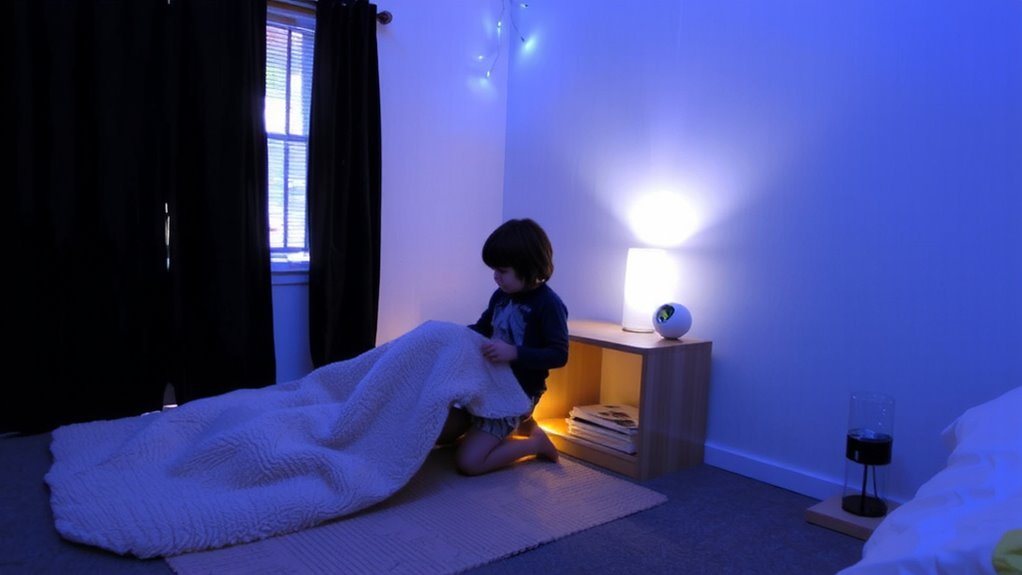
While every child benefits from consistency, establishing a predictable bedtime routine is especially helpful for kids with sensory needs who may struggle to shift from wakefulness to sleep. You can start by introducing calming tools at the same time each night. Weighted blankets provide gentle, even pressure that may help regulate sensory input, making it easier to relax. Look for blankets that weigh about 10% of your child’s body weight, with removable covers for easy cleaning. Noise machines offer consistent, low-level sound that can minimize disruptive background noise. Choose one with adjustable volume and a variety of sound options, like white or pink noise. Test different settings over a few nights to see what works best. Most reputable brands offer a 30-day trial, so you can return them if they don’t help. These tools, used consistently, support smoother shifts to sleep. For children who respond well to deep pressure, choosing from the best weighted blankets can enhance comfort and improve sleep quality.
Calm the Sleep Environment for Better Rest

You’ve already set up a consistent routine with tools like weighted blankets and noise machines, and now it’s time to look at the space where your child sleeps. Optimizing the environment supports better rest through soft lighting and noise control. Choose dimmable lamps or warm-toned bulbs to signal bedtime. Use blackout curtains to block outside light. For sound, consider white noise machines with adjustable volume and timer functions. Position them away from the bed to avoid overstimulation. Test different settings to find what works. A reliable dual alarm clocks option can also help maintain consistent wake-up times for caregivers or support staff without disturbing the child. Below are key features to evaluate when adjusting the sleep space:
| Feature | Why It Matters |
|---|---|
| Soft lighting | Reduces visual stimulation, aids melatonin release |
| Noise control | Masks disruptive sounds, improves sleep continuity |
| Bed positioning | Minimizes light/sound exposure |
| Air quality | Supports breathing and comfort |
| Temperature | Cooler rooms (68–72°F) promote deeper sleep |
Reduce Evening Anxiety in Children With Learning Differences
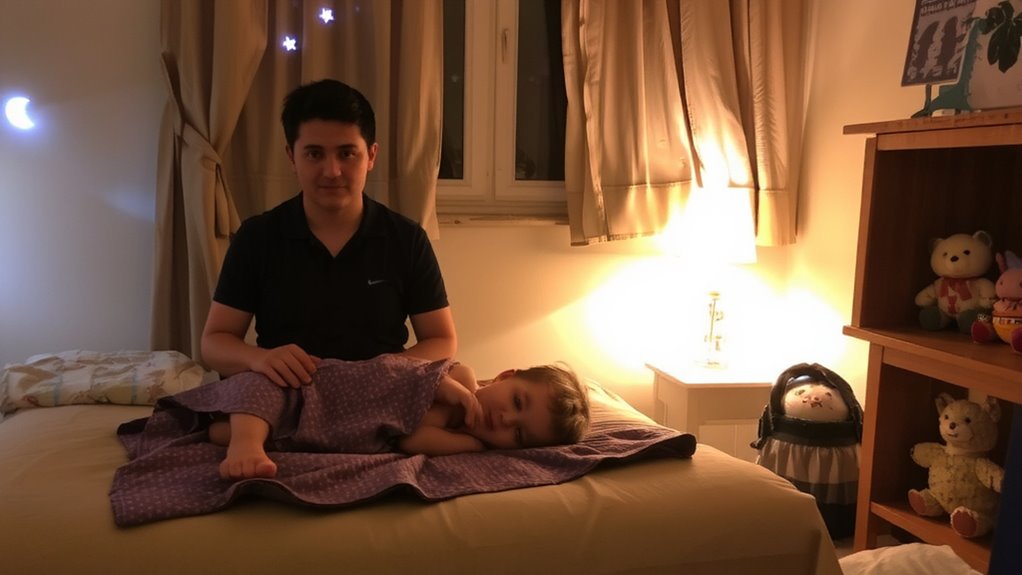
Why do some children with learning differences struggle more at bedtime, even when tired? Their minds often stay active, replaying daily challenges or worrying about tomorrow. You can help ease this evening anxiety with simple, effective tools. Guide your child through deep breathing: have them inhale slowly through the nose, hold for three seconds, then exhale through the mouth. This calms the nervous system. Pair it with positive imagery-ask them to picture a favorite place, like a quiet beach or cozy room-engaging senses to deepen relaxation. These methods require no equipment, have no side effects, and can be tried nightly. With consistent practice, many parents see reduced resistance and calmer shifts. While not a sleep aid in the traditional sense, deep breathing and positive imagery support natural sleep onset, offering a safe, non-medical option worth trying before considering other interventions.
Keep a Consistent Sleep Schedule
A regular bedtime routine works best when it’s built on a steady sleep schedule, something that can make a clear difference for children with learning differences who already face evening challenges. Keeping the same sleep and wake times every day helps regulate your child’s internal clock, improving overall sleep quality. While you might want some bedtime flexibility, especially on weekends, too much variation can disrupt sleep patterns and make falling asleep harder. Consider adjusting your child’s nap schedule-shortening or moving it earlier-to avoid interfering with bedtime. A mid-afternoon nap is often ideal, while late or long naps may reduce nighttime sleep drive. Track your child’s sleep for a few weeks to see how changes affect them. Consistency doesn’t mean rigidity, but predictable timing supports better sleep without relying on sleep aids or interventions.
How Poor Sleep Affects Learning and Behavior
Sleep struggles can quietly undermine a child’s focus, mood, and ability to process new information, especially when learning disabilities are already in the picture. You might notice increased cognitive fatigue, making it harder for your child to stay alert during lessons or complete homework efficiently. Poor sleep often leads to emotional dysregulation, resulting in meltdowns, irritability, or difficulty managing frustration. These challenges don’t just affect nights-they carry into classrooms and social settings, complicating daily routines. When rest is inconsistent or poor quality, the brain has less capacity to adapt, learn, or respond calmly to stress. You may see attention lapses or impulsive behaviors that mimic ADHD symptoms. Recognizing how sleep impacts thinking and emotions helps you prioritize rest as part of your child’s support plan. Improving sleep isn’t a quick fix, but addressing it can make therapies and learning strategies more effective over time.
When to Call a Sleep Specialist
How do you know when normal sleep struggles cross the line into something more serious? If your child has ongoing trouble falling or staying asleep, it might signal underlying sleep disorders. Consider seeking a medical evaluation when problems last more than a few weeks or impact daily functioning.
| Sign | What It Might Mean |
|---|---|
| Loud snoring | Possible sleep apnea |
| Frequent night wakings | Insomnia or restless leg syndrome |
| Daytime sleepiness | Disrupted sleep cycle |
| Sleepwalking | Parasomnia |
| Refusing bedtime | Behavioral or neurological issue |
Early identification improves outcomes. A sleep specialist can review habits, run assessments, and recommend safe interventions. Don’t wait-persistent issues affect health and learning. A proper medical evaluation helps tailor solutions to your child’s needs. Professional insight makes a meaningful difference.
On a final note
You can help your child sleep better by sticking to a calm, predictable routine and adjusting their environment to reduce sensory stress. Watch how poor sleep affects their mood and focus, and consider a consistent schedule to support their needs. If problems continue, consult a sleep specialist to explore causes and safe options. Always review features and trial policies when trying sleep aids, and monitor your child’s response to any changes.