Optimizing Your Bedroom: A Comprehensive Guide to Enhancing Sleep Hygiene
Keep your bedroom cool, aiming for 60–67°F, with breathable cotton or moisture-wicking bedding to support natural temperature drops during sleep. Use blackout curtains with side tracks and overlaps to block light and improve melatonin production. Reduce noise with heavy curtains, rugs, or a white noise machine. Choose a mattress firmness that matches your sleep position-softer for side sleepers, firmer for back and stomach sleepers-and pair it with a supportive pillow. Opt for calming colors, clear clutter, and remove electronics to reduce blue light exposure; smart thermostats or cooling mattress pads can enhance comfort over time. You’ll find options that balance cost, comfort, and performance worth exploring further.
Notable Insights
- Maintain a cool room temperature between 60–67°F to support natural drops in core body temperature during sleep.
- Use blackout curtains with side tracks and overlaps to block light pollution and enhance sleep-friendly darkness.
- Reduce sleep disruptions by minimizing external noise with soundproofing, heavy curtains, or white noise machines.
- Choose a mattress and pillows that suit your sleep position to ensure proper spinal alignment and comfort.
- Design a tech-free bedroom with calming colors, clutter-free surfaces, and optimal airflow to promote restful sleep.
Cool Your Room for Better Sleep
A cool room can make a real difference when you’re trying to get quality sleep, and most experts agree that keeping the temperature between 60 and 67 degrees Fahrenheit works best for most people. Your body’s core temperature drops naturally during sleep, and a cooler environment supports that process. To maintain comfort, aim for ideal humidity around 30% to 50%, which helps prevent dry air or excess moisture. Breathability matters, especially in your bedding-look for natural fibers like cotton or moisture-wicking fabrics that allow airflow. Some people use fans, air conditioners, or smart thermostats to regulate temperature overnight. If you share a bed, consider dual controls or layered bedding for individual comfort. Trial different settings for a few nights to assess what helps you fall asleep faster and stay asleep. Reliable models often come with warranties, so check performance data before buying. For targeted cooling, adding a best cooling mattress pad can significantly enhance thermal comfort throughout the night.
Block Light to Improve Sleep Naturally
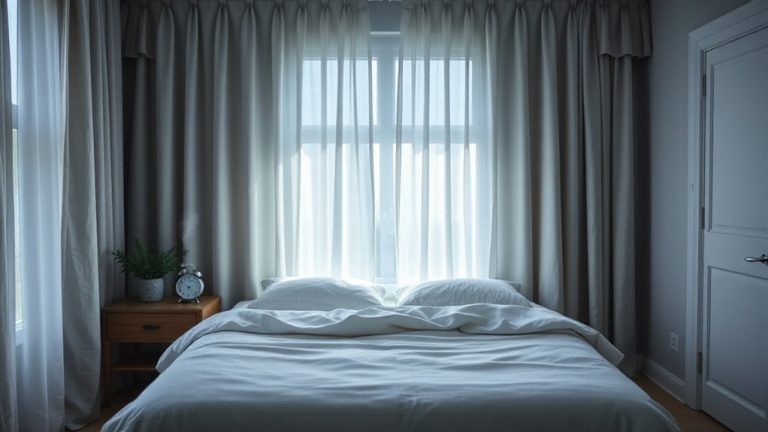
While your body prepares for rest, even small amounts of light can interfere with melatonin production, so blocking unwanted light helps support your natural sleep cycle. Light pollution from streetlights or nearby buildings can seep through thin curtains, disrupting your ability to fall or stay asleep. Blackout curtains are designed to block nearly all incoming light, thanks to their tightly woven, layered fabric and often rubberized backing. They also help with insulation, reducing outside noise slightly and improving room temperature stability. When choosing blackout curtains, look for ones with a high light-blocking rating, side tracks, or overlap features to prevent light gaps. Many brands offer trial periods, so you can test their effectiveness in your space. They’re especially helpful if you work night shifts or live in a brightly lit urban area. Try them if you’re sensitive to light or dealing with sleep onset issues. For top-performing options, consider the best blackout curtains based on verified light-blocking efficiency and customer feedback.
Quiet Your Space for Uninterrupted Rest
How well are you sleeping if every creak, siren, or humming appliance pulls you out of rest? You can’t achieve deep, restorative sleep when outside noise disrupts your rhythm. Taking steps to reduce noise makes a meaningful difference. Consider adding soundproof walls, which use dense insulation, resilient channels, or specialty drywall to block sound transfer. Even if full renovation isn’t an option, heavy curtains, door sweeps, and rugs help absorb sound. White noise machines or fans create consistent background sound that masks irregular disturbances. Earplugs are a low-cost option, especially useful for light sleepers or shift workers. Some find wearable sleep aids with soft audio features gentle and effective. Look for models with comfortable designs and long battery life. Many come with trial periods, so you can test performance. Reducing auditory disruptions supports better sleep continuity-important for managing sleep disorders and improving overall rest quality. For those seeking targeted solutions, exploring the best noise masking devices can significantly enhance your sleep environment.
Choose a Mattress and Bedding for Your Sleep Style
You’ve already taken steps to quiet your space, but even with the right noise control, your sleep can still suffer if your mattress and bedding don’t match how you rest. Your preferred sleep position affects what level of mattress firmness works best-side sleepers often need softer support to cushion shoulders, while back and stomach sleepers may benefit from firmer surfaces to align the spine. Pillow support matters just as much; too high or too flat can strain your neck. Materials like memory foam or latex respond differently to body weight and heat, influencing comfort over time. Consider breathable fabrics in bedding to help regulate temperature. Many brands offer sleep trials and warranties, so you can test firmness and support risk-free. Choosing the right combination isn’t about trends-it’s about matching your body’s needs with thoughtful design for more consistent, restful sleep.
Design a Bedroom That Prioritizes Sleep
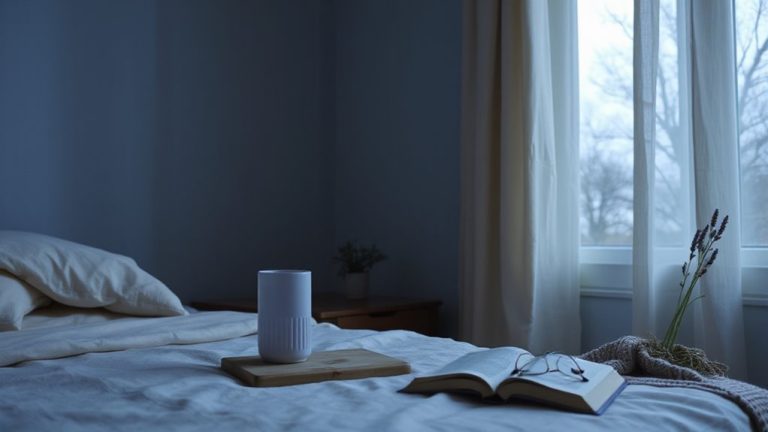
A well-designed bedroom can make a real difference in how easily you fall asleep and how deeply you rest. Focus on room layout and color scheme to support calm and consistency. Position your bed so it’s away from noise and light, with clear pathways for safe movement. Keep surfaces clutter-free to reduce mental stimulation. Choose a color scheme with soft, neutral tones-like warm gray or muted blue-since they’re linked to lower stress and better sleep quality. Avoid bright or bold colors that might energize instead of relax. Below are key features to examine:
| Feature | Benefit |
|---|---|
| Room layout | Supports airflow and easy movement |
| Color scheme | Encourages visual calm and low arousal |
| Bed placement | Reduces exposure to distractions |
| Lighting control | Helps maintain circadian rhythm |
Simple changes improve sleep hygiene over time.
Remove Tech That Disrupts Sleep
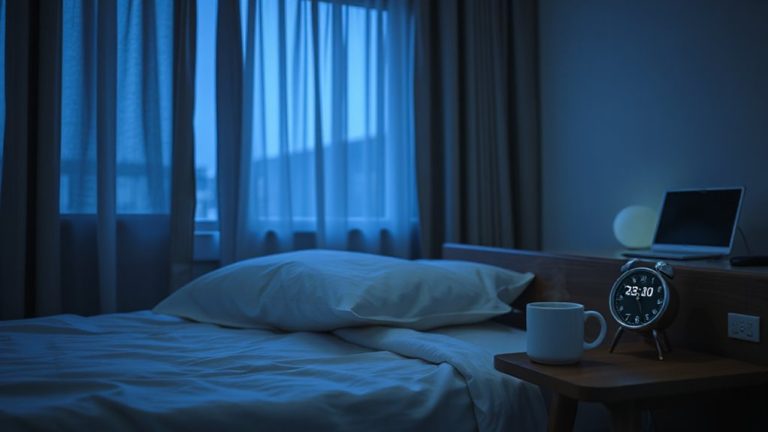
While your bedroom may feel like the ideal place to unwind with a late-night show or scroll through your phone, keeping tech in the space often harms more than helps your sleep. Devices like phones, tablets, and TVs emit blue light exposure that can suppress melatonin, making it harder to fall asleep. Even low brightness still impacts your body’s internal clock over time. To support better rest, aim for consistent screen time reduction, especially 30 to 60 minutes before bed. Try charging phones in another room or using a traditional alarm clock instead. If you use an e-reader, choose one with a warm, non-backlit screen. Removing tech doesn’t mean sacrificing comfort-it’s about creating conditions where sleep can come naturally, reducing reliance on sleep aids or treatments for sleep disorders. Small changes can make a measurable difference.
On a final note
You’ve seen how small changes-like cooling your room, blocking light, and removing tech-can support better sleep hygiene. Choosing the right mattress and bedding matters, too, based on your sleep style and comfort needs. Consider features, construction, and trial periods when comparing options. These steps won’t cure sleep disorders, but they improve conditions for rest. Test changes one at a time, track what works, and adjust with patience.