How to Mix Sheet Textures: Sateen, Linen, and Flannel in One Bed
Choose sateen for a smooth base in warm climates, since it’s breathable and gentle on skin. Pair it with textured linen for airflow and natural cooling, ideal if you overheat at night. Add flannel strategically-like a throw over your legs-to trap warmth where needed without overheating. Balance fabric weights to prevent slipping or bunching, and stick to neutral tones with matching undertones to keep the look cohesive. Many brands offer trials, so test for comfort and care needs; you’ll find how to adjust layers for your sleep rhythm and climate demands.
Notable Insights
- Combine sateen’s smoothness with linen’s texture for sensory contrast and temperature regulation.
- Layer flannel selectively over core areas to add warmth without disrupting breathability.
- Use neutral colors with consistent undertones to unify diverse fabric sheens and textures.
- Match fabric weights to prevent slipping and ensure comfortable, balanced layering.
- Choose OEKO-TEX certified, breathable natural fibers for safe, skin-friendly texture mixing.
Pick the Right Base for Your Climate
While your local climate plays a big role in how you sleep, choosing the right sheet base can make a noticeable difference in comfort and temperature regulation. You need climate suitability in your bedding to support consistent, restful sleep. Sheets made from natural fibers like cotton or linen offer better fabric breathability, helping heat escape and reducing night sweats. If you live in a hot, humid area, lightweight percale or TENCEL™ blends improve airflow and wick moisture. In cooler regions, tightly woven flannel or jersey may help retain warmth without trapping excess humidity. Thread count isn’t everything-balance it with fiber type and weave. Many brands offer trial periods, so test how the fabric feels after several nights. Check warranty terms for shrinkage or pilling. A well-chosen base layer improves sleep quality by stabilizing microclimate conditions next to your skin. For hot sleepers, the best summer bedding options include moisture-wicking and breathable materials like cooling summer sheets.
Pair Smooth Sateen With Textured Linen
When you pair smooth sateen with textured linen, you’re blending comfort and airflow in a way that balances warmth and breathability. The soft, silky feel of sateen glides against your skin, while linen’s natural weave adds light texture and helps regulate temperature. This combination creates a clear texture contrast, which can enhance sensory feedback during sleep-useful for people who shift often or need subtle tactile cues. You’ll notice how the fabrics nest together without slipping, achieving a quiet fabric harmony that supports uninterrupted rest. Sateen’s tighter weave retains warmth slightly more, while linen wicks moisture and disperses heat. Choose this pairing if you live in a mild climate or experience light night sweats. Test both sheets with a sleep trial if available, and check for OEKO-TEX certification to guarantee safe, skin-friendly materials. For optimal comfort, consider starting with best 100% linen sheets to ensure high-quality, breathable layers in your bedding ensemble.
Layer Flannel for Targeted Warmth
Flannel layers give you control over warmth without overheating, letting you adjust based on how cold the night gets. By placing flannel only where you need it-like over your legs or torso-you create thermal zoning that matches your body’s heat loss patterns. This strategy uses localized insulation to keep core areas warm while avoiding excess heat in areas that don’t need it. A flannel blanket or throw can be layered over smoother sheets instead of replacing them entirely, preserving the cool feel of sateen against your skin while adding warmth where necessary. This method works well if you tend to feel cold in your extremities but don’t want to raise the overall bed temperature. It’s helpful for people with circadian shifts or those who sleep hot and cold throughout the night. Try a lightweight flannel layer with a tight weave for durability and consistent warmth-many come with trial periods to test comfort. For top-rated options, consider the best flannel sheets based on performance and comfort reviews.
Balance Weights and Thicknesses
A well-balanced bed starts with matching sheet weights and thicknesses to your sleep needs and environment. You’ll sleep better when the fabric weight supports your body’s temperature regulation. Lighter fabrics like sateen work well in warm rooms, while heavier flannel adds warmth without suffocating. Linen falls in between-its natural thickness variation provides breathability and texture, adapting as seasons change. Mixing textures means checking each layer’s fabric weight so one doesn’t overpower the others. Too much thickness variation can bunch or slip, disrupting sleep. Look for sheets labeled with thread count and GSM (grams per square meter) to compare fabric weight objectively. Many brands offer trial periods, letting you test comfort and performance. Choose based on how the layers feel together, not just alone. Balancing weights helps maintain comfort, reduces tossing, and supports uninterrupted rest.
Use Neutral Colors to Unify Fabrics
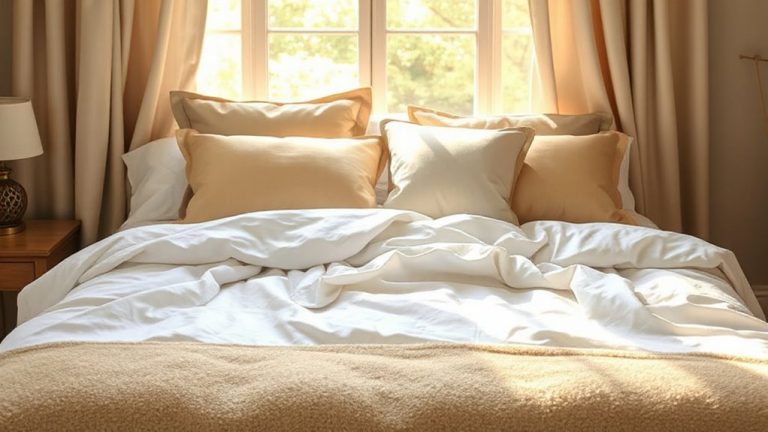
Choosing neutral colors can help tie together different fabric textures without overwhelming your bedroom’s look or feel. You’ll create color harmony by sticking to shades like ivory, taupe, soft gray, or warm white across your sateen, linen, and flannel layers. These tones let the fabric’s natural texture shine while supporting a restful environment. When everything shares a similar base hue, you get better fabric cohesion, even if materials vary in weight or sheen. That visual consistency helps reduce sensory clutter, which matters if you’re sensitive to sleep disruptions. Neutral palettes also blend easily with most decor, giving you flexibility to change accent colors later. Since light and temperature affect sleep quality, these soft shades reflect minimal light and maintain a calm tone. Stick to one undertone-cool, warm, or balanced-to keep the palette unified. This small choice improves both comfort and design without demanding major changes.
Rotate Care by Fabric Type
Different care needs define how each fabric performs over time, and matching your routine to the material keeps sheets feeling fresh and sleeping comfortably. You’ll want to adjust washing frequency based on use and fabric type-flannel, for example, benefits from gentle, less frequent washing to preserve softness and fabric durability. Sateen sheets, with their tighter weave, can handle more frequent laundering but need cool water and mild detergent to prevent pilling. Linen strengthens with each wash, so regular cleaning actually improves texture over time. Always air-dry or use low heat to maintain fiber integrity. Rotating care supports long-term comfort and performance. This helps you avoid wear that might disrupt sleep, especially if you’re sensitive to rough textures or temperature shifts. Matching care to construction guarantees each sheet type lasts, performs well, and supports restful sleep without unnecessary replacement.
Combine Flannel and Sateen for Seasonal Comfort
You’ve already matched your laundry routine to your sheets’ fabric needs, so now you can use that knowledge to fine-tune your sleep environment across the seasons. Switching between flannel and sateen helps maintain thermal regulation year-round. Flannel traps warmth in winter, while sateen’s smooth weave offers light insulation for cooler spring or fall nights. Both support fabric durability when washed properly-flannel resists pilling over time, and sateen maintains its soft sheen with gentle cycles. Consider your sleep comfort and local climate when rotating these textures.
| Season | Fabric Choice | Benefit |
|---|---|---|
| Winter | Flannel | Retains heat, enhances warmth |
| Summer | Sateen | Breathable, smooth for cool touch |
| Changeover | Mix layers | Balances thermal regulation |
Layering them occasionally can ease seasonal shifts while preserving long-term fabric durability.
On a final note
You can mix sateen, linen, and flannel by balancing weight, texture, and climate needs. Sateen offers smooth warmth, linen adds breathable texture, and flannel provides cozy insulation where needed. Layer them thoughtfully, matching thicknesses and using neutral tones to blend aesthetics. Rotate washing by fabric care needs to extend life. Test combinations seasonally, adjusting for comfort. Consider breathability, durability, and feel when choosing-many brands offer trial periods, helping you decide with confidence.