Understanding the Connection Between Chronic Stress and Sleep Deprivation: Strategies for Natural Relief
Chronic stress keeps your body alert, raising cortisol and fueling restless thoughts that block sleep. When you don’t sleep, your brain struggles to manage emotions, making stress feel worse. You can break this cycle by calming your nervous system with slow breathing or holding a cool object to ground yourself. A consistent bedtime routine, dim lights, and a clutter-free room help signal safety. Small, steady changes add up-there’s more to discover about resetting your rhythm and reclaiming rest.
Notable Insights
- Chronic stress elevates cortisol, disrupting sleep by keeping the body in a state of alertness.
- Sleep deprivation impairs emotional regulation, increasing stress sensitivity and cognitive overload.
- Deep, slow breathing and sensory grounding techniques calm the nervous system before bed.
- Consistent nightly routines signal the body to wind down and improve long-term sleep quality.
- Optimizing sleep environment with dim lighting, cool temperatures, and minimal electronics supports restful sleep.
Why Stress Keeps You Awake (And How to Fix It)
When stress keeps your mind racing at night, it’s not just about feeling tired the next day-your body’s natural stress response actually interferes with the brain’s ability to wind down. Cortisol spikes during moments of anxiety, keeping your system alert when it should be relaxing. That surge fuels mental chatter, looping thoughts about unfinished tasks or unresolved worries. You might lie awake, caught in a cycle where your body won’t switch off. Simple bedtime routines-like turning off screens an hour early or writing down thoughts in a journal-can reduce mental clutter. Consider breathable sleepwear and a cool room to support comfort. If you try sleep aids, check for non-habit-forming options with clear labeling, 30-day trial periods, and minimal side effects. Natural supplements often list cortisol regulation as a benefit, but results vary. Prioritize consistent sleep times over quick fixes.
Why Bad Sleep Makes Stress Worse: And Fuels the Cycle
Though you might think a restless night only leaves you groggy, poor sleep actually heightens your body’s sensitivity to stress, making tomorrow’s challenges feel harder to manage. When you’re sleep-deprived, your brain struggles to regulate emotions, leading to emotional exhaustion by midday. Even small frustrations can feel overwhelming. This lack of rest also causes cognitive overload, slowing your thinking and reducing focus, which makes decisions tougher and mistakes more likely. Over time, this fuels a cycle: stress ruins sleep, and poor sleep worsens stress. Without enough deep sleep, your nervous system stays on high alert. Consider tracking your sleep patterns to identify disruptions. Over-the-counter sleep aids may help short-term, but check with a doctor if problems persist. Look for products with clear dosing, a solid trial period, and minimal next-day drowsiness.
Calm Your Nervous System Before Bed
You’re not stuck in the loop of stress and poor sleep, even if it feels that way right now. Your nervous system can learn to shift from alertness to rest, especially with consistent sensory grounding techniques. Try pressing your palms together firmly or holding a cool glass-these small sensations redirect your brain away from stress. Deep, slow breathing also supports emotional regulation by signaling safety to your body. You don’t need special tools; just five minutes of focused attention can make a difference. Over time, these practices help your body recognize when it’s time to wind down. They’re low-risk, easy to test, and don’t require supplements or devices. If you try them for a week and notice even slight changes in how quickly you fall asleep or how rested you feel, they’re worth continuing. Consider them part of understanding what your sleep truly needs.
Follow a Nightly Routine That Lowers Stress
What if the key to better sleep isn’t found in a pill or device, but in the quiet consistency of your evening hours? You can improve sleep hygiene by following a nightly routine that lowers stress. Start winding down at the same time each night, limiting screens and bright lights. This signals your body it’s time to rest. Include simple relaxation techniques like gentle stretching, reading, or writing in a journal. These aren’t quick fixes but habits that build over time. Good sleep hygiene doesn’t demand perfection-small, consistent choices matter most. Your routine should feel doable, not stressful. Think of it as creating a buffer between daily demands and rest. Over weeks, many notice fewer sleep disruptions and less reliance on sleep aids. Give your body the chance to adapt. With patience, a steady routine supports deeper, more restorative sleep-all without needing complex tools or prescriptions.
Use Breathwork and Body Scans to Exit Fight-or-Flight Mode
A steady nighttime routine sets the stage, but sometimes your mind still races when your head hits the pillow. When stress keeps you stuck in fight-or-flight mode, diaphragmatic breathing and body scans can gently shift your nervous system into rest mode. These techniques support natural relaxation without pills or devices. Try pairing diaphragmatic breathing with progressive relaxation to release tension methodically.
| Technique | How to Practice | Time to Try |
|---|---|---|
| Diaphragmatic Breathing | Breathe deeply into your belly, not chest | 4–6 minutes |
| Body Scan | Focus attention from toes to head | 5–10 minutes |
| Progressive Relaxation | Tighten, then release muscle groups | 7–8 minutes |
| Combined Breath + Scan | Breathe into areas of tension | 10 minutes |
| Seated Option | Use if lying down is uncomfortable | Any time |
Create a Bedroom That Signals Safety to Your Brain
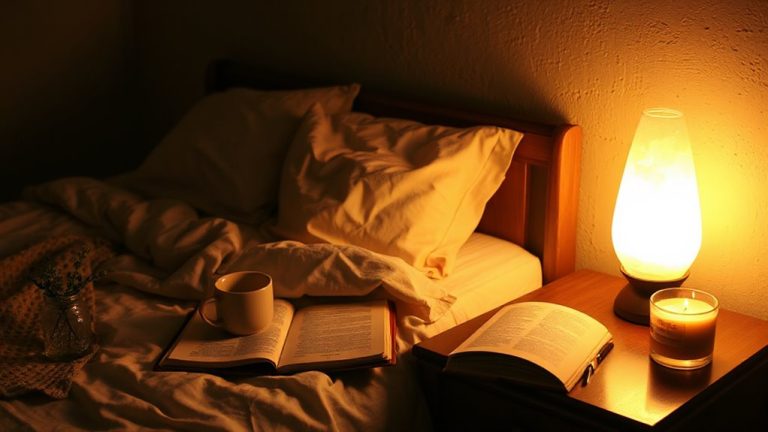
Though your mind might still carry the day’s tension, a bedroom designed to signal safety can shift your body toward rest by reducing subconscious stress cues. Start with soft lighting-dimmable lamps or warm-toned bulbs mimic sunset, helping your brain ease into sleep mode. Avoid harsh overhead lights; instead, use shaded or indirect lighting near the bed. Choose soothing colors like muted blues, soft grays, or warm taupes for walls and linens; these tones are linked to calmness and lower heart rate. Keep electronics minimal to reduce visual clutter and light pollution. Opt for blackout curtains to block outside light and maintain darkness. A tidy, predictable space supports consistency, helping your nervous system relax. Natural materials like cotton or linen add comfort without irritation. Try small changes over a week to see what helps you feel safer and more ready to rest. Incorporating best bedroom decor can significantly enhance sleep quality by aligning your environment with science-backed relaxation principles.
Small Daily Changes That Break the Stress-Sleep Loop
When you make small, consistent adjustments to your daily routine, you’re more likely to disrupt the cycle of stress and poor sleep over time. Try adding mindful journaling for 5–10 minutes each morning or evening-writing down your thoughts helps clear mental clutter and reduces nighttime rumination. Pair this with gratitude reflection by listing three things you’re thankful for daily; this simple habit can quietly shift your focus away from stressors. These practices don’t require special tools or apps, just a notebook and a few quiet moments. Over time, they support emotional regulation and prepare your mind for rest. When your mental load feels lighter, falling and staying asleep often becomes easier. Think of these steps as low-effort, high-return habits that build resilience. You can start small and adjust as needed-there’s no pressure to be perfect, just consistent.
On a final note
You can break the stress-sleep cycle by choosing calming routines and sleep-friendly environments. Simple changes-like consistent bedtimes, breathwork, or decluttering your bedroom-support better rest without relying on sleep aids. If problems continue, consider talking to a healthcare provider about sleep disorders. Many find relief through trial of small, sustainable habits backed by science. Look for options with clear benefits, easy use, and strong safety records.