Sleep Hygiene 101: An In-depth Guide to Achieving Better Sleep Through Environment Design
You’ll sleep better when your bedroom supports your natural rhythm. Keep it cool, ideally around 65°F, with breathable bedding like cotton or linen to regulate temperature. Use blackout curtains or a well-fitted eye mask to block light and boost melatonin. Reduce noise with earplugs or white noise machines, and minimize electronics to cut blue light. Choose calming colors and smooth furniture to ease mental stimulation-simple changes that quietly improve your rest over time.
Notable Insights
- Use calming colors, breathable bedding, and rounded furniture to create a relaxing bedroom environment that promotes mental ease.
- Install blackout curtains or use an eye mask to maximize darkness and support melatonin production for better circadian alignment.
- Maintain a cool room temperature between 60–67°F to facilitate natural body cooling and improve sleep onset and quality.
- Choose natural, breathable fabrics like cotton or linen for bedding to enhance airflow and regulate sleep temperature.
- Reduce noise disturbances with earplugs, white noise machines, or sound-dampening materials for uninterrupted, restful sleep.
How to Turn Your Bedroom Into a Sleep Sanctuary
What if your bedroom could help you fall asleep faster and stay asleep longer? You can create that space by designing a sleep sanctuary focused on relaxation. Start with calming colors like soft blues, greens, or warm neutrals-they reduce mental stimulation and signal safety to your brain. Pair them with breathable, comfortable bedding materials that feel gentle against your skin. Introduce soothing scents such as lavender or chamomile through essential oil diffusers or linen sprays; studies suggest they may lower heart rate and ease tension. Keep electronics minimal and noise low, using white noise machines if needed. Choose furniture with smooth, rounded edges to reduce subconscious stress. When testing changes, track sleep quality over a week or two. Most reputable bedding and scent products offer 30-day trials, so you can adjust risk-free. Optimize lighting by incorporating best lighting picks for dark rooms to enhance ambiance and support melatonin production. Small shifts add up to real improvement.
Block Light to Align With Your Natural Sleep Rhythm
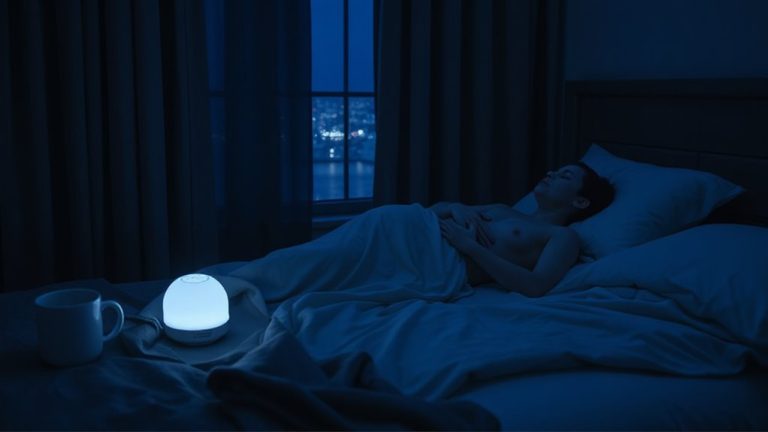
How well you sleep might hinge on just how dark your room gets. Your body’s natural sleep rhythm, or circadian cycle, relies heavily on darkness to signal it’s time to rest. Even small amounts of light can interfere with melatonin production, making it harder to fall or stay asleep. To create true darkness, blackout curtains are a solid choice-they’re designed with dense, layered fabric that blocks nearly all outdoor light and often include side seals to prevent gaps. Look for ones with a warranty, as better models last years. If you rent or travel often, eye mask use offers a portable solution. A well-fitted mask keeps light off your eyes without pressing on your eyelids, which helps comfort and effectiveness. Try both options to see what fits your sleep routine, room layout, and comfort needs. For maximum effectiveness, choose curtains specifically rated for best blackout performance.
Keep Your Room Cool for Deep, Restful Sleep
You’ve already taken steps to darken your space, and that same attention to detail matters when it comes to temperature. Your body naturally lowers its core temperature as bedtime approaches, so maintaining a cool room temperature-ideally between 60–67°F (15–19°C)-supports this shift. This range promotes thermal comfort, helping you fall asleep faster and stay in deeper sleep stages longer. Too warm, and your body struggles to cool down, disrupting sleep cycles. Too cold, and you might wake from discomfort. Adjust your thermostat or use a fan to find your ideal setting. Personal preferences vary, so trial different temps to see what works. Many people notice fewer nighttime awakenings when they consistently maintain cooler air. Monitoring room temperature nightly can offer insight into patterns affecting your rest, especially if you suspect a sleep disorder.
Use Breathable Bedding That Prevents Overheating
Many sleepers find they rest better when their bedding allows heat and moisture to escape, reducing the chance of waking up too warm. You can improve this by choosing materials made from natural fibers like cotton, linen, or bamboo, which offer breathability and softness. These fabrics help regulate your temperature by promoting airflow and providing moisture wicking, so sweat doesn’t trap heat against your skin. Look for percale or sateen weaves in sheets-they balance comfort and ventilation. For blankets or comforters, opt for lightweight fills like down or lyocell that resist overheating. Many brands now offer trial periods, so you can test bedding performance over several nights. Check warranty terms too, since quality breathable bedding often lasts longer with proper care. Choosing the right combination helps support consistent, comfortable sleep without relying on external cooling devices. A top-rated option for night sweats and temperature control is the best bedding for hot sleepers, designed specifically to enhance airflow and moisture management.
Eliminate Noise With Simple Soundproofing Hacks
Why does noise disrupt your sleep so easily, even when you’re tired? Your brain stays alert to sounds, pulling you from deep sleep. You can reduce interruptions with simple soundproofing. Try earplugs first-they’re cheap, portable, and block sudden noises like traffic or snoring. Look for memory foam ones with a noise reduction rating (NRR) of 30+ for best results. If earplugs alone aren’t enough, add white noise. A white noise machine or app masks irregular sounds with steady background tones, helping your brain ignore disturbances. Position it near your bed, set to a low, consistent volume. Heavy curtains, door draft stoppers, and rugs also help dampen sound. Test different combinations-you might need earplugs plus white noise for full effect. Most brands offer 30-day trials, so compare what works without risk.
Power Down Devices to Stop Sleep-Stealing Blue Light
Shutting out noise is only part of the battle-what you look at before bed can be just as disruptive. Your devices emit blue light, which can interfere with your body’s natural sleep-wake cycle by suppressing melatonin. The longer your screen time before bed, the harder it may be to fall asleep or stay asleep. To support better sleep hygiene, aim to power down phones, tablets, computers, and TVs at least 30 to 60 minutes before bedtime. If you must use a device, consider enabling a night mode that reduces blue light emissions. Some screens now come with built-in settings or apps that automatically adjust color temperature in the evening. Using these features may help reduce the impact on your sleep, especially if you’ve struggled with restlessness. Experiment to see what works best for your routine.
Run a 10-Minute Evening Reset for a Sleep-Ready Room
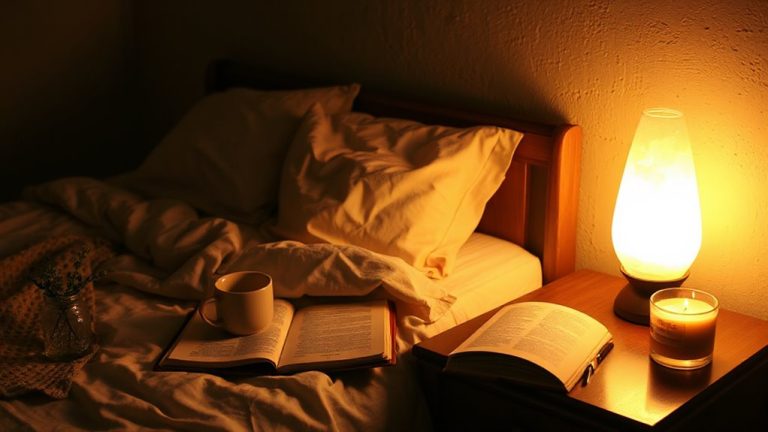
A focused 10-minute evening reset can make your bedroom work better for your sleep. Start by adjusting the evening lighting-dim the overheads and switch to warm, low-wattage bulbs or salt lamps to signal your body it’s time to wind down. Introduce calming aromatic cues like lavender or chamomile using a diffuser or linen spray; these scents support relaxation through gentle sensory feedback. Pick up clutter, tidy surfaces, and guarantee your bed is neatly made-visual order promotes mental calm. Confirm the room is cool and well-ventilated.
Use this brief routine to create consistency and cue your brain that sleep is coming.
| Task | Time Needed | Benefit |
|---|---|---|
| Adjust lighting | 2 min | Supports melatonin release |
| Add aromatic cues | 3 min | Enhances relaxation response |
| Tidy room & bedding | 5 min | Reduces mental clutter |
On a final note
You’ve made real changes by adjusting light, temperature, and noise to support your body’s natural rhythm. Simple upgrades-like breathable bedding or a cool room-can improve sleep depth without costly aids. Most fixes are low-risk and reversible, letting you test what works. If problems persist, consider tracking sleep patterns or consulting a professional, since disorders often mimic poor hygiene. Trial adjustments for at least a week to gauge improvement, and remember, consistency builds results over time.