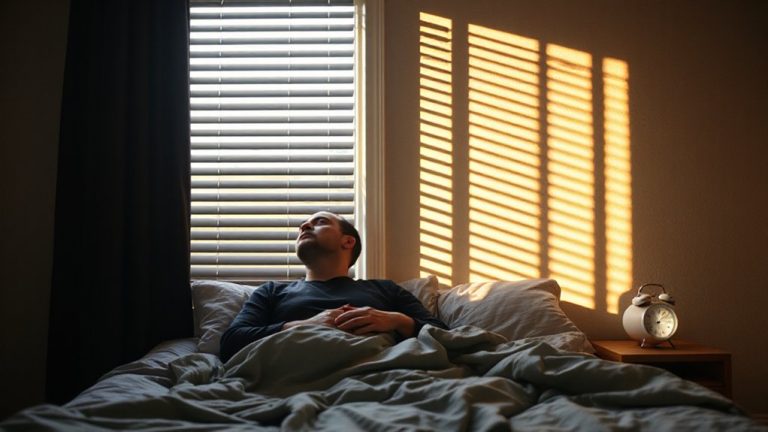
Understanding Restless Leg Syndrome (RLS) and Its Impact on Sleep Hygiene
You’ve likely felt it-the crawling, tingling urge to move your legs at night, common with restless leg syndrome (RLS). It disrupts sleep onset and reduces deep, restorative stages, leaving you tired. Triggers like low iron, genetics, or caffeine can worsen symptoms. Simple changes-consistent sleep times, less evening stimulants, warm baths-often help. If symptoms persist, treatments like dopamine-related medications may be an option under medical guidance. There’s more to explore about managing RLS effectively.
Notable Insights
- RLS causes uncomfortable leg sensations and an urge to move, often worsening at night and disrupting sleep onset.
- Sleep fragmentation from RLS reduces restorative REM and slow-wave sleep, leading to unrefreshing sleep.
- Genetic factors, iron deficiency, and conditions like kidney disease increase RLS risk and impact sleep hygiene.
- Evening caffeine, alcohol, and inactivity can trigger RLS, so lifestyle adjustments improve sleep quality.
- Consistent sleep schedules, leg stretches, and medical treatments like dopamine agonists help manage RLS-related sleep disruption.
What Is Restless Leg Syndrome (RLS)?
Picture lying in bed, ready to sleep, when an uncomfortable urge to move your legs sets in-restless leg syndrome (RLS) often starts like this. You feel crawling, tingling, or pulling sensations, most often at night, and moving eases the discomfort-just briefly. It’s not just restlessness; RLS is tied to neurological mechanisms involving dopamine and iron regulation in the brain. If you have a family history, your genetic predisposition may increase your chances. Symptoms vary in intensity and frequency, making sleep onset difficult and often reducing sleep quality. While it doesn’t lead to serious disease, RLS can disrupt your nightly routine and long-term rest. Diagnoses rely on symptom patterns, not scans, so tracking your experiences helps. Treatments range from lifestyle changes to medications, depending on severity. Monitoring timing, triggers, and relief methods gives you control when considering next steps for care or sleep aids.
Common Triggers and Who’s Most at Risk
While you can’t always prevent restless leg syndrome, knowing what triggers it and who’s more likely to experience it helps you make smarter choices about sleep and treatment. You may be at higher risk if you have a family history, since genetic predisposition plays a key role. Conditions like chronic kidney disease or Parkinson’s also increase your odds. Iron deficiency is a major trigger-low brain iron affects nerve signaling and can worsen symptoms. Certain medications, alcohol, caffeine, and sedentary habits may provoke episodes. Pregnant women, especially in the third trimester, often report RLS, though symptoms usually fade after delivery. Older adults are more prone, but RLS can start at any age. Identifying your personal triggers through a sleep diary can guide better sleep habits and decisions about seeing a specialist. Testing for iron levels is a simple first step that could lead to effective changes.
How RLS Disrupts Sleep Quality and Patterns
Restless leg syndrome throws a wrench into your sleep routine, making it tough to fall or stay asleep. You might notice an uncomfortable urge to move your legs, especially at night, which delays sleep onset and fragments your rest. These recurring sensations trigger frequent nocturnal arousal, pulling you out of deeper sleep stages and weakening overall sleep quality. Over time, this disrupts your sleep architecture, reducing REM and slow-wave sleep-both essential for restorative rest. You’re likely to wake feeling unrefreshed, even after eight hours. Poor sleep continuity can affect focus, mood, and daily function. Recognizing how RLS interferes helps you assess sleep aids and therapies more effectively. Devices like weighted blankets or pneumatic compression tools may offer support. Tracking sleep patterns can guide treatment choices, helping you find solutions that fit your needs without overpromising results.
Proven Strategies to Manage RLS Symptoms at Night
Managing RLS symptoms at night starts with strategies backed by research and real-world use. You can reduce discomfort through consistent lifestyle changes like sticking to a sleep schedule, avoiding caffeine late in the day, and doing light evening stretches. Regular exercise during the day helps, but avoid intense workouts close to bedtime. Some find relief with warm baths or using heating pads on their legs. When lifestyle changes aren’t enough, medication options may help-doctors often prescribe dopamine agonists or certain anticonvulsants based on your symptoms. These medications work differently for everyone, and side effects vary. You’ll need to try them under medical supervision to see what balances relief with tolerable effects. Don’t expect instant fixes-most solutions take days or weeks to show results. Patience and consistent tracking improve your chances of finding what works for your sleep and comfort.
When to See a Doctor for Restless Leg Syndrome
How do you know when it’s time to bring your leg discomfort to a doctor? If restless leg syndrome (RLS) disrupts your sleep more than twice a week or makes falling asleep nearly impossible, it’s time to seek help. You’re not alone-many face diagnosis challenges because symptoms vary and overlap with other conditions. A doctor can review your medical history, run tests, and possibly refer you to a sleep specialist. Recognizing patterns in your symptoms helps with accurate diagnosis. Once confirmed, you’ll explore treatment options tailored to your needs, from lifestyle adjustments to FDA-approved medications. Some treatments improve sleep quality fast, while others take weeks. Most come with trial periods or warranties, letting you assess effectiveness. Don’t wait until fatigue affects your daily life-early action supports better sleep hygiene and long-term comfort.
On a final note
You can manage RLS by adjusting nighttime habits and identifying triggers like caffeine or stress. Simple changes-consistent sleep schedules, light evening exercise, and leg stretches-often help. If symptoms persist, talk to your doctor about possible treatments, including FDA-approved medications or FDA-cleared devices. Many have trial periods or warranties, so test options safely. Good sleep hygiene supports better outcomes, and early action improves long-term rest.