Why Advanced Sleep Phase Disorder Is Linked to Familial Traits
You likely have a genetic mutation that shifts your internal clock earlier, making advanced sleep phase disorder run in families. Genes like *PER2* and *CK1δ* affect circadian timing and can pass from parent to child. This isn’t laziness or poor sleep hygiene-it’s a biological difference causing early sleep and wake times. If your family shares these patterns, it’s worth tracking sleep habits. Bright light therapy and melatonin timing may help manage daily demands, and understanding your family’s traits could guide better routines ahead.
Notable Insights
- Advanced Sleep Phase Disorder is linked to inherited genetic mutations affecting circadian rhythm regulation.
- Mutations in genes like *PER2* and *CK1δ* alter the body’s internal clock, causing early sleep-wake cycles.
- These mutations follow autosomal dominant inheritance, giving a 50% chance of passing the trait to offspring.
- Families with ASPD often show consistent early sleep patterns across multiple generations.
- Genetic testing and family history analysis help confirm the hereditary nature of the disorder.
What Is Advanced Sleep Phase Disorder?

What if your body clock simply runs ahead of everyone else’s? You’re not imagining it-this is Advanced Sleep Phase Disorder (ASPD). You likely feel sleepy early, maybe by 7 or 8 p.m., and wake hours before sunrise, unable to stay asleep. Your sleep architecture stays normal-deep sleep, REM cycles, all intact-but just shifted earlier. The core issue? Melatonin timing. Your body releases melatonin earlier than average, often mid-evening. That shift drives your sleep desire and morning alertness forward. It’s not laziness or insomnia; it’s physiology. While no sleep aid resets your internal clock, bright light therapy in the evening may help delay your rhythm slightly. Some try melatonin supplements in the morning, though responses vary. Diagnosis often involves sleep logs or actigraphy over weeks. Treatment focuses on managing social and work demands, not “fixing” sleep structure, since it’s healthy-just mistimed.
How Inherited Genes Cause ASPD
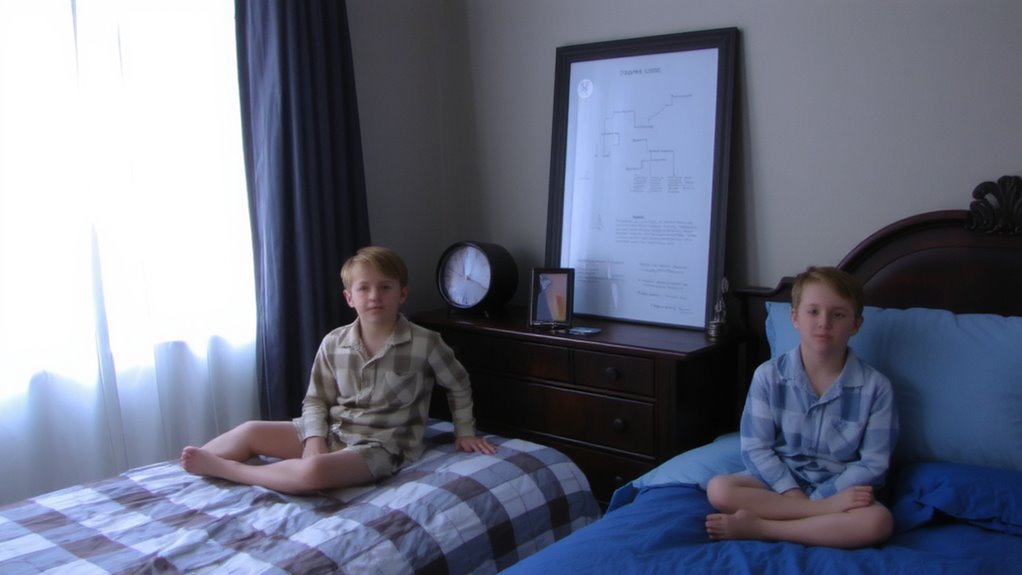
Though you might think your early sleep pattern is just a personal habit, it could actually stem from inherited genes that shift your body’s internal clock. Specific genetic mutations can alter how your circadian rhythm functions, making you naturally fall asleep and wake up hours earlier than typical. These changes are often passed down through families, following clear inheritance patterns-meaning if one parent carries the mutation, there’s a 50% chance you might inherit it. Scientists have identified such patterns in families with multiple members showing similar sleep tendencies. Because these genetic factors directly affect your biological timing, standard sleep aids or routine adjustments may not fully correct the shift. Understanding the root cause helps you choose better strategies, like timed light exposure or adjusted social schedules, rather than relying solely on temporary fixes that don’t address the underlying biology.
Key Circadian Genes Linked to Familial ASPD
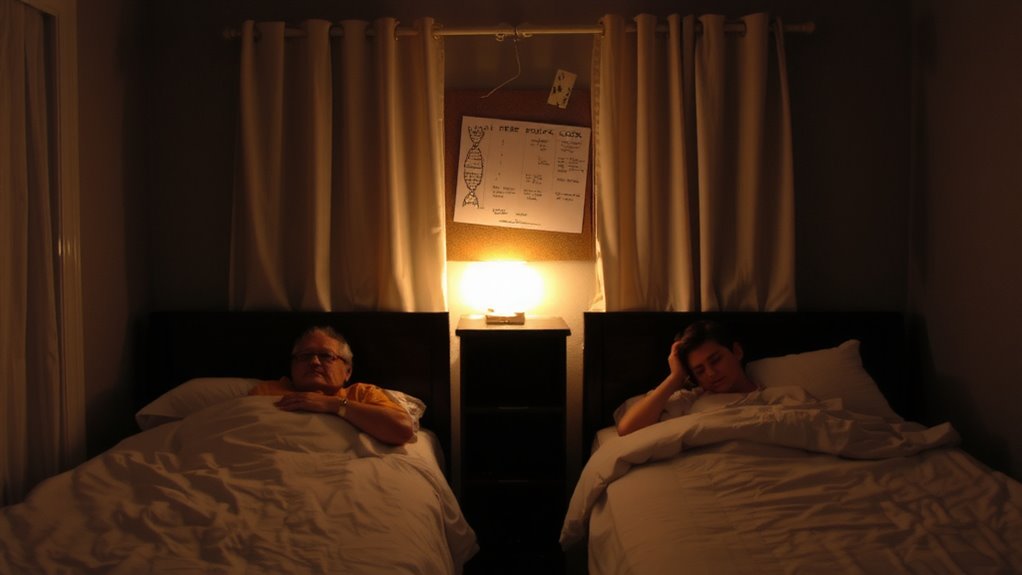
A handful of key circadian genes play a central role in shaping your sleep-wake cycle, and when altered, they can lead to familial advanced sleep phase disorder (ASPD). You may carry genetic mutations in genes like *PER2* or *CK1δ*, which shift your internal clock earlier. These changes directly affect chronotype inheritance, explaining why family members often share early sleep and wake times. The altered proteins speed up your circadian rhythm, making you feel tired earlier in the evening and awake before dawn. While this pattern is consistent, it’s not always disruptive-some adapt with lifestyle adjustments. Others might consider light therapy or melatonin, timed carefully to delay the cycle. Genetic testing can clarify if mutations are involved, supporting informed decisions. Understanding your biology helps you choose strategies that align with your needs, improving sleep quality without overhauling your natural rhythm.
Spotting ASPD in Your Family Tree
How often do you notice the same sleep patterns repeating across generations in your family? If you or relatives consistently fall asleep early and rise before dawn, family patterns might point to Advanced Sleep Phase Disorder (ASPD). These recurring traits often appear in parents, grandparents, and children, suggesting a strong genetic link. Observing sleep habits across your family tree can help identify whether early sleep timing is a shared tendency or a possible circadian condition. Genetic testing may offer clarity by revealing known mutations tied to ASPD, especially if symptoms persist and impact daily life. While not everyone needs testing, it’s an option when timing issues interfere with work, social life, or health. Understanding your family’s sleep history helps guide decisions about monitoring, adjustments, or professional advice, leading to better-informed steps for managing long-term sleep wellness.
ASPD vs. Normal Early Rising: A Medical Difference
You might think getting up at 5 a.m. and feeling sleepy by 8 p.m. is just a sign of good discipline, but it’s not always a lifestyle choice-sometimes it’s biology. Advanced Sleep Phase Disorder (ASPD) isn’t just early rising; it involves a consistent sleep onset variance, where you fall asleep and wake up far earlier than desired, often before 8 p.m. and 6 a.m. Unlike people who simply prefer mornings, those with ASPD can’t adjust easily-even with effort. That’s when a chronotype mismatch occurs, disrupting social, work, or family routines. Normal early risers adapt without strain, but ASPD causes distress when your internal clock won’t shift. The condition is often inherited, tied to genetic changes affecting circadian rhythms. Recognizing the difference helps guide decisions about sleep aids or light therapy. Tools like melatonin, timed exposure to evening light, or behavioral strategies may help manage timing without medication. These options offer practical support while respecting natural physiology.
When to Seek Diagnosis for Inherited ASPD
What if your early sleep pattern isn’t just a habit but a sign of something deeper? If you consistently fall asleep before 8 p.m. and wake before 4 a.m., especially with family members doing the same, inherited Advanced Sleep Phase Disorder (ASPD) might be the cause. This isn’t just preference-your body clock may be genetically shifted. When daily life becomes strained, like missing evening events or struggling with work hours, it’s time to act. Talk to a sleep specialist who can arrange sleep studies to confirm your circadian rhythm. These tests track your sleep-wake cycle over days, offering clear evidence. If results suggest ASPD, genetic counseling can help you understand risks for children or siblings. These tools don’t cure ASPD, but they guide decisions about lifestyle, light therapy, or melatonin use. Early insight means better control-without guesswork.
Coping Strategies for Families With ASPD
Why does the dinner table feel empty when you’re just starting your evening? Because your loved one with ASPD is already asleep, their day ending hours before yours. It’s tough, but you can adapt together. Practicing good sleep hygiene helps-keep routines consistent, limit evening light, and create a calm bedtime environment. Family counseling offers tools to communicate needs and ease frustration. You’re not alone in this shift. Consider shared schedules where possible, and use quiet activities to reconnect.
| Family Member | Evening Activity After ASPD Adjustment |
|---|---|
| ASPD Parent | Reading in bed by 7:30 PM |
| Teen Child | Finishing homework by 8:00 PM |
| Partner | Watching TV with low light after 9:00 PM |
| Young Child | Asleep by 8:30 PM, routine unchanged |
Small changes add up. Sleep hygiene and family counseling make life more predictable and peaceful.
On a final note
You might inherit advanced sleep phase disorder through specific circadian gene variants, making early sleep and wake times biological, not just habit. If family members consistently fall asleep and rise unusually early, consider a medical evaluation. Treatments like timed light exposure or melatonin can help adjust rhythms. Discuss options with a sleep specialist, and review warranty or trial details if using light therapy devices. Monitor changes carefully for best results.