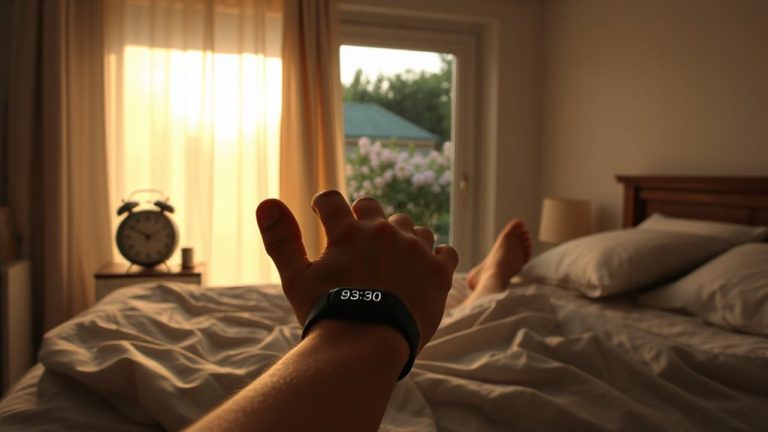
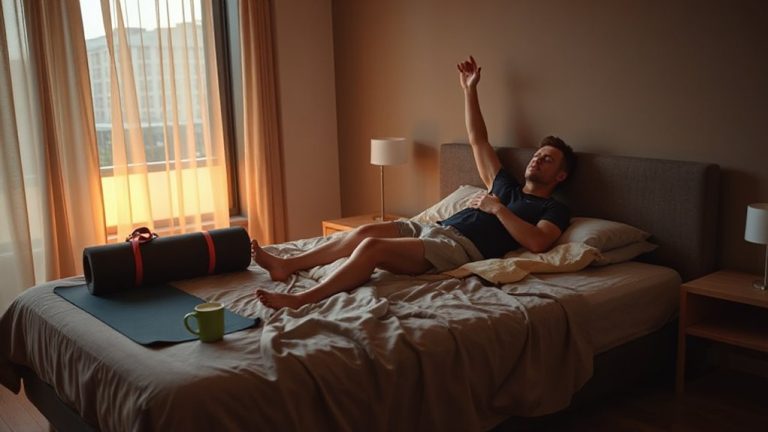
The Role of Sleep Pressure in Delayed Sleep Phase Disorder
Your sleep pressure builds the longer you’re awake, driven by adenosine in your brain, but in delayed sleep phase disorder (DSPD), this pressure peaks much later-often after midnight. Even if you’re tired, your body’s internal clock delays melatonin release and lowers body temperature too late for early sleep. Light exposure, especially blue light, worsens this delay. Sticking to consistent sleep times and reducing evening light can help reset your rhythm gradually. There’s more to discover about aligning your biology with healthier sleep patterns.
Notable Insights
- Sleep pressure builds normally in DSPD but peaks later due to delayed circadian timing.
- Adenosine accumulation drives sleep pressure, yet its effect is misaligned with typical sleep times in DSPD.
- Melatonin release is delayed, causing sleep pressure to align with early morning rather than night.
- Circadian misalignment prevents sleep onset at conventional hours despite rising sleep pressure.
- Natural sleep pressure can promote sleep if bedtime matches the delayed internal clock in DSPD.
What Is Sleep Pressure and How Does It Work?
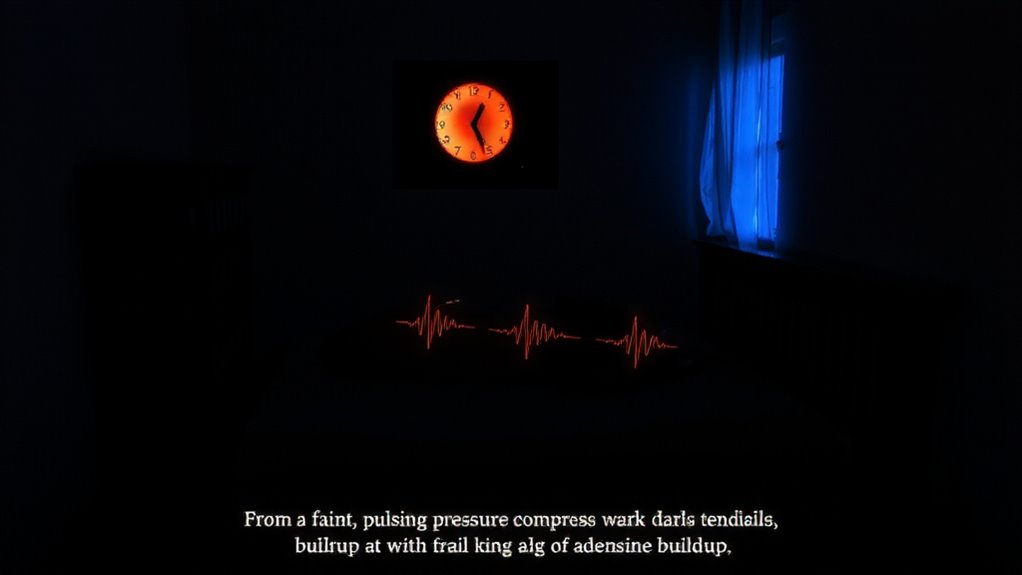
Think of sleep pressure as a kind of biological debt that builds the longer you stay awake. Your brain chemistry gradually shifts as adenosine, a neurotransmitter, accumulates and signals growing fatigue. This process isn’t just about how tired you feel-it’s tied to deep, measurable changes in your body’s systems. At the same time, your hormone cycles, including melatonin release, help regulate when sleep pressure becomes strong enough to push you into rest. These two forces-sleep pressure and circadian timing-work together, but don’t always line up perfectly. Understanding how brain chemistry and hormone cycles interact can help you make smarter choices about sleep schedules, light exposure, and even when to contemplate sleep aids. It’s not about forcing sleep; it’s about aligning with your body’s natural signals for better timing and improved sleep quality over time.
How DSPD Delays Your Sleep Drive
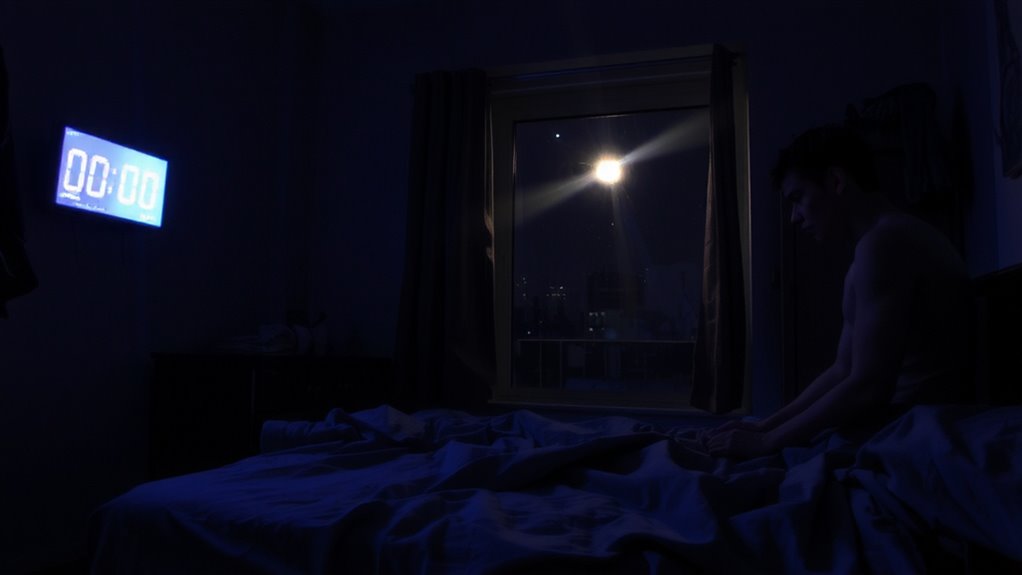
Your body builds sleep pressure steadily the longer you’re awake, but in delayed sleep phase disorder (DSPD), that rising pressure doesn’t match up with the clock like it does for most people. Even when you’re tired, your peak sleep drive shifts later-often past midnight or into the early morning hours. This delay isn’t just poor habits; it’s tied to a genetic predisposition that affects your internal clock. A hormonal imbalance, especially in melatonin release, plays a key role, pushing your body to stay alert when others are winding down. Because your circadian rhythm runs on a different schedule, standard bedtimes feel nearly impossible. Recognizing this helps you understand why typical sleep advice may not work. Tracking your natural sleep patterns and discussing options like timed light exposure or prescription melatonin with a specialist can support more effective, personalized strategies.
Why You Can’t Fall Asleep Early With DSPD?
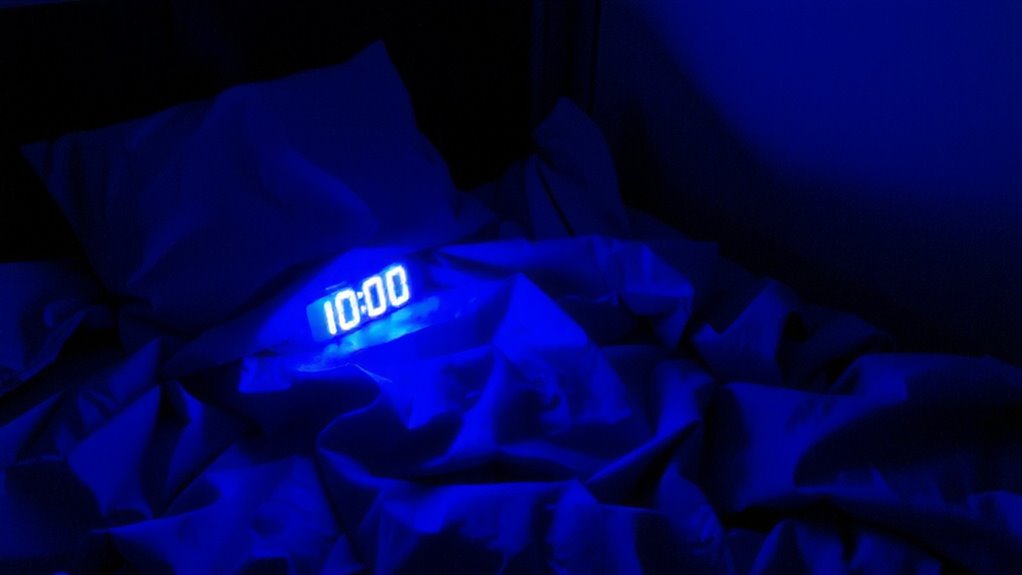
Even though you might feel exhausted by 10 or 11 p.m., your body isn’t ready to fall asleep because the internal signals that trigger sleep-like melatonin release and core body temperature drop-aren’t aligned with that schedule. This mismatch is due to circadian misalignment, a core feature of Delayed Sleep Phase Disorder (DSPD), meaning your internal clock runs later than typical. Your melatonin timing, which usually rises in the evening to prepare you for sleep, doesn’t begin until much later-often past midnight-making it nearly impossible to fall asleep earlier, no matter how tired you feel. While this delay isn’t laziness or poor habits, it does impact daily function. Trying to sleep early often leads to frustration and prolonged wakefulness. Recognizing this biological basis helps guide treatment choices, such as carefully timed melatonin supplements, which, when used correctly, may support gradual shifts in sleep timing under professional guidance.
How Light Keeps Your Body Clock Late
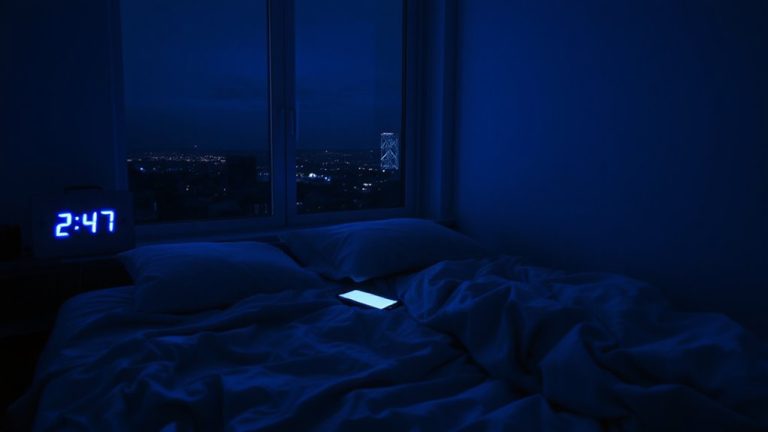
What keeps your body clock running late, even when you want to sleep earlier? It’s likely blue light and evening exposure messing with your internal rhythm. Your brain treats that light like daylight, delaying melatonin release and pushing sleep further into the night. Screens, LEDs, and phones all emit strong blue light, especially risky in the hours before bed.
| Source | Effect on Sleep Cycle |
|---|---|
| Phone screens | Delays body clock by 30+ mins |
| LED bulbs | Suppresses melatonin |
| Evening exposure | Shifts sleep time later |
Even small changes in light timing can deepen delayed sleep phase disorder. You don’t need total darkness, but reducing blue light 2 hours before bed may help stabilize your rhythm. Consider amber lenses or screen filters as testable options, often with free trials, to see what works for your body without commitment.
How to Reset Your Sleep Schedule Naturally
Shifting away from light’s role in delaying your rhythm, the next step is adjusting your sleep schedule without medication or devices. You can reset your internal clock by improving sleep hygiene-going to bed and waking up at the same time daily, even on weekends. Avoid screens an hour before bed, and keep your bedroom cool, dark, and quiet. Building sleep pressure naturally helps, so stay active during daylight and limit naps. Some people find herbal remedies like valerian root or chamomile helpful, though results vary and aren’t FDA-regulated. A variety of best calming teas can support relaxation and ease the transition into sleep. Start with small time shifts-15 minutes earlier each night-until you reach your target schedule. Consistency matters more than speed. Track your progress for a few weeks, and be ready to adjust based on how rested you feel. Patience and steady habits improve the odds of lasting change.
On a final note
You feel tired later because your sleep pressure builds on a delayed cycle, making early bedtimes tough. Light exposure, especially at night, reinforces this late rhythm. Resetting your schedule is possible with consistent morning light, controlled evening darkness, and gradual bedtime shifts. These natural methods work slowly but support long-term change. Some try supplements or devices, which may help but vary in evidence and comfort. Check with a provider to weigh options safely.