Melatonin’s Role in Improving Insomnia Symptoms Through Circadian Rhythm Adjustments
You can use melatonin to help reset your internal clock when insomnia stems from disrupted circadian rhythms. It signals your brain that it’s time to wind down, easing you into sleep naturally-especially if you struggle with falling asleep at night or waking too early. For best results, take a low dose 30–60 minutes before bed and maintain consistent sleep habits. Pairing it with good sleep hygiene increases effectiveness. Watch for side effects like grogginess or vivid dreams. If your sleep issues persist, exploring further guidance may help clarify the best next steps.
Notable Insights
- Melatonin helps regulate the circadian rhythm by signaling the brain to initiate sleep in response to darkness.
- Disrupted circadian rhythms due to blue light exposure can delay melatonin release and worsen insomnia symptoms.
- Timed melatonin supplementation 30–60 minutes before bed can realign the sleep-wake cycle and improve sleep onset.
- Low doses (0.5–3 mg) are effective for circadian adjustment without suppressing natural melatonin production.
- Combining melatonin with consistent sleep hygiene enhances its effectiveness in treating insomnia linked to circadian misalignment.
How Melatonin Helps You Fall (And Stay) Asleep
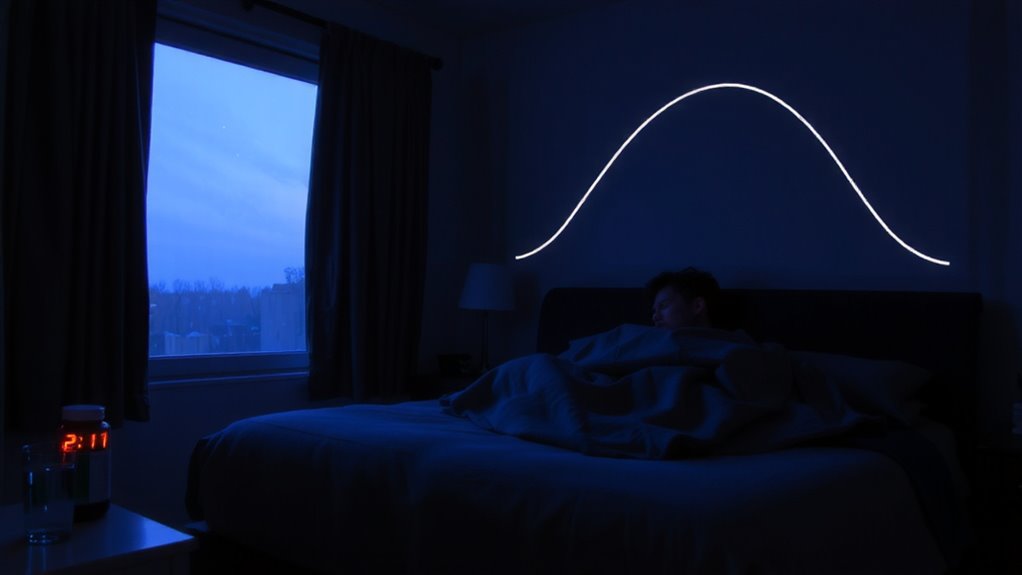
Why does your body know when it’s time to sleep? It relies on melatonin, a hormone that signals darkness to your brain. When it’s dark, your pineal gland releases melatonin, helping shift your sleep architecture toward rest. This hormone doesn’t knock you out but gently eases you into drowsiness by supporting natural neurotransmitter balance, especially with GABA and serotonin activity. You’ll likely fall asleep faster and stay asleep longer when melatonin levels rise at the right time. Most over-the-counter supplements offer 0.5 to 5 mg, typically in quick-release or extended-release forms. Quick-release helps you fall asleep; extended-release may help you stay asleep. Check labels for added ingredients and consider third-party tested brands. While melatonin is generally safe for short-term use, it’s best used as part of a broader sleep routine. For travelers adjusting to new time zones, best travel melatonin picks can support circadian rhythm realignment and improve sleep quality.
Circadian Disruption and Melatonin: Recognizing the Signs
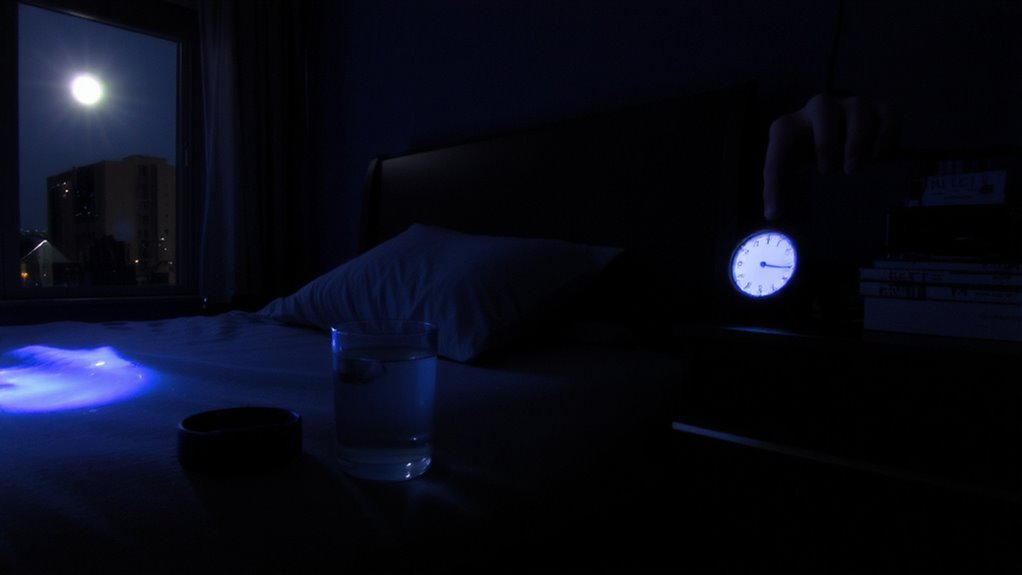
Though your body runs on a natural sleep-wake cycle, modern life-like late-night screens or irregular work hours-can throw it off, and when that happens, melatonin production often lags. Signs of circadian disruption include trouble falling asleep at your desired sleep timing or waking up too early, even when tired. Your internal clock is highly sensitive to light exposure, especially blue light from phones and computers, which can delay melatonin release and shift your rhythm. You might feel alert at bedtime or groggy in the morning, despite getting enough hours in bed. Irregular sleep timing worsens the mismatch. Recognizing these patterns helps you identify whether circadian misalignment is affecting your sleep. Adjusting light exposure-dimming screens at night, getting bright morning light-and stabilizing sleep timing can support natural melatonin production and improve sleep quality over time. For optimal comfort during circadian rhythm adjustments, consider using breathable, temperature-regulating best sheets for Sleep Number beds.
Melatonin for Insomnia: Who Responds Best?

You might already know how circadian disruption affects melatonin and sleep timing, but when it comes to using melatonin as a sleep aid, not everyone sees the same results. Your response could depend on genetic predisposition, which influences how your body produces and uses melatonin naturally. Some people have gene variants that make them more sensitive to supplementation, while others see little change. Age factors also play a role-older adults often produce less melatonin naturally, so they may benefit more than younger users. Children and teens rarely need supplements unless advised due to specific conditions. If you’re middle-aged or older, have a consistent sleep schedule issue, and suspect low melatonin, a trial might help. Always consider these factors before starting, and consult a healthcare provider to rule out other causes. For those considering supplementation, choosing a high-quality product is key, and reviewing the best melatonin supplements can help guide an informed decision.
When to Take Melatonin for Faster Sleep Onset
How effective could your melatonin routine be if taken at the wrong time? Not very-timing accuracy is key for faster sleep onset. Taking melatonin too early or too late can shift your circadian rhythm incorrectly, delaying results. For best effects, take it 30–60 minutes before bedtime. This aligns with your body’s natural dip in alertness, boosting melatonin’s effectiveness.
| Sleep Goal | Best Time to Take Melatonin |
|---|---|
| Fall asleep faster | 30–60 min before bed |
| Adjust early wake | 1–2 hours before current sleep time |
| Shift sleep later | 2 hours before current bedtime |
| Maintain rhythm | Same time nightly |
Dosage consistency also matters-stick to 0.5–3 mg nightly. Small doses often work better than high ones, reducing grogginess. Pair timing accuracy and dosage consistency for ideal outcomes.
Pair Melatonin With Sleep Hygiene for Better Results
Pairing melatonin with solid sleep hygiene greatly improves your chances of falling asleep faster and staying asleep longer. You’ll get better results when you support the supplement with a consistent routine and a rest-friendly sleep environment. Aim to go to bed and wake up at the same time every day, even on weekends-routine consistency reinforces your body’s internal clock. Make your bedroom dark, quiet, and cool, and avoid screens for at least 30 minutes before bed, since blue light can interfere with melatonin’s effectiveness. Reserve your bed for sleep only, strengthening the mental link between your bed and rest. Keep caffeine and heavy meals to a minimum in the evening. Using melatonin alongside these habits doesn’t just help you drift off-it supports more restorative, uninterrupted sleep through the night.
Side Effects and Safety: What to Watch For
While melatonin is generally safe for short-term use, it’s important to stay aware of possible side effects and how your body responds. You might notice drowsiness, dizziness, or headaches, especially if you take too much. A melatonin overdose can lead to nausea, confusion, or intense dreams, so stick to the lowest effective dose-usually between 0.5 to 3 mg. Since it affects sleep-wake cycles, timing matters; taking it too early or late can shift your rhythm more than intended. You should also consider that long term dependency isn’t common, but using melatonin nightly for months may reduce your body’s natural production. It’s best used temporarily while you improve sleep hygiene. Always talk to your doctor if you have health conditions or take other medications. Watch how you feel, adjust carefully, and prioritize lasting habits over quick fixes.
On a final note
You can use melatonin to help reset your sleep schedule, especially if your circadian rhythm is off. It works best when taken 30–60 minutes before bedtime, paired with good sleep habits like consistent routines and limited screen light. Some people see quicker results, particularly those with delayed sleep onset. Watch for mild side effects like drowsiness. It’s not a long-term fix, so consider it a short-term aid while you improve sleep hygiene.