Why Innerspring Mattresses Are Often Paired With Wool Toppers
You pair a wool topper with an innerspring mattress to soften its firm support while keeping breathability and resilience. Wool cushions pressure points without sinking, helping side sleepers feel less stiff. It wicks moisture, regulates temperature, and resists allergens naturally. The fibers bounce back over time, maintaining comfort year after year. Many come with 5- to 10-year warranties and trial periods. You’ll find how thickness and care affect long-term performance.
Notable Insights
- Innerspring mattresses offer firm support but can feel too hard, and wool toppers add cushioning without compromising that support.
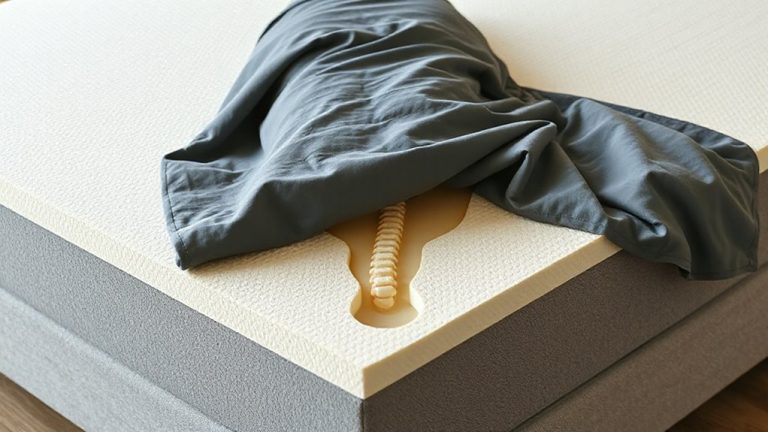
- Wool toppers conform gently to the body, relieving pressure on hips and shoulders while maintaining spinal alignment.
- Natural wool fibers regulate temperature by wicking moisture and releasing heat, preventing overheating during sleep.
- Wool enhances breathability and works with innerspring coils to improve airflow, reducing allergens like dust mites and mold.
- Wool is durable, renewable, and resilient, often backed by long warranties and requiring minimal care for extended use.
Why Pair a Wool Topper With an Innerspring Mattress?
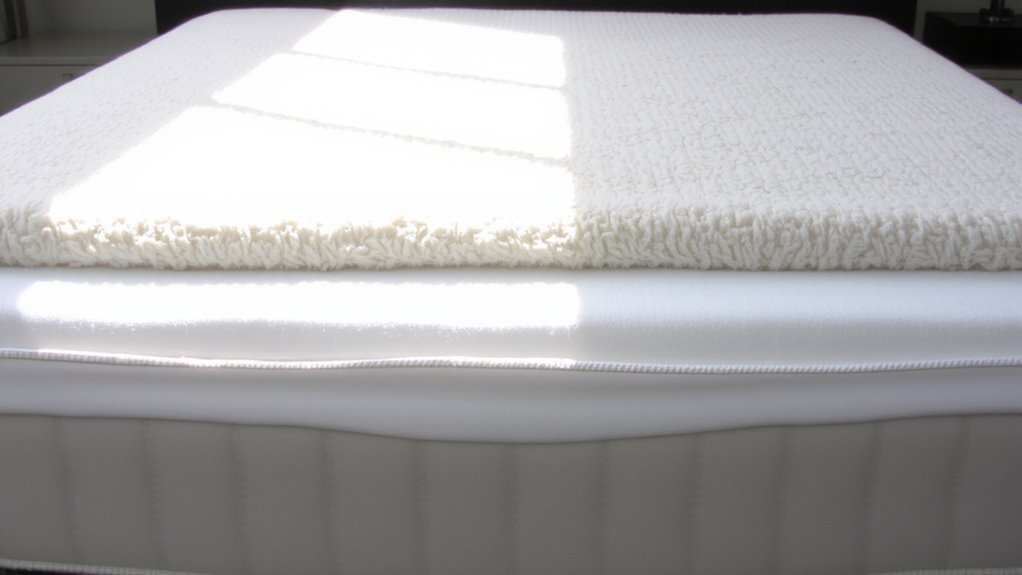
A good number of innerspring mattresses deliver strong support but can feel too firm or lack pressure relief, especially if you sleep on your side or have joint discomfort. You might find that adding a wool topper improves both comfort and breathability without sacrificing support. Wool offers natural comfort by conforming slightly to your body while staying resilient over time. It’s also an eco friendly support option, since it’s renewable, biodegradable, and often processed without harsh chemicals. Unlike synthetic foams, wool helps regulate temperature, reducing night sweats. Most wool toppers work well on top of innersprings, adding a soft yet supportive layer. Look for certified organic wool and check warranty terms-many quality toppers include 5- or 10-year coverage. Testing one in your bedroom for a few nights can help you decide if the blend of spring support and wool’s natural benefits suits your sleep needs.
How Wool Toppers Reduce Firmness and Pressure
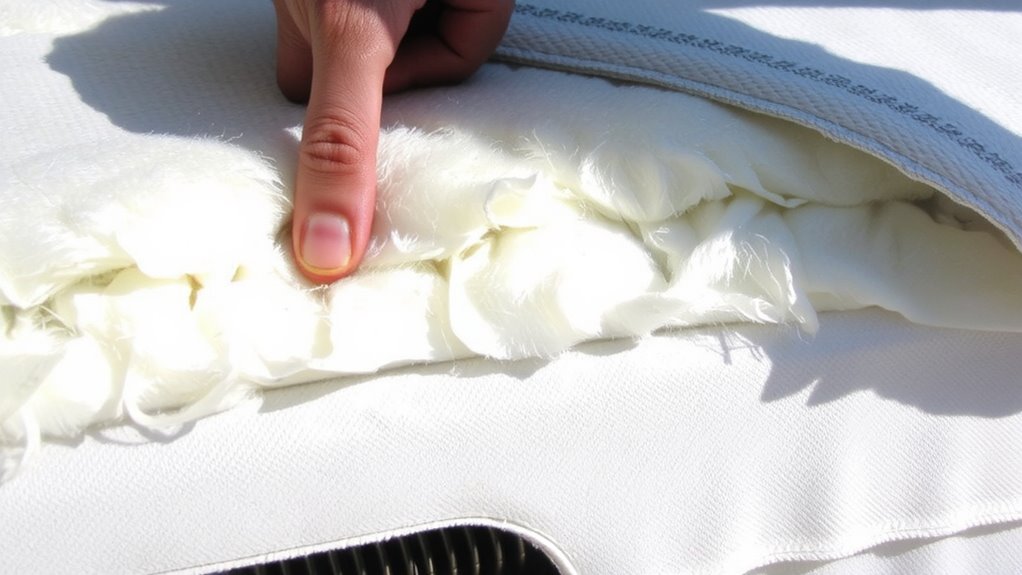
Why does an innerspring mattress sometimes feel too firm, even if it offers great support? The coils provide durability and structure, but they don’t always cushion pressure points well. That’s where a wool topper helps. Its natural fibers offer compression resistance, meaning they bounce back after you lie down instead of packing down over time. This resilience supports your body without sinking too deeply. Wool also promotes even pressure dispersion, spreading your weight across the surface so hips, shoulders, and joints don’t bear excess force. You’ll notice less stiffness when waking, especially if you sleep on your side or have joint sensitivity. The material conforms gently, not rigidly, refining the feel of a firm base. Most wool toppers come with trial periods and warranties, so testing one involves little risk. It’s a practical upgrade if firmness disrupts your comfort but you still want solid support from your innerspring.
Can a Wool Topper Regulate Your Sleep Temperature?
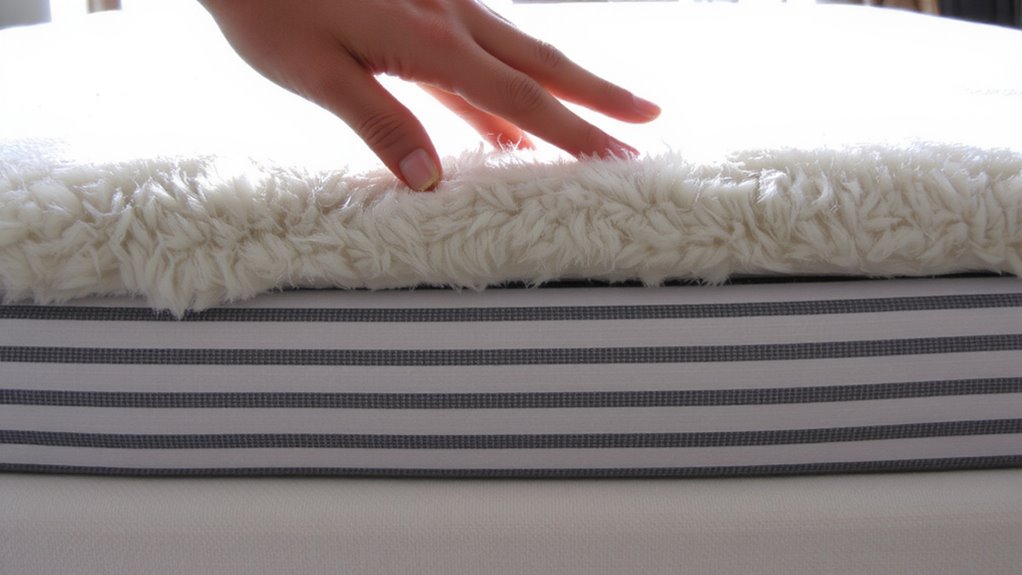
How does a wool topper help you stay comfortable all night when your innerspring mattress traps heat? Wool naturally wicks moisture and manages airflow, helping maintain thermal comfort through changing body temperatures. Sleep science shows stable sleep temperature supports deeper, more restful rest. Wool fibers absorb excess heat when you’re warm and release it when you cool down, balancing your microclimate without feeling stuffy. This breathable construction adapts to your needs, whether you sleep hot or feel chilly. Unlike synthetic toppers, wool doesn’t trap sweat or degrade insulation over time. It resists odors and maintains performance, even after long-term use. Many wool toppers come with trial periods and durable warranties, making them a practical choice. For better thermal regulation and improved sleep conditions, adding wool offers measurable benefits based on your body’s rhythms and sleep environment needs.
How Wool Toppers Improve Airflow and Reduce Allergens
You’re already aware that a wool topper helps balance your body heat throughout the night, especially when paired with an innerspring mattress that tends to retain warmth. Wool’s natural fibers promote airflow, allowing heat and moisture to escape efficiently. This breathability reduces humidity buildup, which can otherwise encourage dust mites and mold. Thanks to its hypoallergenic properties, wool resists allergens without chemical treatments. It’s a smart choice if you’re sensitive to irritants or managing mild sleep disruptions linked to allergies.
| Feature | Benefit | Performance Insight |
|---|---|---|
| Natural fibers | Enhance breathability | Air moves freely through the material |
| Hypoallergenic properties | Reduce allergens | Naturally repels dust mites and mold |
| Breathable structure | Supports airflow | Works with innerspring coils for ventilation |
| Moisture-wicking | Keeps sleep surface dry | Lowers humidity that triggers allergies |
Do Wool Toppers Help With Motion Isolation?
What happens when someone moves on the other side of the bed-does it wake you? Wool toppers offer modest motion isolation through natural vibration absorption, helping reduce how much movement transfers across the mattress. While they’re not as effective as memory foam, their dense fiber structure dampens some noise and movement, contributing to sound dampening. You’ll notice less bounce and subtle shifts, especially on innerspring beds where motion typically travels further. Wool’s resilience allows it to respond softly to pressure, absorbing small disturbances like rolling over or adjusting position. This can support lighter sleepers or those sensitive to interruptions. Though not a complete barrier, the added layer improves overall sleep continuity. Many wool toppers also come with trial periods, so you can test their impact on motion in your own bed. Consider it a mild but helpful upgrade for shared sleepers.
Choosing the Right Thickness for Your Wool Topper
A wool topper’s thickness plays a direct role in how it affects comfort, support, and motion absorption, building on its ability to reduce disturbances during sleep. Choosing the right thickness depends on your weight, sleeping position, and existing mattress firmness. Below is a guide to help match thickness with needs, including considerations for custom sizing and durability concerns.
| Thickness | Best For | Notes |
|---|---|---|
| 1 inch | Light sleepers, mild softening | Minimal change, quick break-in |
| 2 inches | Side sleepers, added cushion | Better pressure relief, slight sink |
| 3 inches | Heavyweights, max comfort | Deep contouring, may need custom sizing |
| 4 inches | Severe pressure points | High loft, watch durability concerns over time |
Thicker toppers offer more plushness but may compress faster, especially without proper support. Custom sizing guarantees a snug fit, reducing shifting and wear. Always check warranty terms to protect your investment.
How to Care for Your Wool Topper Long-Term
How can you keep your wool topper feeling fresh and supportive for years? Regularly air it out by placing it in mild sunlight, which naturally refreshes the fibers and reduces odors. Avoid moisture buildup by using a breathable, washable protector-this minimizes the need for deep cleaning. When cleaning is necessary, follow gentle washing techniques: hand wash or use a delicate machine cycle with wool-safe detergent, then lay flat to dry to prevent shrinkage. Never use bleach or high heat. For storage tips, keep your topper in a cool, dry place, loosely covered to allow airflow-never seal it in plastic, as wool needs to breathe. Rotate it a few times a year to promote even wear and maintain loft. With proper care, your wool topper supports restful sleep longer, enhancing comfort without compromising breathability or thermal regulation.
On a final note
You might choose a wool topper for your innerspring mattress to soften firmness while maintaining support. Wool regulates temperature naturally, wicks moisture, and resists allergens, improving sleep comfort. It adds cushioning without trapping heat, and though it won’t fully isolate motion, it enhances airflow. Toppers range from 1 to 3 inches-thicker options offer more plushness. Most come with washable covers and trial periods, so test one if you’re adjusting to a new feel.