Creating a Herbal Sleep Protocol for Shift Workers
You’re dealing with a disrupted internal clock when working shifts, and light at night can suppress melatonin, making sleep lighter or harder to start. Herbs like valerian, passionflower, and chamomile support natural relaxation without heavy sedation or grogginess the next day. Take a standardized blend 30–60 minutes before bed, even during daytime hours, to signal rest consistently. Rotate shifts? Anchor your routine with dim lighting and timed herbal support, adjusting over 2–3 cycles. Always check for interactions, especially if you take CNS depressants. A third-party tested formula with a 30-day guarantee lets you test safely, and trying different timings in low-pressure periods helps fine-tune results. More details on building your personalized routine follow.
Notable Insights
- Align herbal supplements like valerian and passionflower with your shift-based bedtime to support circadian rhythm adaptation.
- Use standardized, third-party tested herbal blends to ensure consistent potency and avoid contaminants.
- Take calming herbs 30–60 minutes before sleep, even during daytime, to signal rest despite light exposure.
- Avoid stimulating herbs like ginseng close to bedtime, especially on night or rotating shifts.
- Consult a healthcare provider to prevent interactions between herbal supplements and prescription medications.
How Shift Work Breaks Your Sleep Cycle

While your body’s natural rhythm is designed to follow the sun, working nights or rotating shifts throws that cycle out of sync, making it harder to fall asleep or stay asleep when you need to. This mismatch causes circadian disruption, confusing your internal clock and weakening sleep signals. When you’re exposed to light at night-especially blue light-your brain slows melatonin production, a hormone that cues sleep. That’s melatonin suppression, and it’s common in shift workers trying to rest during daylight hours. As a result, your sleep may feel lighter, more fragmented, or shorter than needed. Over time, this pattern can increase the risk of long-term sleep disorders. Managing light exposure, sleep environment, and timing helps, but many find support through targeted strategies that address the root causes of disrupted sleep without relying on harsh medications.
Why Herbs Help You Sleep Without Morning Fog
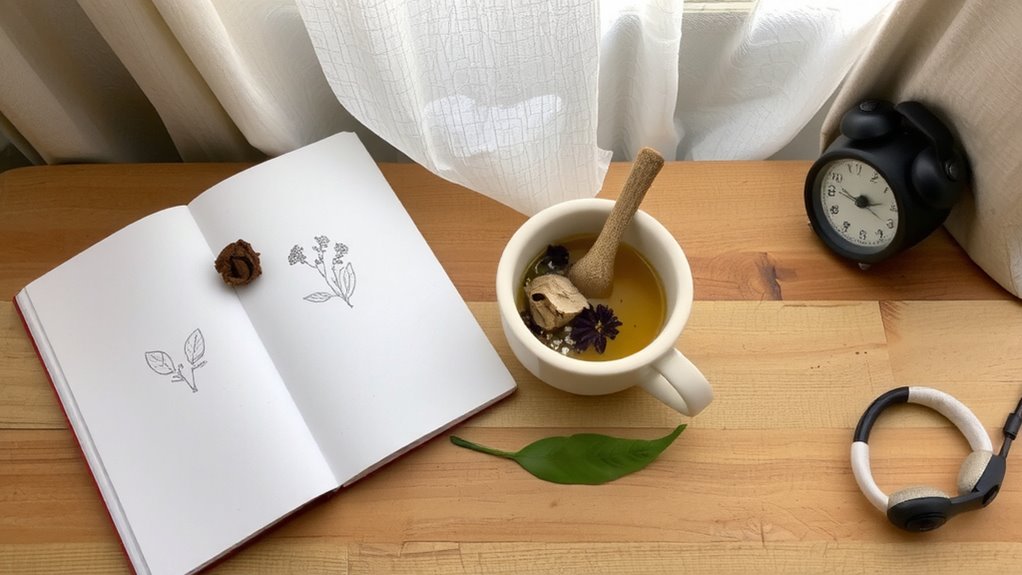
Sleep support from herbs offers a gentler alternative to strong sleep medications, especially when you’re trying to rest at unusual times. Unlike prescription drugs that can linger in your system, herbs like valerian, passionflower, and chamomile promote relaxation without heavy sedation. You’ll notice the difference in how you wake-clearer, more alert, and ready for downtime or daily tasks. That’s because of their herbal efficacy: they support natural sleep pathways without disrupting your brain’s chemistry long-term. You maintain cognitive clarity, letting you function safely after short or irregular sleep. These botanicals work with your body’s rhythms, not against them. Many users find they adapt quickly, with fewer groggy mornings. Though results vary, most report improved sleep quality within a few uses. Consider starting with standardized extracts to guarantee consistent potency. Always check for third-party testing when choosing products.
Top Herb Blends for Daytime Sleep After Night Shifts

When you’re working the night shift, getting quality sleep during the day means fighting against your body’s natural rhythm, so choosing the right herbal blend can make a real difference. A blend of valerian root, passionflower, and lemon balm uses herbal synergy to support relaxation without harsh side effects. These herbs work together to ease your nervous system, helping you fall asleep faster and improve overall sleep quality. Chamomile combined with ashwagandha is another effective option, especially if stress or anxiety disrupts your rest. Look for standardized extracts to guarantee consistent strength, and choose formulas tested for purity. Try one blend for at least three shifts to assess its effect before switching. Most come with a 30-day satisfaction guarantee, so you can test them risk-free. Always check with your doctor if you’re on other medications. For shift workers, incorporating a natural sleep aid can complement your routine and promote more restful daytime sleep.
Time Your Herbs to Your Shift
How well you time your herbal sleep support could shape how quickly you drift off after a night shift. Proper herb timing helps your body relax when it’s not naturally inclined to sleep. If you work nights, take calming herbs like valerian or passionflower about 30–60 minutes before your target bedtime, even if it’s morning. This supports better circadian alignment by signaling rest at consistent times, regardless of light or daily noise. Consistency matters-your body begins to expect rest, improving sleep onset and quality. Avoid stimulating herbs like ginseng close to bedtime, as they may disrupt your efforts. For day sleep, consider a blend designed for deeper sedation, taken at the same time daily. Over time, this routine strengthens your body’s internal clock. Trial different timings in low-risk settings to see what gives you restful recovery. It’s not just the herb, but when you use it that counts. Choosing a high-quality valerian root supplement can enhance the effectiveness of your sleep protocol.
Stay on Track With Rotating or Irregular Shifts
Why is it so hard to stay consistent with herbal sleep support when your work schedule keeps changing? Your body struggles to achieve circadian alignment when shifts rotate unpredictably. This makes sleep consistency difficult, even with herbs like valerian or chamomile. To stay on track, anchor your routine as much as possible-use dim lights before bed, keep a regular wind-down ritual, and take your herbal support at the same time daily, regardless of shift. Think of it like setting a personal sleep cue. Over time, this builds reliability, helping your internal clock adapt. If your schedule changes weekly, track your sleep patterns for two to three cycles, then adjust herb timing gradually. Small shifts help your system respond better than sudden changes. Aim for steady habits, not perfection. Consistency improves results more than any single herb choice. For added comfort during rest, consider sleeping on best bamboo sheets to help regulate temperature and enhance sleep quality.
Avoid Dangerous Herb-Drug Interactions
Could your nightly herbal sleep aid be working against your prescription meds? It’s a real possibility. Many shift workers use herbs like valerian, chamomile, or passionflower to help regulate sleep, but these aren’t risk-free. Some herbs interact with common medications-especially blood thinners, antidepressants, or sedatives-leading to dangerous drug contraindications. For example, valerian might increase the effects of CNS depressants, raising drowsiness or dizziness. That’s why herb safety starts with transparency. Always tell your doctor what supplements you’re taking, especially if you’re on prescription drugs. Checking for interactions doesn’t mean you can’t use herbs-it means you’ll use them more wisely. A quick talk with a pharmacist or healthcare provider can prevent problems. When in doubt, verify. Your health depends on knowing how herbal ingredients work with, or against, your current meds.
Build Your Custom Herbal Sleep Routine
What if your ideal sleep routine could be shaped around your unique schedule and sensitivities? Start by aligning herbal synergy with your body’s natural rhythm-combine gentle herbs like valerian, passionflower, and chamomile based on what supports your sleep without next-day grogginess. If you work nights, take your blend 30 minutes before daytime sleep, not bedtime. Adjust doses gradually and monitor how your body responds over a few shifts. Consistent sleep rituals matter: dim lights, reduce screen time, and use calming teas or tinctures the same way each cycle. Rotate herbs occasionally to prevent tolerance. Always choose standardized extracts for reliable potency, and check batch testing for purity. Trial periods of 7–10 days help gauge effectiveness. There’s no universal formula, but thoughtful experimentation helps you build a sustainable, personalized herbal sleep routine that respects your shift work demands.
On a final note
You now have the tools to build a herbal sleep routine that fits your shift schedule. Choose herbs like valerian or passionflower for reliable support, and time doses to align with your sleep window. Always check for drug interactions, especially if you take prescriptions. Start with small amounts, track how you feel, and adjust blends as needed. A well-chosen protocol can improve sleep quality without grogginess, helping you feel rested and ready for your next shift.