How to Wash Embroidered Duvet Covers Without Damaging Stitching
Always check the care label first-some embroidered duvet covers need dry cleaning or specific water temperatures to protect delicate stitching. Turn it inside out before washing to shield embroidery from friction. Use the gentle cycle with cold water and a mild detergent, avoiding fabric softener, which can weaken fibers over time. Never hang or tumble dry; lay flat on a drying rack to prevent stretching. Store it flat or rolled to maintain shape and thread integrity. Further details on preserving intricate designs follow.
Notable Insights
- Always check the care label to follow fabric-specific washing instructions and avoid damaging embroidery or voiding warranties.
- Turn the duvet cover inside out before washing to protect delicate stitching and prevent snagging of raised embroidery.
- Use the gentle cycle with cold water and a mild detergent to minimize stress on threads and prevent color bleeding.
- Lay the cover flat to dry on a clean, dry surface to avoid stretching from wet weight and protect stitch integrity.
- Store flat or rolled on a padded tube in a breathable bag to prevent creasing, stretching, and moisture buildup.
Check the Label on Your Embroidered Duvet Cover
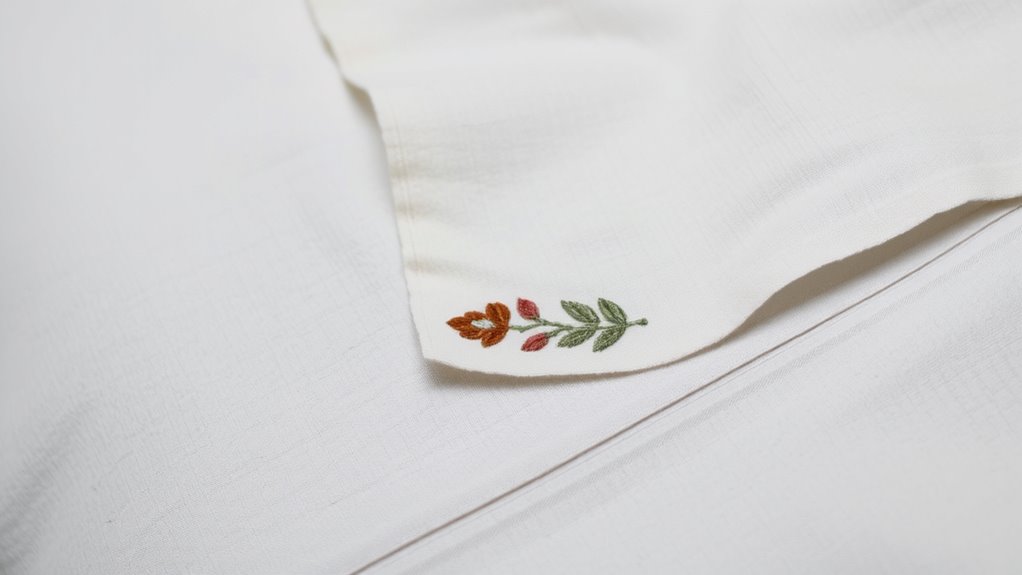
What if the best way to protect your embroidered duvet cover starts before you even wash it? Check the care label first-it holds key details about fabric type, washing temperature, and recommended cleaning methods. Ignoring it could harm stitching or fabric, especially during stain removal attempts. Some materials react poorly to harsh detergents or high heat, so follow instructions closely. If the label advises against fabric softener, skip it-residue can weaken fibers over time and reduce breathability, which might affect sleep comfort. You’ll also want to note whether dry cleaning is required, as machine washing could void any warranty. Labels often include trial-period info or performance tips based on construction. Taking a moment now helps maintain softness, color, and integrity through many uses. It’s a small step that supports long-term performance-especially if you’re sensitive to texture changes that might disrupt sleep.
Turn It Inside Out to Protect Embroidery
While turning your embroidered duvet cover inside out before washing may seem like a small step, it helps shield delicate stitching from friction and abrasion during the cycle. This simple move supports fabric preservation by reducing surface wear, especially on raised or intricate designs. Flipping the cover inside out keeps embroidery smooth and intact, maintaining stitch integrity over time. It’s especially helpful if the piece has dense threadwork or metallic accents, which can snag or tangle with other laundry. You’ll notice less pilling and distortion after several washes, meaning your bedding keeps its quality longer. For best results, combine this step with proper zipper closure and minimal load crowding. Though not always required, it’s a low-effort habit that improves long-term care. Over time, consistent handling like this helps preserve both appearance and construction, making it a smart choice for anyone invested in lasting sleep comfort and bedding performance.
Wash on Gentle With Cold Water
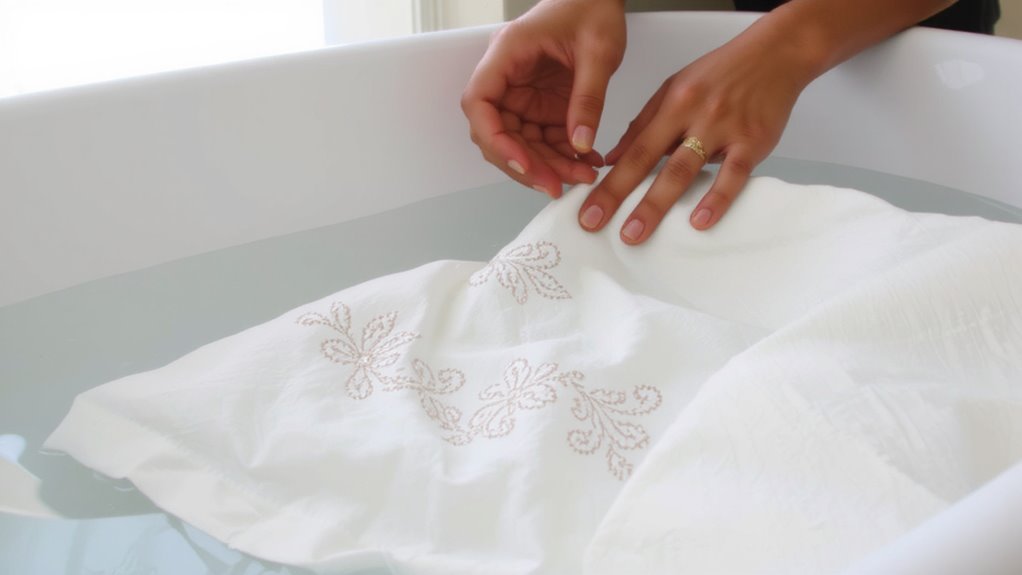
When washing embroidered duvet covers, choosing the gentle cycle with cold water helps preserve both fabric and stitching over time. Cold water prevents shrinking and color bleeding, while the gentle setting reduces stress on delicate threads. You should avoid fabric softener, as it can coat fibers and degrade绣线 slowly. Instead, use a mild detergent made for delicates. If your machine has adjustable settings, shorten the spin cycle to minimize friction and tension. Always zip up any closures and wash the cover alone or with similar fabric items.
| Setting | Recommendation |
|---|---|
| Water Temp | Cold |
| Wash Cycle | Gentle/Delicate |
| Fabric Softener | Avoid |
| Spin Cycle | Low/Short |
Lay Flat to Dry: No Hanging or Tumbling
After washing your embroidered duvet cover on the gentle cycle with cold water, the next step is just as important for maintaining its shape and stitch integrity-drying it the right way. You should always lay it flat to dry, never hang or tumble it. Hanging adds fabric tension that can stretch the embroidery out of alignment, especially when wet and heavy. Tumbling creates friction and heat, which may weaken delicate threads over time. Instead, choose a clean, dry surface with good air circulation, like a drying rack or spare bed. Flip the cover halfway through drying to guarantee even moisture evaporation. This method supports even weight distribution and helps the fabric retain its original dimensions. Proper drying preserves both construction and decorative details. With consistent care, your duvet cover will stay in shape, stitch by stitch, ready to contribute to a restful sleep environment night after night.
Store Flat or Rolled to Prevent Damage
You’ll want to store your embroidered duvet cover flat or rolled to keep it in top condition. Proper storage methods prevent stress on delicate stitching and avoid creases from fabric folding. Laying it flat on a shelf or in a drawer distributes weight evenly, while rolling it around a padded tube reduces strain. Avoid hanging long-term-it can stretch the fabric and distort embroidery. Use breathable cotton bags instead of plastic to protect against moisture and discoloration.
| Method | Benefit | Consideration |
|---|---|---|
| Flat Storage | Minimizes creasing, supports weight | Requires shelf/drawer space |
| Rolled | Saves vertical space | Use acid-free paper to wrap |
| Folded | Convenient for small areas | Risk of permanent creases |
Choose based on your space and fabric care needs.
On a final note
Always check the care label before washing your embroidered duvet cover, as fibers and stitching vary. Turn it inside out to shield the embroidery, then wash gently in cold water to preserve thread and fabric. Air-dry flat to prevent stretching or heat damage-never tumble or hang. When storing, lay flat or roll it to reduce stress on seams. Proper care keeps stitching intact and extends lifespan, supporting long-term comfort and appearance.