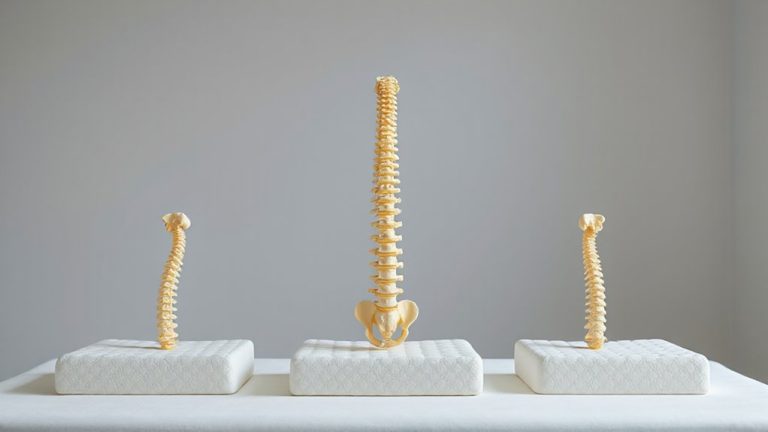
Why Innerspring Mattresses Are Often Used in Healthcare Facilities
You’ll often find innerspring mattresses in healthcare settings because they offer firm, consistent support that keeps the spine aligned, especially important if you’re immobile. Their durable coil system resists sagging, handles frequent use, and supports easier cleaning with fluid-resistant, tightly sealed covers. They’re also more breathable than foam, helping regulate temperature. With a lifespan of up to 10 years and lower long-term costs, they’re a practical choice. There’s more to evaluate about how these features compare in real-world use.
Notable Insights
- Innerspring mattresses provide firm, consistent support that maintains spinal alignment for immobilized patients.
- Their durable construction with steel coils and high-density foam withstands constant use in healthcare settings.
- Fluid-resistant, easy-to-clean covers support strict infection control and withstand frequent disinfection.
- Enhanced airflow from the coil design reduces heat buildup, improving comfort for sensitive patients.
- Long lifespan and repairable design lower replacement costs and reduce long-term healthcare spending.
Why Hospitals Still Choose Innerspring Mattresses
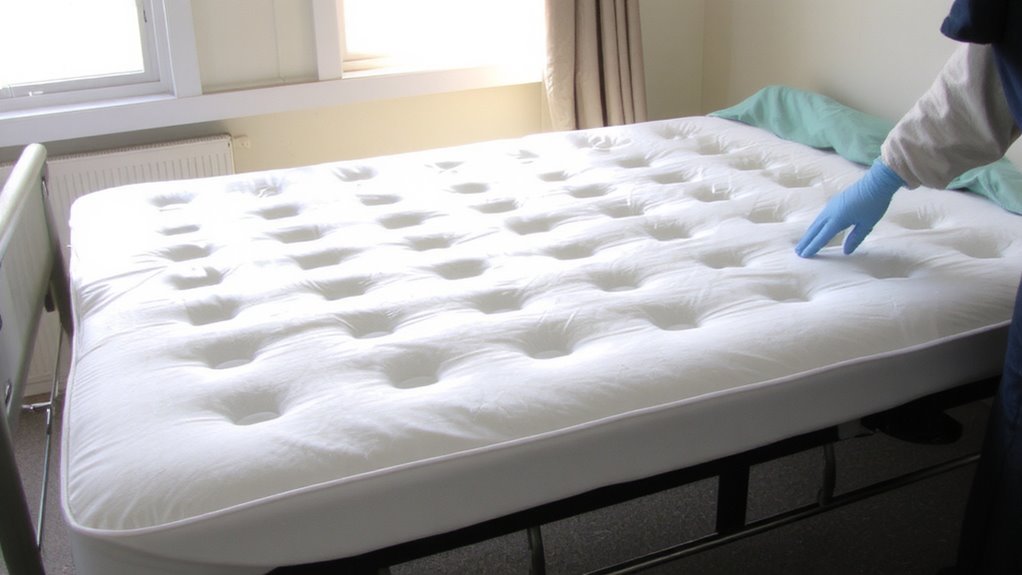
Even though newer mattress types have entered the market, innerspring models remain a practical choice for many healthcare facilities because they offer reliable support and durability at a lower cost. You’ll find these beds use tempered steel coils bonded to high-density foam, which together improve patient comfort and extend mattress durability. The firm, breathable design helps regulate temperature, reducing overheating during long stays. Most models come with antimicrobial fabric covers that resist mold and bacteria, supporting hygiene protocols. Factories build them to endure constant use, so they withstand frequent cleaning and patient transfers without sagging. If you’re comparing options, check warranty terms-many last 5 to 10 years with proof of maintenance. Trial periods are rare in institutional buys, so rely on performance data. While not ideal for every condition, their balance of support, airflow, and cost makes innerspring mattresses a sensible pick where budget and longevity matter.
Strong Spinal Support for Immobilized Patients
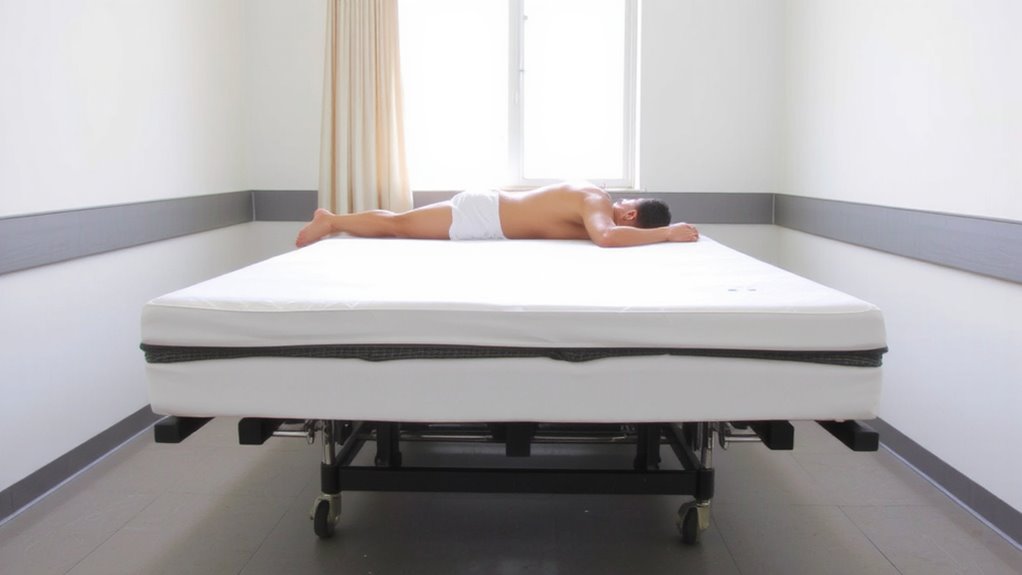
Proper spinal alignment matters most when patients can’t reposition themselves. Innerspring mattresses provide firm, consistent support that helps maintain natural spinal alignment, especially important for those confined to bed. The coil system responds to body weight by reinforcing the lower back and minimizing sinkage, keeping the spine straight and reducing strain. Even though memory foam conforms more closely, innerspring models often offer better edge support and resistance to motion transfer-key for medical settings. They also promote balanced pressure distribution, lowering the risk of pressure sores by preventing excessive weight on hips or shoulders. Paired with a quality topper, they combine support with surface cushioning. Many healthcare-grade innersprings come with antimicrobial covers and offer trial periods or extended warranties. This makes them a practical, durable choice for long-term patient care.
Built for Heavy-Duty Hospital Use
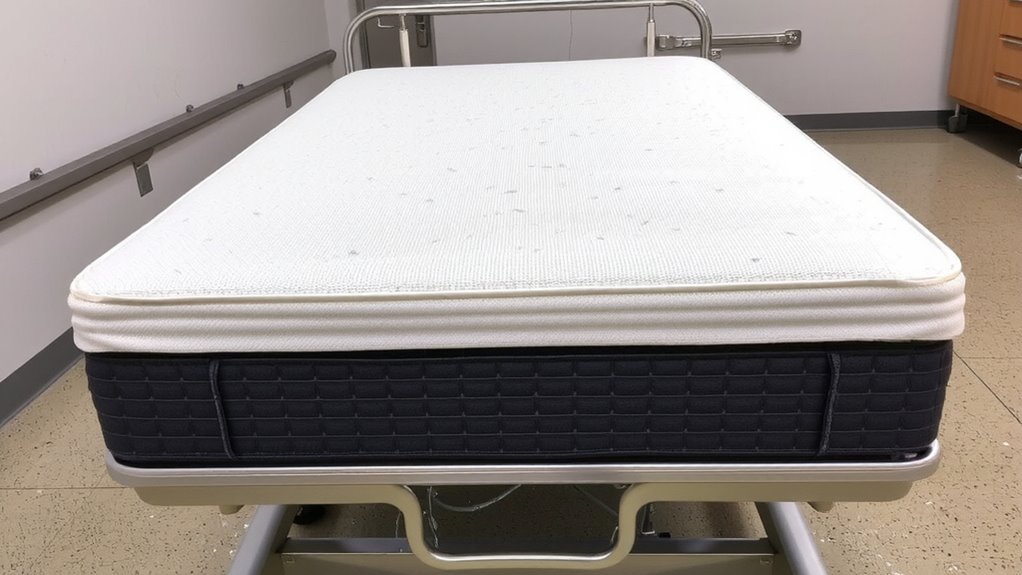
Since hospitals demand reliability, you’ll want a mattress that withstands constant use without losing shape or support. Innerspring mattresses offer durable construction designed for heavy daily wear. With reinforced coils and high-density foam layers, they provide long term reliability across years of patient turnover. Their robust design supports frequent repositioning and weight shifts without sagging.
| Feature | Benefit |
|---|---|
| Reinforced steel coils | Resist deformation over time |
| High-density base foam | Prevents bottoming out |
| Heavy-duty fabric cover | Handles frequent handling |
| Edge support system | Maintains stability when sitting |
| 10-year warranty | Reflects confidence in long term reliability |
You can count on this type of mattress to maintain performance in demanding environments. The durable construction guarantees consistent support, making it a smart choice where toughness matters.
Simple Cleaning, Stronger Infection Control
When keeping hospital environments clean is a top priority, you’ll want a mattress that makes disinfection quick and effective. Innerspring mattresses offer easy maintenance thanks to their tightly sealed, fluid-resistant covers that stand up well to frequent cleaning. You can wipe down surfaces with common hospital-grade disinfectants without damaging the material, helping guarantee consistent hygiene assurance. Their simple construction limits places where bacteria can hide, unlike foam layers that may trap moisture or degrade over time. Because they’re built for repeated sanitation, these mattresses support stronger infection control protocols. The sturdy cover materials resist tears and punctures, maintaining a protective barrier through daily use. Easy maintenance doesn’t mean sacrificing performance-these models balance durability with cleanliness. For facilities focused on practicality and long-term hygiene, innerspring mattresses provide reliable performance and peace of mind without unnecessary complexity.
Cooler Sleep in Hospital Beds
Why do some patients rest easier at night than others, even in the same facility? It often comes down to sleep temperature. Innerspring mattresses support cooler sleep thanks to their breathable design and open coil structure. This allows better air circulation, reducing heat buildup. If you’re choosing bedding for sensitive patients, consider how construction affects comfort.
| Feature | Benefit | Impact on Sleep |
|---|---|---|
| Coil Support System | Enhances airflow | Promotes consistent ventilation |
| Breathable Design | Reduces moisture retention | Helps maintain cool surface |
| Fabric Cover | Lightweight, porous materials | Supports skin comfort |
| Gap Between Layers | Allows heat to escape | Minimizes overheating |
| Air Circulation | Continuous movement of air | Encourages restful sleep |
These traits can make a real difference, especially for those prone to night sweats or poor thermoregulation.
Lower Replacement Costs for Facilities
A single innerspring mattress can last up to 7–10 years with proper care, and that kind of lifespan really adds up when you’re outfitting an entire facility. You’ll replace them less often, which boosts cost efficiency over time. That durability frees up more of your budget for other patient care needs, improving your overall budget allocation. Innerspring units are often easier and cheaper to repair than replace, too-minor issues like sagging can sometimes be fixed instead of scrapped. Their straightforward construction means parts are accessible and service is fast, reducing downtime. With fewer replacements needed, you also cut down on long-term purchasing stress and inventory demands. While no mattress lasts forever, choosing one built to endure helps maintain consistency in patient comfort. You’re not just buying beds-you’re investing in long-term performance and smarter spending, which matters when every dollar counts.
Innerspring vs. Memory Foam: Which Is Better for Hospitals?
How do you choose between innerspring and memory foam when outfitting a hospital? Consider both patient comfort and material durability. Innerspring mattresses offer firm support with responsive coils, helping ease movement for staff and patients. They’re breathable, reducing heat buildup-a plus during long stays. Memory foam contours closely, which can relieve pressure points but may retain heat unless gel-infused. For patient comfort, it depends on individual needs: some prefer the hugging feel of foam, while others like the lift of coils. In high-traffic facilities, material durability matters; innersprings often last longer under constant use and resist permanent sagging. Many hospitals opt for coil-based models with foam overlays, balancing support and softness. Trial periods and warranties help assess long-term performance. Test both types in real-world conditions before deciding. Each has strengths-your choice should match patient needs and facility demands.
On a final note
You’ll find innerspring mattresses in hospitals because they support the spine well, especially for patients who stay still. Their durable coils handle frequent use, and the breathable design helps keep sleep cooler. Since they’re easy to clean, infection control improves. Though less contouring than memory foam, they cost less to replace. Many facilities choose them for practicality. Check warranties and trial periods when comparing-both types have trade-offs worth weighing for your needs.