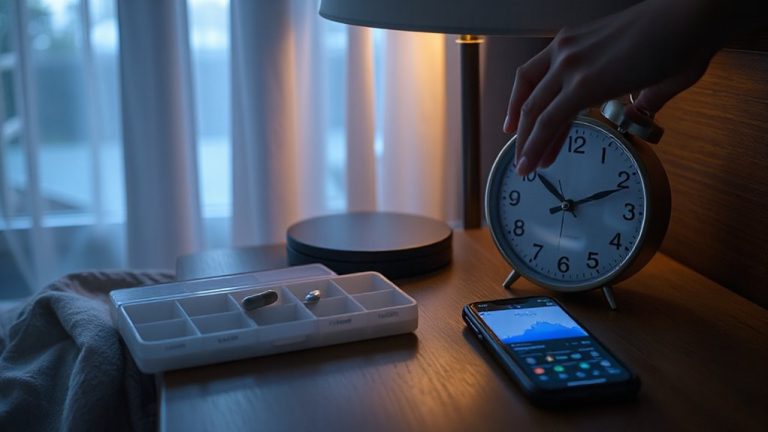
Why Advanced Sleep Phase Disorder Can Lead to Daytime Fatigue
You feel tired during the day because Advanced Sleep Phase Disorder shifts your internal clock, making you fall asleep and wake up much earlier than typical. Even if you go to bed at 7 p.m., you may wake up before dawn, disrupting deep and REM sleep. This misalignment means your rest doesn’t match natural sleep cycles, leaving you fatigued. Poor sleep quality persists despite long hours in bed. Evening light therapy and consistent wake times can help adjust your rhythm. More strategies are available to explore.
Notable Insights
- Advanced Sleep Phase Disorder causes early sleep and wake times, leading to early morning awakenings that truncate sleep duration.
- Even with adequate time in bed, circadian misalignment disrupts sleep architecture and reduces restorative deep and REM sleep.
- Melatonin release occurs earlier in the evening, shifting the entire sleep-wake cycle and causing fatigue during evening social hours.
- Waking before dawn due to internal clock shifts results in chronic sleep fragmentation and non-refreshing sleep.
- Misalignment with societal schedules leads to daytime exhaustion, even if total sleep time appears sufficient.
What Is Advanced Sleep Phase Disorder?

While most people wind down in the evening and sleep through the night, you might notice you’re feeling sleepy earlier than usual-sometimes as early as 6 or 7 p.m.-and waking up wide awake by 3 a.m., and that could be a sign of advanced sleep phase disorder (ASPD). This condition shifts your sleep schedule forward, often due to genetic predisposition or age factors. You’re more likely to develop ASPD if a family member has it, suggesting inherited traits play a role. It also becomes more common as you age, especially after 60, making older adults more vulnerable. Though not dangerous, it can disrupt daily routines and social activities. You may struggle to stay awake during evening commitments or find morning responsibilities harder due to early rising. Recognizing these patterns helps you decide whether to track sleep habits, consult a specialist, or explore light therapy options with a doctor’s guidance.
How ASPD Shifts Your Internal Clock
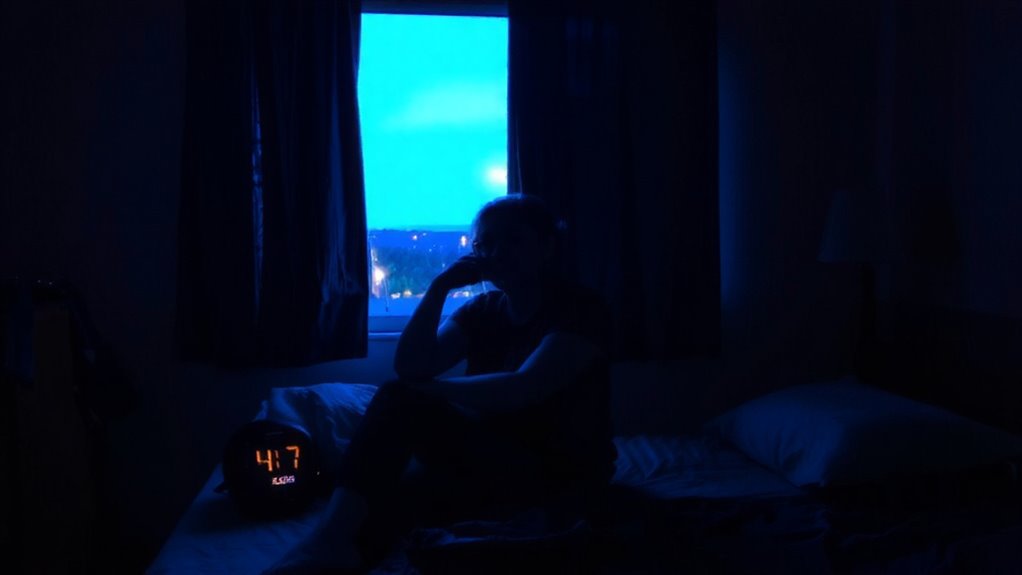
Your body runs on a natural 24-hour cycle called the circadian rhythm, and in advanced sleep phase disorder (ASPD), this internal clock shifts earlier than normal-sometimes by several hours. That means you feel sleepy and wake up much earlier than most people, no matter your schedule. This shift affects melatonin timing, the hormone that signals sleepiness; in ASPD, melatonin is released earlier in the evening, often around 6–8 p.m. Your circadian rhythm runs on internal cues, not just bedtime habits. Light exposure, genetics, and age can all influence this timing. Treatments like bright light therapy in the evening may help delay your circadian rhythm. Melatonin supplements, taken at a later time, might adjust melatonin timing gradually. These strategies don’t fix everything overnight, but consistent use over weeks could help realign your sleep cycle with daily demands.
Why Early Bedtimes Don’t Fix Fatigue
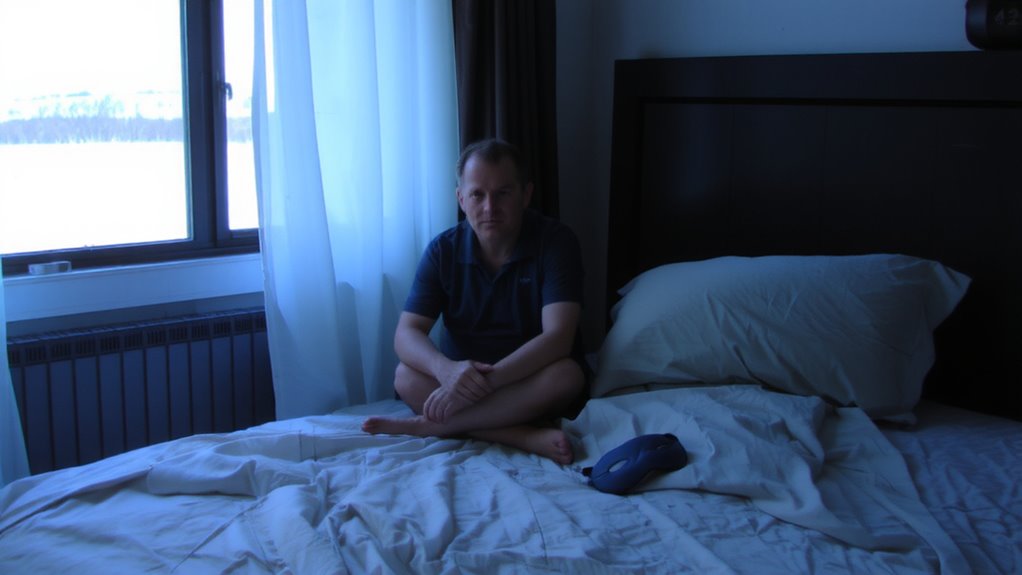
Why do you still feel tired even when you’re in bed by 8 p.m.? It’s because early sleep onset doesn’t guarantee restorative rest if your sleep duration is disrupted or misaligned with your body’s needs. You might fall asleep early, but if you wake up hours before feeling refreshed, quality sleep remains out of reach. A consistent bedtime routine helps signal your brain that it’s time to wind down, but with ASPD, that routine may not shift your internal clock enough to improve energy levels. Even with eight hours in bed, fragmented sleep or early waking can reduce effective sleep duration. This mismatch means you’re not cycling through deep and REM stages efficiently. Addressing fatigue isn’t just about timing-it’s about sleep quality, continuity, and whether your routine supports complete rest. Tracking patterns and discussing options with a specialist can clarify what adjustments may help.
How ASPD Causes Daytime Exhaustion
If you’re waking up before dawn no matter how early you go to bed, your body’s internal clock might be running ahead of schedule, a hallmark of advanced sleep phase disorder (ASPD). This shift causes circadian misalignment, meaning your sleep-wake cycle doesn’t match typical daily rhythms. Even if you sleep seven or eight hours, the timing distorts your sleep architecture-reducing deep and REM sleep when you need it most. That imbalance leaves you tired during the day, even after a full night’s rest. Your body may start winding down early in the evening, but that early onset doesn’t guarantee restorative sleep. The mismatch between your internal clock and social or work schedules worsens daytime exhaustion. Recognizing circadian misalignment helps explain why simply sleeping longer doesn’t help. Understanding your sleep architecture can guide better choices about when to seek help or consider treatments.
How to Manage Fatigue From ASPD
A well-timed routine can make a real difference when managing fatigue from advanced sleep phase disorder (ASPD). You’ll want to align your schedule with your body’s early rhythms while using light therapy in the evening to delay sleep onset slightly. Exposure to bright light for 30–60 minutes in the early evening helps shift your internal clock later, making it easier to stay awake longer. Pair this with solid sleep hygiene-keep your bedroom quiet, cool, and dark, avoid screens before bed, and stick to a consistent wake-up time even on weekends. Caffeine and heavy meals late in the day can worsen fatigue, so limit those. While sleep aids may seem tempting, they’re best used short-term and under medical guidance. A combination of light therapy and strong sleep hygiene offers a sustainable way to manage tiredness and improve daily function.
On a final note
You might go to bed early with ASPD, but that doesn’t guarantee restful sleep or energy during the day. Your shifted internal clock can leave you tired even after eight hours. Managing fatigue often involves light therapy, consistent wake times, and sometimes melatonin under a doctor’s guidance. Consider tracking your sleep and discussing options with a specialist. Many treatments have trial periods and come with clear usage guidelines to help you decide what works.