Tailoring Light Therapy Start Times Based on Individual Dim Light Melatonin Onsets
You’ll get the best results from light therapy when you time it to your unique Dim Light Melatonin Onset (DLMO), the point at which melatonin rises in dim light. If your DLMO is early (6–8 p.m.), morning light helps shift your rhythm earlier. A late DLMO (after 9 p.m.) may respond better to evening light. Testing via at-home saliva kits and sleep tracking over two weeks improves accuracy. Getting the timing right reduces sleep onset latency and supports healthier alignment-small adjustments can make a meaningful difference in how well the therapy works for you.
Notable Insights
- DLMO timing determines the optimal start time for light therapy to effectively shift circadian rhythms.
- Morning light therapy advances sleep timing when DLMO occurs late (after 9 p.m.).
- Early DLMO (6–8 p.m.) responds best to morning light to prevent excessively early sleep onset.
- Evening light exposure can delay rhythms in individuals with late DLMO needing later sleep times.
- Accurate DLMO assessment via dim light saliva testing ensures properly timed, personalized light therapy.
What Is Dim Light Melatonin Onset (DLMO)?
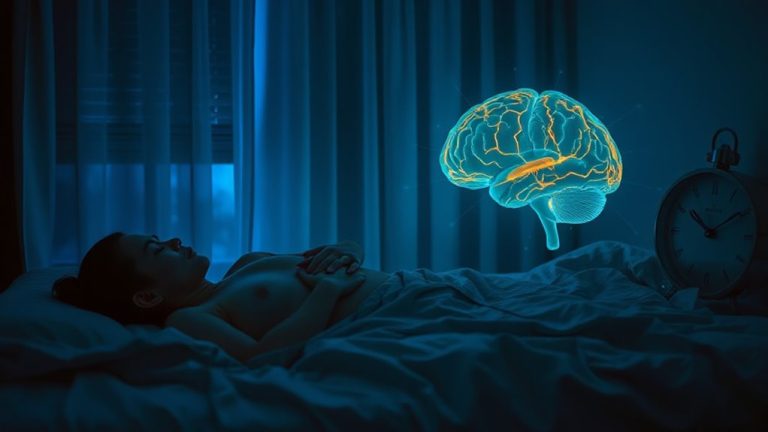
Why does timing matter so much when it comes to melatonin and your sleep? Because your body’s natural release of melatonin, known as Dim Light Melatonin Onset (DLMO), signals it’s time to prepare for rest. DLMO is the point in the evening when melatonin levels rise above baseline under dim lighting, marking the start of your biological night. This moment is key for circadian alignment-matching your internal clock to your desired sleep schedule. If you’re exposed to bright light before DLMO, you risk melatonin suppression, delaying sleep. Knowing your DLMO helps you time light exposure, supplements, or bedtime routines more effectively. It’s especially useful if you struggle with sleep onset or shift work. Testing DLMO involves saliva samples in low light but offers personalized insight. Using this data improves your strategy for healthier, more consistent rest.
Why DLMO Determines Light Therapy Timing
Since your body’s melatonin release marks the start of your biological night, getting light therapy at the right time depends heavily on knowing your DLMO. Chronobiology research shows that mistimed light exposure can shift your rhythm the wrong way, worsening sleep phase correlation. For example, morning light delays sleep in evening types if given too early. Timing therapy based on DLMO guarantees ideal alignment with your internal clock.
| DLMO Time | Recommended Light Therapy Start | Effect on Sleep Phase |
|---|---|---|
| 6:00 PM | 7:30 AM next day | Advances |
| 8:00 PM | 9:00 AM next day | Mild advance |
| 9:00 PM | 10:30 AM next day | Stabilizes |
| 10:00 PM | 12:00 PM next day | Delays |
| 7:00 PM | 8:30 AM next day | Moderate advance |
This precision helps treat circadian disorders effectively.
How to Measure Your Personal DLMO
You just saw how aligning light therapy with your DLMO can shift your sleep schedule more effectively, which means knowing your personal DLMO is the next practical step. The most accurate way to find it is through melatonin testing, usually done via saliva samples collected in dim light over several hours at night. These tests measure when melatonin rises, marking your DLMO. At-home kits make this easier, though results depend on strict light control. Sleep tracking can also help estimate your rhythm by recording bedtime, wake time, and sleep quality over two weeks. While not as precise as melatonin testing, consistent sleep tracking reveals patterns linked to your biological clock. Combining both methods improves accuracy. Some clinics offer supervised testing with warranties on sample handling, while home kits often include trial periods. Choose based on your need for precision versus convenience.
When to Start Light Therapy Based on DLMO
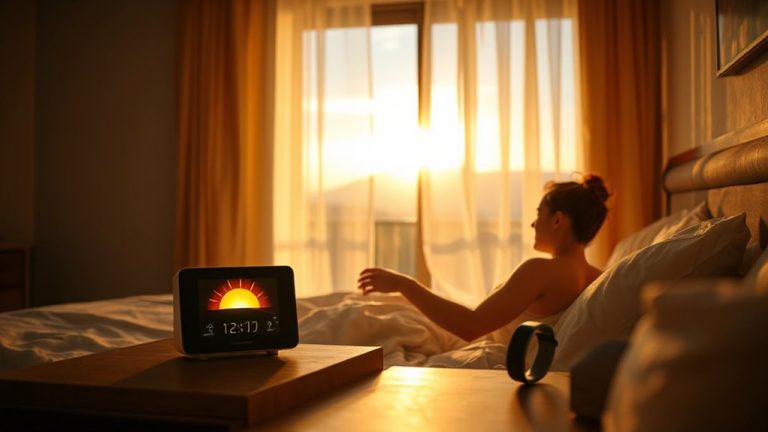
When should you actually begin your light therapy for the best results? You’ll want to start based on your personal dim light melatonin onset (DLMO), since it reflects your body’s true circadian rhythm. If your DLMO occurs early, say around 6–8 p.m., beginning light therapy in the morning helps delay your clock and improve circadian flexibility. But if your DLMO is late, after 9 p.m., morning light can advance your rhythm, aligning it earlier over time. Your level of light sensitivity also matters-some people respond quickly, while others need consistent exposure for several days. Devices with high-intensity, blue-enriched light often work faster, but even modest lamps can be effective with proper timing. Always check warranty and usage guidelines, and track your sleep changes during the first two weeks to assess performance and adjust start time as needed.
Morning vs. Evening Light Therapy Based on DLMO
How does the timing of your light therapy affect your circadian rhythm? If your dim light melatonin onset (DLMO) is early, morning light therapy helps shift your clock earlier, aligning sleep with your natural rhythm. But if your DLMO is late, evening light exposure can push your cycle forward, promoting later sleep onset and wake times. This approach supports circadian flexibility, letting your body adapt more smoothly to schedule changes. Morning sessions often boost alertness and consistency, while evening use may improve sleep resilience for night owls adjusting to early demands. Your DLMO guides which timing works best-personalized, not one-size-fits-all. Trials show proper alignment reduces sleep onset latency and improves sleep quality. Though devices typically come with a 1-year warranty, effectiveness depends on correct timing. Stick with it for at least two weeks to assess results.
On a final note
You should time light therapy to match your personal DLMO, as it shapes your body’s natural rhythm. Starting light exposure 1–2 hours after DLMO helps reset your sleep cycle gradually. If you’re an evening type, morning light may work best; if you wake too early, evening light could help. Use saliva or blood tests to find your DLMO. Many devices offer trial periods, so test one that fits your routine and delivers 10,000 lux.