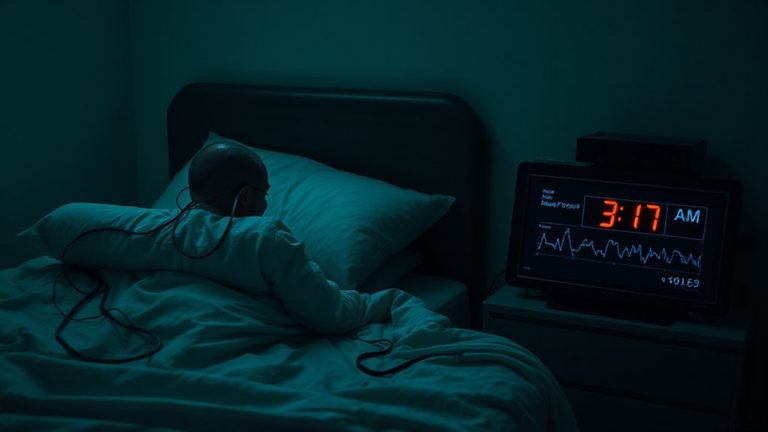
Using Morning Bright Light Therapy to Reset Sleep in Delayed Sleep Phase Disorder
You can reset your delayed sleep schedule with morning bright light therapy by using a 10,000 lux UV-free lamp within 30 minutes of waking. Sit 16–24 inches away for 20–30 minutes while keeping your eyes open but not staring directly at the light. This daily habit helps shift your internal clock earlier over time. Pair it with consistent wake times and dim evening lighting for best results. You’ll find more useful details ahead.
Notable Insights
- Morning light therapy shifts the delayed circadian rhythm earlier by exposing users to 10,000 lux light shortly after waking.
- Consistent daily use for 20–30 minutes within one hour of waking helps align the internal clock with desired sleep times.
- Light therapy lamps should filter UV rays and provide bright, even illumination without direct eye exposure.
- Position the lamp 16–24 inches away while engaging in morning activities like eating or reading.
- Combine light therapy with evening blue light reduction and fixed wake times to improve sleep onset and daytime alertness.
Understand Delayed Sleep Phase Disorder (DSPD)
Ever wondered why you can’t fall asleep until the early morning hours, even when you’re tired? You might have Delayed Sleep Phase Disorder (DSPD), where your circadian rhythm runs later than typical. Your body’s internal clock shifts, pushing melatonin levels to rise much later-often after midnight. That means sleep doesn’t feel natural until 2 a.m. or later. Even if you’re exhausted, your brain isn’t ready to wind down. Waking up on time for work or school becomes a struggle, and trying to sleep earlier usually fails. This isn’t laziness-it’s a real circadian rhythm disorder affecting daily function. Diagnosis often involves sleep logs or actigraphy to track patterns over time. Treatments exist, but understanding your cycle is the first step. Recognizing the role of melatonin levels and timing helps you make informed choices about managing sleep without jumping to medication.
Reset Your Clock With Morning Light Therapy
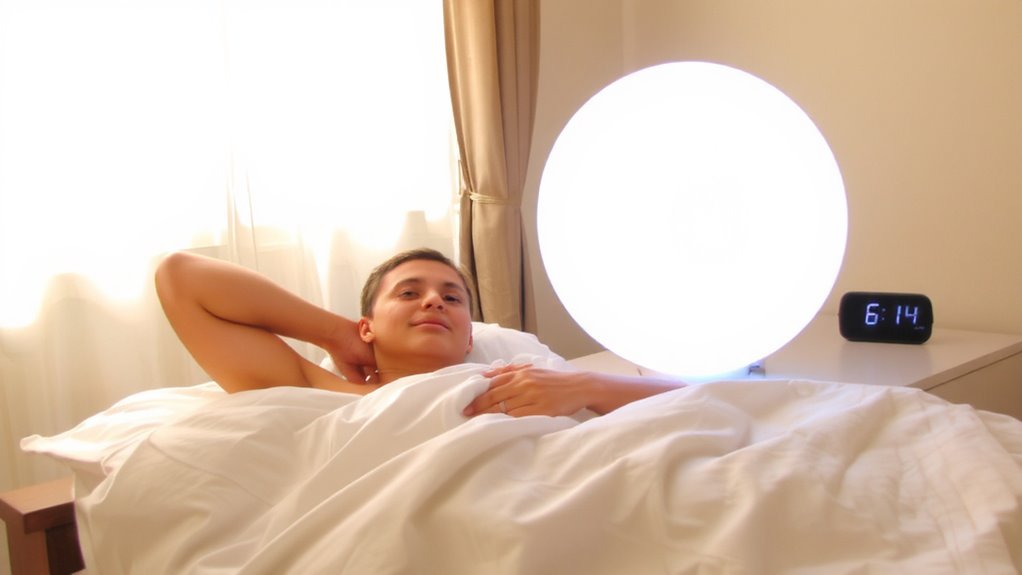
When used consistently, morning light therapy can help shift your internal clock earlier by exposing you to bright light shortly after waking. This daily light exposure signals your brain to reduce melatonin production, promoting alertness and supporting circadian alignment. For best results, use the light box within an hour of waking, ideally for 20 to 30 minutes. Position it about 16 to 24 inches from your face while eating breakfast, reading, or working. Avoid looking directly at the lamp, but keep your eyes open and forward. Consistent timing strengthens the effect, helping you feel sleepy earlier at night. Morning light therapy works best when combined with avoiding bright screens at night and keeping a regular sleep schedule. Over time, you may notice improved sleep onset and mood. It’s a non-invasive method backed by research for managing delayed sleep patterns.
Choose a Bright Light Therapy Lamp: Brightness, Size, and UV Safety
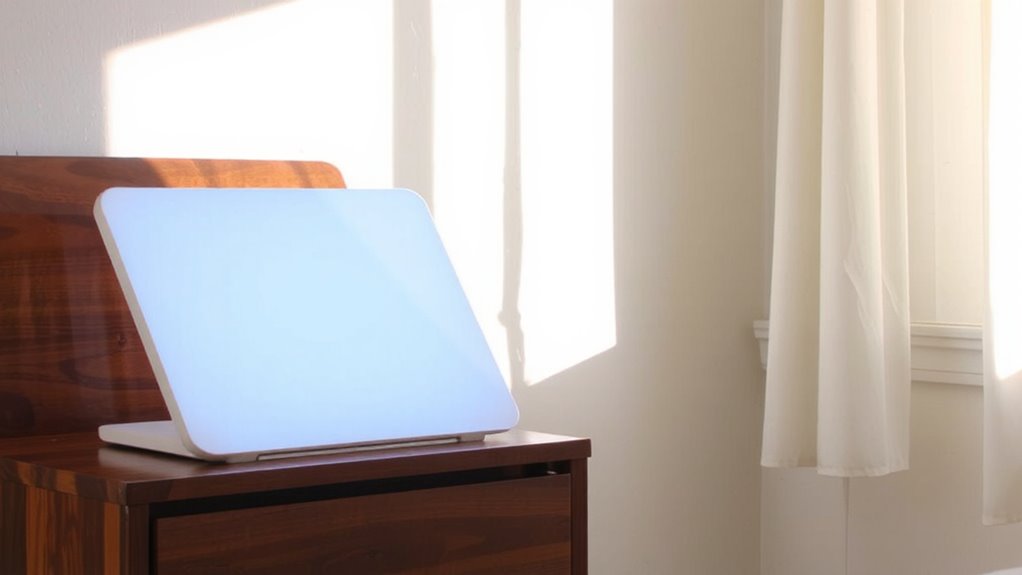
A good light therapy lamp mimics natural sunlight without the harmful UV rays, and your choice matters for both comfort and effectiveness. Look for a lamp that delivers 10,000 lux of brightness, which is the standard for effective treatment. Brighter lamps let you sit farther away or use them for shorter periods. Size and lamp design affect how easy it is to use-larger panels spread light more evenly, while compact ones fit better on small spaces. Make sure the lamp filters out all UV exposure, protecting your skin and eyes. Many quality models include adjustable stands or portable designs, letting you position the light at the right angle. Check if the manufacturer offers a trial period or warranty-this lets you test the lamp safely. A well-built, properly designed lamp supports consistent use, which is key for managing delayed sleep phase disorder.
Build a Consistent Morning Light Routine
Though it might feel challenging at first, sticking to a regular morning light routine can make a real difference in resetting your sleep schedule over time. Consistent light exposure helps strengthen circadian alignment, making it easier to wake up and feel alert in the morning. For best results, aim for 20–30 minutes of bright light soon after waking. Use your light therapy lamp at the same time each day, even on weekends, to support steady progress. Choosing the right lighting environment throughout the day, including using the best light bulbs for better sleep in the evening, can further support your circadian rhythm and improve sleep quality.
| Time of Use | Duration | Light Intensity |
|---|---|---|
| Within 30 min of waking | 20–30 min | 10,000 lux |
| Same time daily | Daily | Direct exposure |
| Morning only | Consistent | No UV rays |
| Avoid evenings | Short sessions | Adjustable stand |
This routine enhances therapy performance and improves long-term outcomes.
Pair Light Therapy With Sleep-Friendly Habits
Since light therapy works best when your overall habits support healthy sleep, pairing it with consistent nighttime routines can improve results over time. Aim to practice good screen hygiene by limiting blue light exposure at least one hour before bed-this means avoiding phones, tablets, or TV, which can delay melatonin release. Use dim, warm lighting in the evening to signal your body it’s time to wind down. In the morning, complement your light session with quiet activities like morning meditation to enhance alertness and reduce stress without overstimulating your system. Keep your wake-up time consistent, even on weekends, to strengthen your circadian rhythm. These habits don’t replace light therapy but work alongside it, increasing its effectiveness over weeks. Small, steady changes in routine often lead to more sustainable sleep improvements than isolated fixes. Choosing the right light bulbs can further support your circadian health, such as those with balanced light spectrum quality.
Track Progress and Fix Common Issues
How do you know if light therapy is really working? You’ll notice gradual shifts in your sleep schedule and energy levels. Start sleep tracking to record bedtime, wake time, and how long it takes to fall asleep. Over weeks, look for earlier sleep onset and more consistent waking. Pair this with mood monitoring-note irritability, alertness, or changes in focus. If progress stalls, check your light box intensity: 10,000 lux is standard, and you should sit about 16–24 inches away for 20–30 minutes. Make sure you’re using it right after waking. Consistency matters more than perfection. Common issues like eye strain or headaches often improve by adjusting distance or duration. If sleep timing doesn’t shift within 2–3 weeks, reconsider timing or consult a sleep specialist. Small tweaks often restore progress. For more accurate insights, consider using one of the best sleep trackers to monitor your sleep patterns objectively.
Maximize Results With Morning Light and Bedtime Timing
When you align your morning light therapy with a consistent wake-up time, your body’s internal clock strengthens more quickly, helping you fall asleep easier at night. Aim to begin therapy within your wake window-ideally 30 to 60 minutes after waking-to maximize circadian response. Use a light box that delivers 10,000 lux of light intensity for about 20–30 minutes to simulate natural sunlight. Position it about 16 to 24 inches from your face while eating or reading. Avoid staring directly at the light. If you’re still struggling, adjust your bedtime gradually in 15-minute shifts to meet your target sleep schedule. Combining consistent timing with proper light intensity improves results over time. Be patient-most people notice changes within 1 to 2 weeks. Stick with a routine, even on weekends, to sustain progress.
On a final note
You can reset your sleep schedule with morning bright light therapy, especially when consistency matters. Choose a lamp with at least 10,000 lux, UV-free light, and a size that fits your routine. Pair daily sessions with stable sleep habits and track small changes over time. Results vary, so allow a few weeks of regular use, and check warranty terms before buying. It’s one effective option among several for managing DSPD.