Innerspring Mattress Edge Support Tests You Can Do at Home
Sit on each corner to check for sagging and see if the edges hold firm. Press along all sides to test compression-consistent firmness means better support. Slide your hand under the mattress edge to spot gaps larger than a quarter, which can weaken structure. Feel the head and foot edges for soft spots that suggest weak reinforcement. Watch for lasting indentations after sitting five minutes. Strong edges help keep your spine aligned and movement smooth, especially if you or your partner sleep near the perimeter. Models with reinforced coils or dense foam edges tend to last longer. A warranty covering edge sag of 1.5 inches or more over 10 years offers added protection. Choosing the right support now can improve comfort and durability over time. You’ll find there’s more to contemplate when evaluating long-term performance.
Notable Insights
- Sit on each corner to assess stability and detect sagging that may affect spinal alignment.
- Press firmly along all sides to test for consistent edge firmness and support.
- Check for gaps between the mattress and foundation by sliding a hand around the edges.
- Feel the head and foot edges for firmness to evaluate reinforcement quality.
- Observe for lingering indentations after sitting on the edge for five minutes.
Test Edge Support by Sitting on Each Corner
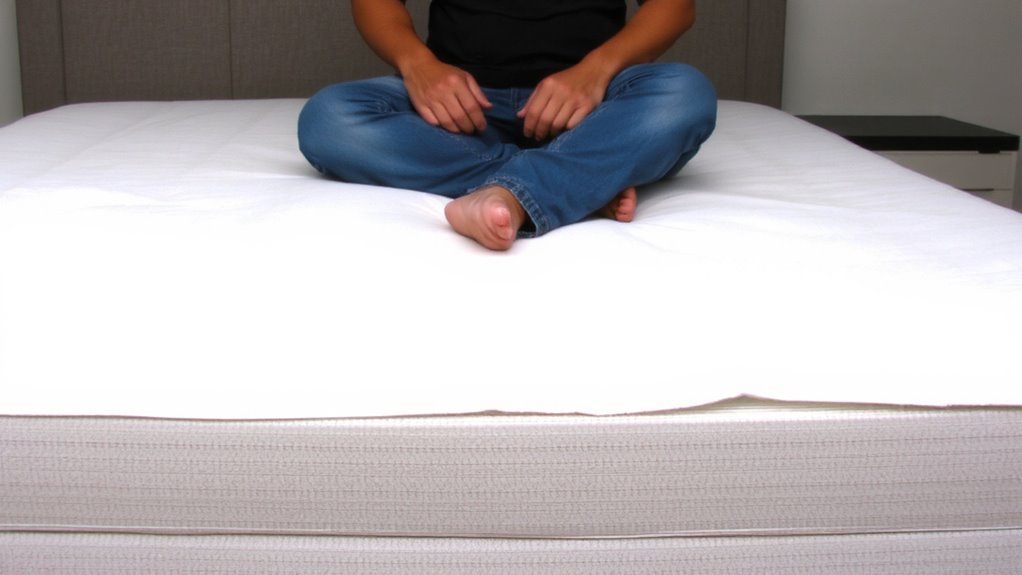
To check how well an innerspring mattress holds up at the edges, start by sitting on each corner. You’re testing corner stability, which tells you how much the mattress resists sagging when weight presses on its weakest points. A well-constructed edge with reinforced coils or foam should keep the surface firm, not give way too easily. Good seating durability means you can sit there nightly without long-term damage. This matters if you share the bed or get in and out frequently. Weak corners might hint at poorer support over time, possibly affecting spinal alignment when sleeping near the edge. Look for models with strong perimeter support and at least a 10-year warranty covering sag depth-usually 1.5 inches or more. That way, you’re protected if corner stability declines. Testing now helps avoid discomfort later, especially if you need reliable edge support for mobility or sleep position changes.
Press Along All Sides for Firmness
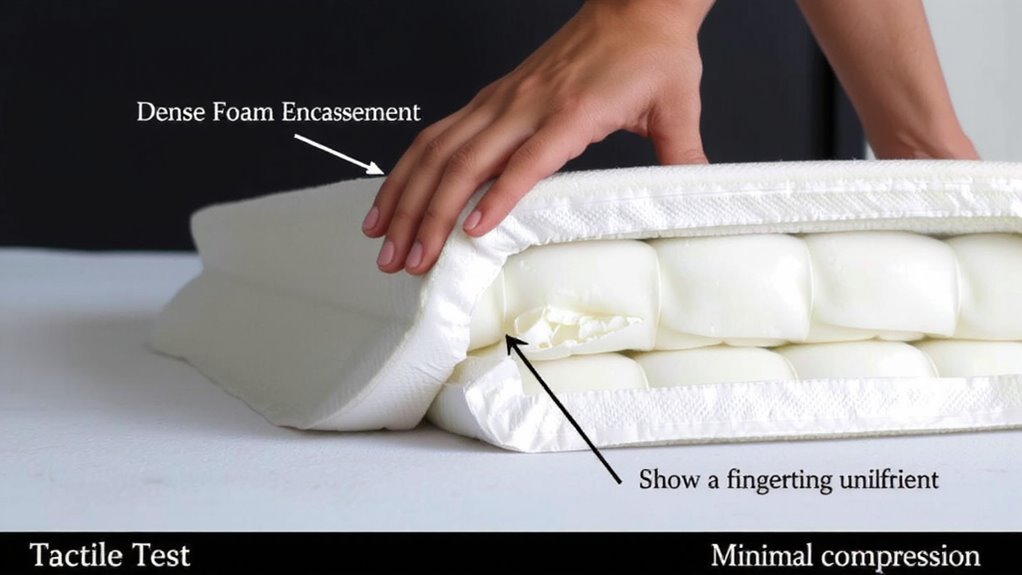
You’ve already checked the corners, and now it’s time to feel how the entire perimeter holds up under pressure. Run your hands along each side, pressing down firmly with your palms. Notice how much resistance you meet-this test reveals edge compression, showing whether the border stays firm or sinks too easily. Consistent firmness means better side durability, which helps when sitting or sleeping near the edge. Innerspring mattresses with reinforced coils or dense foam along the border usually offer stronger performance here. Poor edge support can make the surface feel smaller and reduce long-term resilience. A solid perimeter also supports easier movement for those with mobility concerns. If the edge compresses too much, it may wear faster, especially with nightly use. Check the warranty, too-many brands cover structural issues that affect edge durability. This simple test helps you judge real-world comfort and longevity. For those considering different comfort options on each side, look into models featuring dual-firmness design.
Check for Foundation Gaps Causing Sag
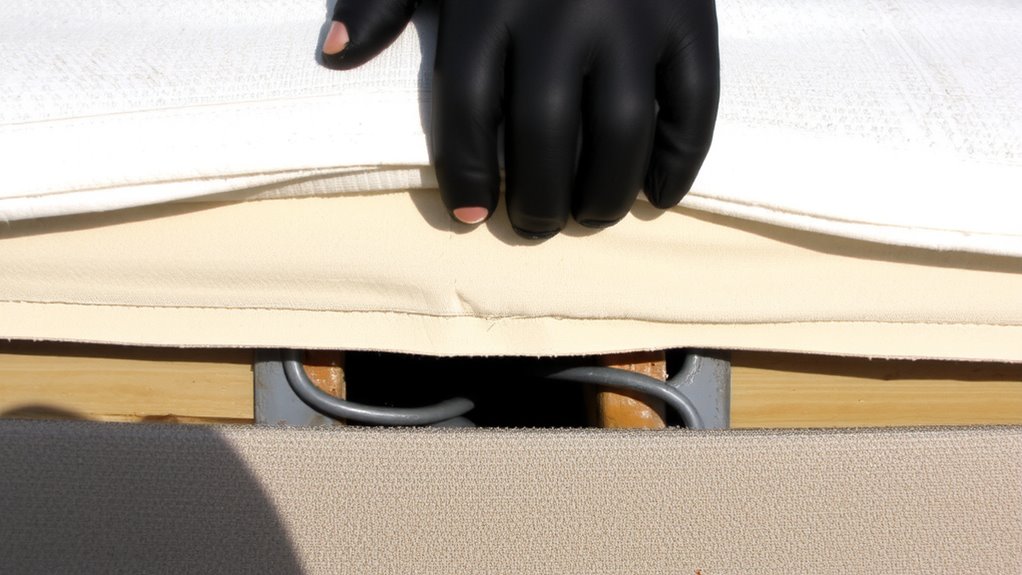
What if the support under your innerspring mattress isn’t as solid as it seems? Gaps in your foundation can cause noticeable sag, especially along the edges. Perform a foundation inspection by sliding your hand between the mattress and the frame-any space larger than a quarter suggests poor support. These gaps compromise the mattress’s structural integrity, worsening over time and affecting sleep quality. Uneven support may lead to discomfort, particularly if you sleep near the edge. A solid foundation should lie flush against the mattress with no visible separation. If you find gaps, check if your bed frame or box spring has warped, broken slats, or weak joints. Addressing these issues early helps maintain durability and support. Some manufacturers void warranties if the foundation fails to meet their standards, so verify requirements. Fixing or replacing a faulty foundation can extend your mattress’s life and improve spine alignment during sleep.
Feel for Edge Firmness at Head and Foot
While lying on your innerspring mattress, press down along the edges near the head and foot to assess how firm or soft they feel. Firm edges offer better support and contribute to edge durability over time. Soft or compressible edges may suggest lower material quality or weak reinforcement. Your hands should detect consistent resistance, not sudden give. For a clear picture, compare your results with this guide:
| Location | Firmness Level | What It Suggests |
|---|---|---|
| Head edge | Firm | Good edge durability |
| Head edge | Soft | Possible material quality issues |
| Foot edge | Firm | Reliable support for movement |
| Foot edge | Sinking | May wear faster over time |
Consistent firmness at both ends helps maintain spinal alignment and ease of movement. It also influences how well the mattress holds up during long-term use. Material quality and construction directly affect edge durability, so check closely.
Observe Sag After Sitting for 5 Minutes
Sit toward the outer third of the mattress and maintain a seated position for five minutes to check how well the edges resist sagging. This sitting duration helps reveal how mattress materials respond under pressure. After five minutes, stand and look for visible indentations or dips along the edge. Some give is normal, but deep sagging may signal weaker support coils or softer foam layers. High-density foams and reinforced perimeter coils usually hold up better. If the surface doesn’t bounce back quickly, the materials may degrade faster over time. You’ll want better edge integrity if you share the bed or use the edge for sitting. Testing helps assess durability and support, factors that influence long-term comfort and sleep quality. A mattress with good trial periods lets you test edge performance in real use. Check warranty terms too-some cover sagging beyond a certain depth.
Spot Warning Signs of Edge Failure
If you notice the edges caving in when you sit or sleep near the perimeter, it’s likely a sign of weakening support layers. This kind of edge wear can make getting in and out of bed difficult and may affect spinal alignment during sleep. Often, it’s not just worn fabric-you’re seeing foam breakdown in the perimeter foam or inner coil system losing resilience. Catching these signs early helps maintain better sleep posture and prevents discomfort.
| Warning Sign | What It Means |
|---|---|
| Visible sagging edges | Advanced edge wear, reduced support |
| Soft, crumbling feel | Foam breakdown in border foam |
| Tilt when sitting | Compromised structural integrity |
Pay attention to how your mattress feels at the borders-consistent softness or instability suggests the support system is deteriorating. These changes can influence sleep quality over time.
Know When to Replace Your Mattress
How do you know when it’s truly time to replace your mattress? Start by checking the mattress age-most innerspring models last 7 to 10 years before support degrades. If yours is older, performance likely declined. Next, evaluate your comfort level. Are you waking up stiff or noticing more aches? That could mean the coils or padding have worn out. Sagging edges, visible indentations, or feeling springs through the fabric are red flags. Even with good edge support, an aging mattress loses structural integrity. Consider how well you sleep now versus when it was new. Poor sleep quality may link to inadequate support. Don’t ignore persistent discomfort-it’s a sign. Many brands offer trial periods, so test replacements if needed. Check warranty terms too; some cover sag depth after a certain time. Replacement isn’t urgent unless comfort level and mattress age clearly affect rest.
On a final note
You can check your innerspring mattress’s edge support by testing corners and sides for firmness and noticing any sag after sitting. Gaps or soft spots may signal wear. Strong edges help with mobility and extend mattress life. If edges collapse easily or cause discomfort, consider models with reinforced perimeters. Review warranty terms on sag depth, often covered at 1.5 inches or more. A supportive edge aids restful sleep and reduces strain.