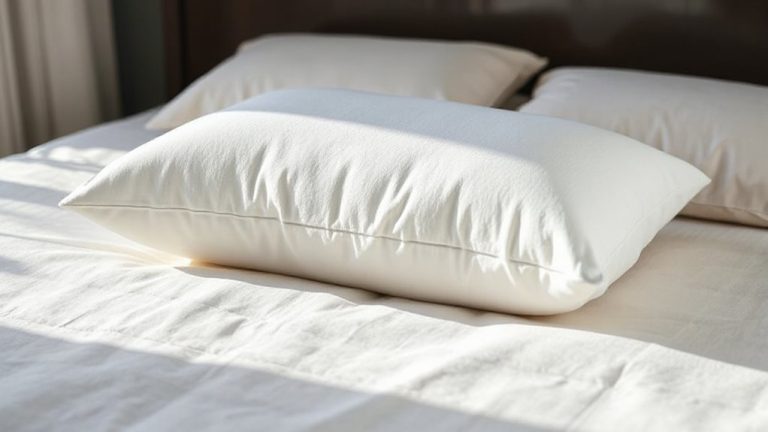
Creating a Transitional Bedroom With Traditional and Modern Bedding Mix
You can create a calming shift bedroom by pairing a solid wood or metal bed frame with soft linen sheets and a velvet duvet in neutral tones like warm beige or soft gray. Choose breathable cotton-silk blends for temperature regulation, especially if you experience night sweats. Mix in subtle patterns-like a floral duvet with solid bedding-to balance tradition and modern calm. Look for pieces with warranties or trial periods to test comfort. Thoughtful fabric and frame choices support long-term sleep quality and adapt well to future updates.
Notable Insights
- Select a solid wood or upholstered bed frame that balances modern lines with traditional details for durability and style.
- Use a neutral color palette of soft grays, beiges, and whites to create a calming, cohesive atmosphere.
- Layer breathable, high-thread-count bedding like cotton silk sheets and velvet linen duvets for texture and comfort.
- Mix traditional patterns such as florals with minimalist solids or geometrics to blend warmth and simplicity.
- Prioritize quality construction with reinforced frames and tightly spaced slats to ensure long-term support and comfort.
Define the Transitional Bedroom Style
While blending traditional and modern elements may sound complicated, changing bedroom style keeps it balanced and livable. You’re aiming for cozy elegance-think soft linens, neutral tones, and layered textures that invite rest without sacrificing style. This approach blends the best of both worlds: the clean lines of modern design with the warmth of traditional details like carved wood or classic molding. The result has timeless charm that won’t feel outdated in a few years. Your bedding mix should support a calm atmosphere, promoting consistent sleep patterns. Choose breathable, high-thread-count fabrics for comfort and durability. Look for products with trial periods or warranties so you can test performance. Consider how materials affect temperature regulation, especially if you’re sensitive to heat or have sleep issues. A well-chosen shift fosters relaxation, offering a retreat that’s both refined and functional.
Choose a Transitional Bed Frame
You’ve already set the tone for your space by balancing comfort and design, and now it’s time to pick a foundation that supports both your sleep and your style-the bed frame. When choosing bed frame materials, consider solid wood or metal for durability and weight support, especially if you use adjustable bases or need motion isolation for sleep disorders. Upholstered frames add softness but may trap heat, so breathable fabrics help regulate temperature. Frame leg designs influence stability; splayed legs offer modern flair and legroom, while blockier, tapered styles suit traditional spaces and distribute weight evenly. Look for reinforced joints and slats spaced no more than three inches apart to prevent sagging. Most quality frames include a warranty of five years or more, and some allow trial periods for assembly and fit. Choose one that aligns with your bedding structure and sleep needs without sacrificing long-term comfort. For a cohesive look, consider pairing your frame with one of the best platform beds that blend traditional craftsmanship with modern design elements.
Use a Neutral, Unified Color Scheme
Because your bedding palette sets the stage for both rest and design, choosing neutral tones can help create a cohesive, calming space that supports uninterrupted sleep. You’ll achieve better color harmony by sticking to soft grays, warm beiges, or muted whites-shades that blend easily across seasons and reduce visual stress. A neutral base also makes it easier to adjust your room later without starting over. Focus on tonal balance: layer slightly different shades of the same hue to add depth without chaos. This subtle variation keeps the room feeling unified but not flat. These choices support relaxation, which may reduce sleep disruptions. If you struggle with sleep, a stable, quiet environment can help-neutrals contribute by minimizing stimulation. They also pair well with future additions, whether new bedding or sleep aids like blackout curtains. Stick with proven palettes that offer flexibility and long-term comfort. For reliable options, consider the Best Neutral Bedding Picks that combine comfort, durability, and timeless style.
Mix Classic and Modern Bedding Textures
A neutral color scheme gives your bedroom a quiet, balanced foundation, and now you can build on that calm with thoughtful texture choices. You’ll want materials that feel good against your skin and support restful sleep. Try pairing a velvet linen duvet for softness and subtle sheen with cotton silk sheets, which regulate temperature and reduce friction for less nighttime disruption. Velvet linen adds warmth in winter but can feel heavy if you sleep hot, so test it seasonally. Cotton silk blends offer breathability and a cool touch, ideal if you’re prone to night sweats or movement during sleep. These fabrics are durable, but check care labels-silk blends often require gentle washing. Look for options with trial periods or warranties, especially if you have sensitivities. Mixing these textures balances comfort and function. You’re not just styling a bed-you’re creating a sleep-friendly environment based on how the materials perform night after night.
Combine Traditional and Minimalist Patterns
While traditional patterns like florals or damasks can add warmth and heritage to your bedroom, pairing them with minimalist designs such as solid tones or geometric shapes helps maintain a clean, calming atmosphere conducive to sleep. You’ll find that floral geometrics blend ornate detail with structured forms, offering visual interest without sensory overload. When balanced with stripe solids-simple yet defined-they anchor the space, reducing visual clutter that might interfere with relaxation. These combinations support better sleep by creating order and flow, important for those sensitive to environmental stimuli. Choose fabrics with breathable weaves and non-irritating dyes, especially if you have sleep sensitivities. Performance improves when patterns aren’t overwhelming, so test a bedding set with alternating traditional and minimalist pieces. Look for options with trial periods or warranties, letting you assess comfort and durability. This mix offers gentle contrast, aligning tradition with modern calm for a restful night.
Add Decor That Balances Old and New
You’ve already set the tone with bedding that pairs intricate traditional patterns and sleek minimalist designs, so now it’s time to extend that balance into your decor. Thoughtful details like vintage lighting and curated artwork help blend eras seamlessly, creating a room that feels both warm and current. Choose fixtures with classic silhouettes but updated finishes-like an antique brass lamp with an LED switch-for reliable, soothing illumination ideal for nighttime routines. Select curated artwork that pairs timeless subjects with modern framing, supporting visual calm. Use these elements to guide mood and function without overwhelming the senses.
| Feature | Benefit |
|---|---|
| Vintage lighting | Soft, warm output supports melatonin production |
| Curated artwork | Reduces visual clutter, aiding relaxation |
| Mixed materials | Adds texture without sensory overload |
| Balanced placement | Supports symmetry, linked to improved sleep quality |
On a final note
You can blend traditional and modern bedding to create a harmonious bedroom that feels balanced and restful. Choose pieces with clean lines and natural textures, mixing materials like linen and cotton for comfort and breathability. Look for bedding with removable covers and hypoallergenic fills, especially if you have sensitivities. Test washability, check warranty terms, and consider how the fabric regulates temperature-key for quality sleep. A calm, cohesive setup supports better sleep habits without sacrificing style.