How to Reduce Nighttime GERD Symptoms That Interfere With Sleep and Posture
Elevate your head and upper body with a wedge pillow or bed risers to keep acid down. Wait at least three hours after eating before lying down to aid digestion. Choose light, low-acid snacks like almonds or bananas if hungry. Sleep on your left side to use gravity in your favor, and support posture with a body pillow. Avoid alcohol, chocolate, and mint close to bedtime-they relax the esophageal valve. Try these adjustments together for better results.
Notable Insights
- Elevate your upper body with a wedge pillow or bed risers to prevent acid reflux during sleep.
- Wait at least three hours after eating before lying down to allow proper digestion and reduce reflux risk.
- Choose low-acid, low-fat bedtime snacks like bananas or almonds if eating before bed is necessary.
- Sleep on your left side to use gravity to keep stomach acid below the esophagus.
- Avoid alcohol, chocolate, and mint at night as they relax the lower esophageal sphincter and trigger reflux.
Elevate Your Head and Upper Body
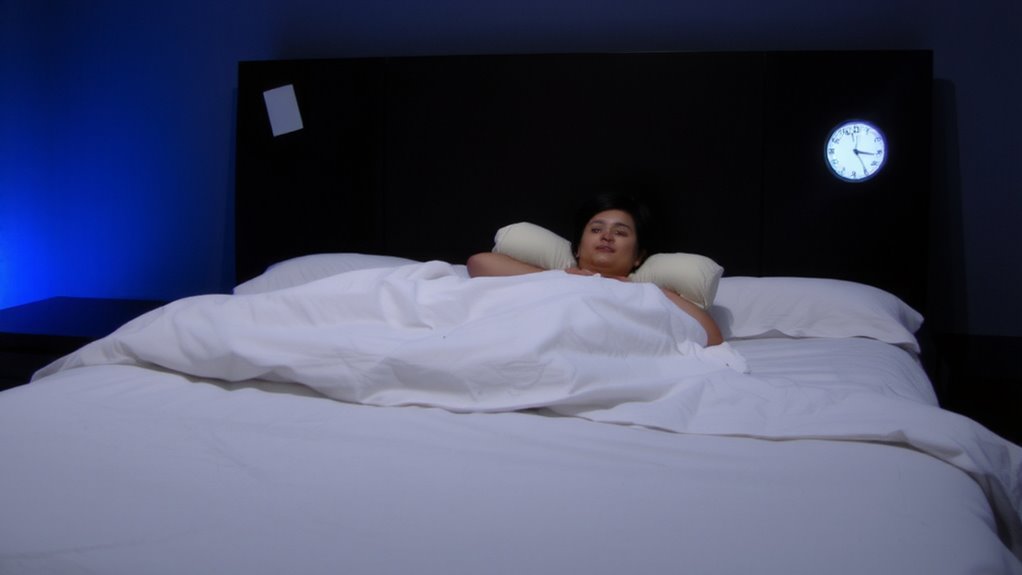
While lying flat can make it easier for stomach acid to rise into your esophagus, you can reduce nighttime GERD symptoms by elevating your head and upper body during sleep. A wedge pillow made of firm foam keeps your upper body lifted without bending at the waist, which helps maintain proper alignment. Look for models with a non-slip bottom and cover that’s removable and washable for ease of care. Though convenient, wedge pillows typically offer a fixed incline, usually between 6 to 12 inches. For adjustable lift, bed frame risers provide a sturdier solution by raising the entire head of your bed. Risers made of solid plastic or wood support bed frames evenly and often come with warranties. You may need to test both options: some find wedge pillows slip or compress, while risers can affect bed stability. Consider your mattress type and bed design before choosing. Those recovering from surgery may benefit significantly from post-surgery comfort, and the right wedge pillow can support healing and proper positioning.
Wait 3 Hours After Eating Before Bed

Lying flat too soon after eating can let stomach acid creep upward, especially if you’ve already tried raising your head with a wedge pillow or bed risers. Waiting at least three hours after eating before bed supports proper digestion timing, giving your stomach enough time to process food before you lie down. This meal spacing reduces the chance of reflux during sleep, especially if you eat dinner early or choose lighter portions. Your body needs time to move food from the stomach to the intestines, and lying down too soon slows that process. Think of it as a necessary cooldown period after fueling up. Sticking to this window doesn’t require special tools or sleep aids-just planning. If your schedule allows, adjust dinner earlier, and avoid late-night meals. It’s a simple, effective strategy backed by how digestion naturally works, helping cut nighttime symptoms without added cost or risk.
Pick Reflux-Friendly Bedtime Snacks

If you need a snack before bed, choosing the right one can make a real difference in how much reflux you experience overnight. When bedtime hunger strikes, go for options that are low in fat and acidity, like a small handful of almonds, a few whole-grain crackers, or a banana. These snacks are gentle on the esophagus and less likely to trigger symptoms. Pay close attention to snack timing-try to eat at least an hour before lying down to give your stomach time to begin digestion. Even if you’ve waited after dinner, a poorly chosen bedtime snack can still worsen reflux. Small portions work best, keeping your stomach from overfilling. You don’t need to eliminate nighttime eating entirely-just adjust what and when you eat to reduce nighttime symptoms and support better, uninterrupted sleep. For added relief, consider pairing your snack strategy with an elevated sleeping position using the best acid reflux pillows for side sleepers.
Sleep on Your Left Side
Choosing the right snack before bed helps set the stage for a more comfortable night, but how you position your body during sleep also plays a key role in managing nighttime GERD symptoms. Your sleep position can markedly affect acid reflux. Lying on your left side helps keep stomach acid from flowing back into the esophagus. This position allows gravity to work in your favor, as the stomach sits below the esophageal opening when you’re on your left side. Studies suggest this sleep position reduces acid exposure and nighttime symptoms. You might need to experiment to stay comfortably in this position through the night. Using a body pillow can support your back and help maintain proper alignment. If you use sleep aids like wedges or adjustable beds, pair them with a left-side posture for better results. Try this adjustment for several nights to assess improvement.
Avoid Alcohol, Chocolate, and Mint at Night
Since certain foods and drinks can relax the lower esophageal sphincter, it’s best to skip alcohol, chocolate, and mint in the hours leading up to bedtime. Alcohol effects include delayed stomach emptying and increased acid production, worsening nighttime reflux. Even small amounts can disrupt sleep quality and trigger symptoms. Chocolate triggers heartburn because it contains both caffeine and fat, which relax the sphincter and slow digestion. Mint, especially peppermint, has a similar relaxing effect on digestive muscles, allowing stomach acid to creep upward. You don’t have to give these up entirely-just time them earlier in the day. Avoiding these items at least three to four hours before bed reduces the chance of symptoms interfering with sleep. It’s a simple change that supports better esophageal function and sleep hygiene. Over time, tracking your intake can help identify individual patterns and improve long-term comfort.
On a final note
You can reduce nighttime GERD by adjusting sleep position, timing meals, and choosing snacks wisely. Elevating your head and sleeping on your left side helps prevent acid reflux. Waiting three hours after eating lets digestion start before lying down. Avoiding triggers like alcohol and mint cuts irritation. These changes often improve sleep quality quickly. Try them consistently for a week or two, and if symptoms continue, talk with your doctor about possible sleep aids or further options.