How to Wash Hypoallergenic Pillows Without Losing Their Properties
You can wash hypoallergenic pillows safely by checking the care label first and following specific instructions to preserve their performance. Use a gentle cycle with cool water and mild detergent, avoiding bleach or fabric softeners that degrade fibers. Always dry on low heat with tennis balls or air-dry flat in indirect sunlight to maintain loft and prevent mold. Washing every 3–6 months keeps dust mites at bay and supports better sleep hygiene. There’s more to learn about extending your pillow’s lifespan effectively.
Notable Insights
- Check the care label to follow manufacturer guidelines and preserve material integrity during washing.
- Use a gentle cycle with cool or warm water to protect fibers and maintain pillow support.
- Wash with mild detergent, avoiding bleach and fabric softeners that can degrade hypoallergenic fill.
- Dry thoroughly on low heat with tennis balls or by air-drying flat to prevent mold and retain loft.
- Wash every 3–6 months depending on use to control allergens without over-washing and causing wear.
Can You Wash Hypoallergenic Pillows Safely?
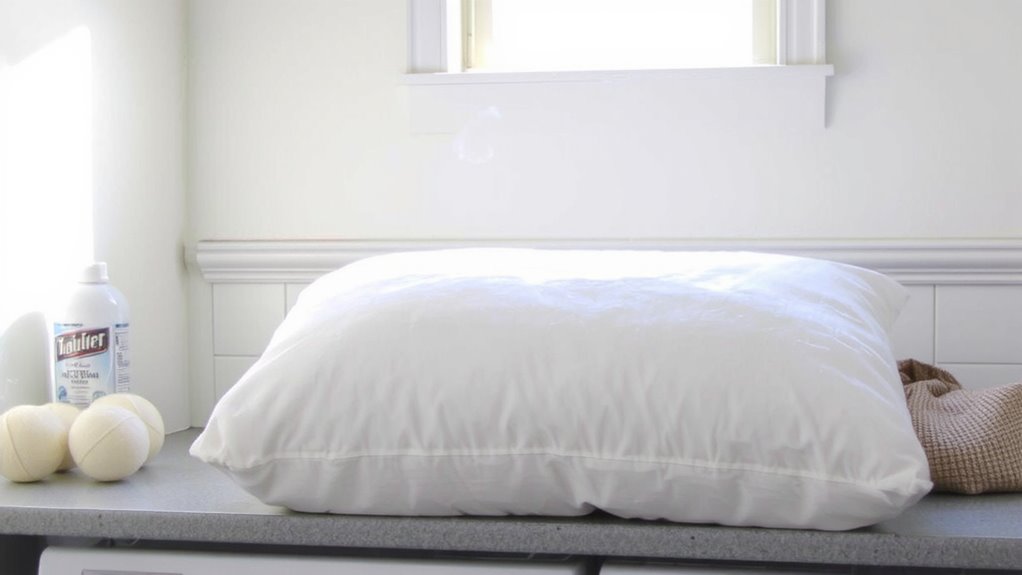
Why risk damaging your hypoallergic pillows when washing them at home? You can wash them safely, but how you do it affects pillow durability and fabric integrity. Most are machine-washable, yet harsh cycles or high heat can break down filling and weaken seams over time. Gentle cycles with mild detergent help preserve their structure. Air drying or low-heat tumble drying keeps fibers resilient and reduces wear. Frequent washing may reduce long-term performance, so using pillow protectors can limit soil buildup and extend life. Adding a layer of protection with best organic pillow protectors ensures cleanliness while safeguarding sensitive materials. Always consider material type-down alternative, memory foam, and polyester each respond differently. Maintaining fabric integrity supports consistent support and comfort, which matters if you rely on proper alignment for restful sleep. While warranties often cover defects, they rarely include damage from improper care. Test one pillow first to assess how well it recovers its shape and feel after washing.
Check the Care Label Before Washing
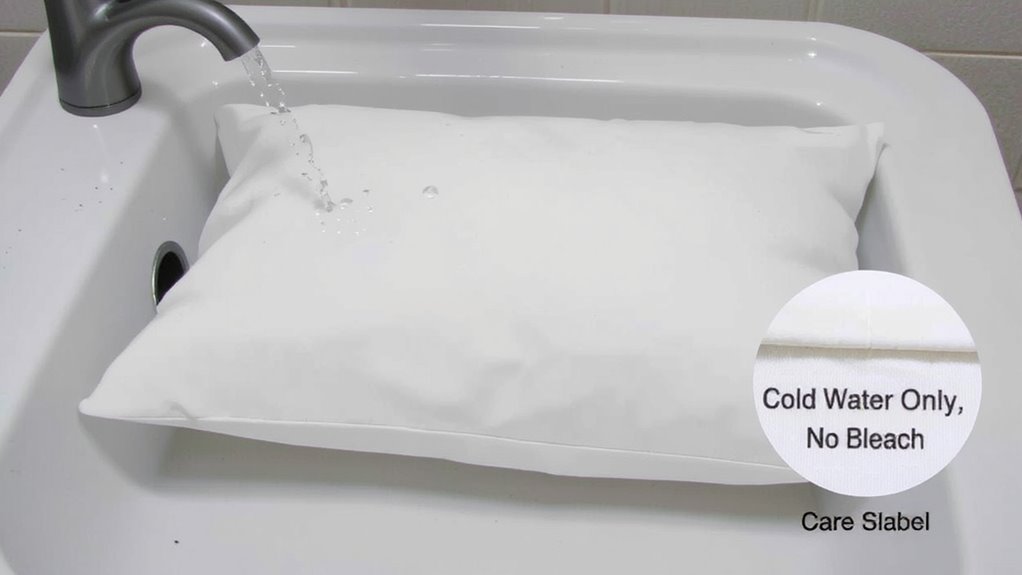
Before you start washing your hypoallergic pillow, take a moment to look at the care label stitched into the seam. It provides essential care symbols and manufacturer guidelines that help preserve the pillow’s materials and support. These symbols tell you whether the pillow can be machine washed, needs hand cleaning, or should be dry cleaned only. Following them guarantees you don’t damage the fill or fabric, which could affect breathability and support-important for maintaining good sleep posture. Some hypoallergenic pillows have special fibers or moisture-wicking covers that degrade if washed incorrectly. The manufacturer guidelines may also include details on drying methods or frequency of cleaning to keep allergens low. Respecting these recommendations helps extend the pillow’s life and performance. Checking the label isn’t just routine-it’s a small step that supports long-term comfort and hygiene in your sleep routine. For optimal results, consider choosing a pillow filled with best synthetic fibers designed to retain shape and hypoallergenic properties after washing.
Wash Hypoallergenic Pillows on Gentle Cycle
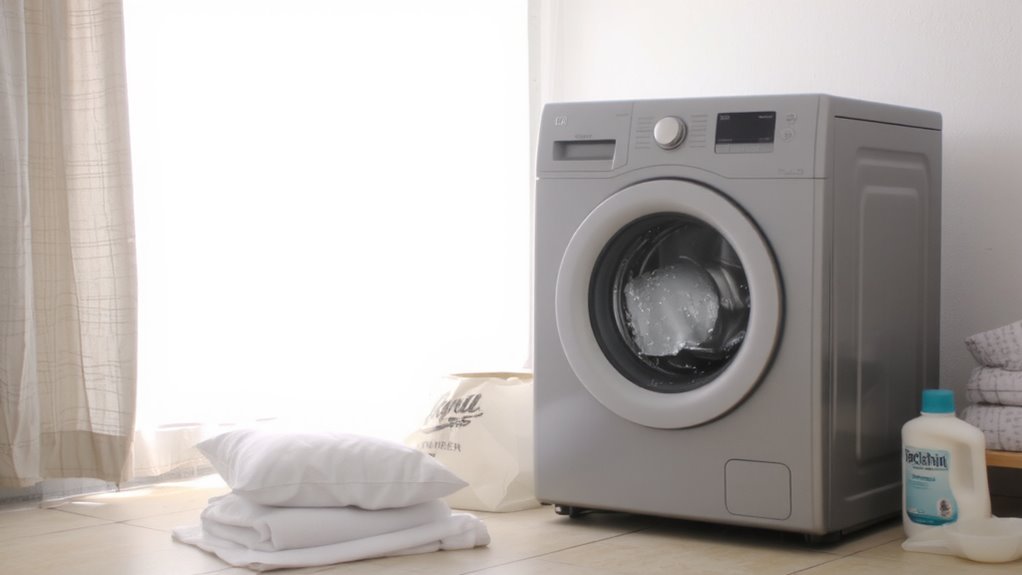
A gentle cycle keeps your hypoallergenic pillow safe while still removing dust, oils, and allergens that build up over time. Using the right machine settings helps preserve the pillow’s fill and structure, so it continues supporting your sleep needs. Always pair the gentle cycle with cool or warm water and a mild detergent. Avoid bleach or fabric softeners-they can break down fibers and reduce effectiveness.
| Feature | Benefit |
|---|---|
| Gentle cycle | Protects internal fill |
| Cold water | Prevents fiber breakdown |
| Low spin speed | Reduces clumping |
| Machine settings | Maintain pillow’s longevity |
This approach guarantees your pillow stays clean and functional, contributing to better sleep hygiene without compromising performance. You’ll notice less irritation over time, especially if you’re sensitive to allergens.
Dry Completely to Prevent Mold and Maintain Fluff
Once the washing cycle finishes, it’s essential you dry the pillow thoroughly to prevent mold growth and preserve its soft, supportive texture. Hypoallergenic pillows retain moisture easily, so proper drying is key for moisture control and long-term hygiene. Use a dryer on low heat with a few clean tennis balls to help maintain loft and break up clumps. Guarantee consistent air circulation by leaving space between pillows and checking them often. If using a clothesline, position the pillow flat in indirect sunlight and flip it occasionally for even drying. Never store a damp pillow-it can develop odors or lose structural integrity. Complete drying may take several hours, but rushing the process risks damage. Most manufacturers advise fully dry pillows before use to uphold warranty standards. This step supports performance, especially if you have sensitivities or sleep concerns. Proper care extends comfort and function over time. Consider protecting your pillow with a waterproof bed pad to minimize moisture transfer and allergen exposure during sleep.
Fluff and Sun-Dry for Long-Lasting Freshness
Though synthetic fibers and down alternative fills resist allergens well, giving your hypoallergenic pillow time to fluff and sun-dry adds a layer of freshness that boosts long-term comfort. Pillow fluffing helps restore loft and supports proper neck alignment, which can ease discomfort during sleep. After drying, gently shake the pillow to redistribute fibers evenly. Then, place it in direct sunlight for a few hours-sun exposure naturally deodorizes and inhibits dust mites without harsh chemicals. Just avoid prolonged UV exposure, as it may weaken fabric over time. This simple step enhances performance by maintaining breathability and softness, contributing to a more restful sleep environment. If you deal with allergies or mild sleep disturbances, the combination of fluffing and sun-drying offers a low-cost, effective way to extend pillow life and comfort. Try it after each wash for best results.
How Often to Wash Hypoallergenic Pillows
You’ll generally want to wash hypoallergenic pillows every three to six months, depending on your sleep habits and allergy sensitivity. Regular cleaning supports allergy prevention and keeps dust mites at bay, especially if you sweat at night or sleep with pets. For heavier users or those with allergies, washing every three months is smarter for consistent hygiene.
| Factor | Recommendation |
|---|---|
| Average use | Every 6 months |
| Heavy sweating or pets | Every 3 months |
| Allergy prevention | Every 3–4 months |
This schedule helps maintain the pillow’s support and hypoallergenic properties. Dust mites thrive in warm, damp environments, so routine washing disrupts their growth. Always check the care label-some pillows tolerate machines, while others need hand washing. Air-drying thoroughly prevents mold and preserves fill. Sticking to a practical routine guarantees better sleep hygiene and extends pillow life without overhandling.
On a final note
You can wash hypoallergenic pillows safely if you check the care label first, as materials like memory foam or down alternatives react differently. Use a gentle cycle with mild detergent, then dry thoroughly to prevent mold. Tumble dry on low or sun-dry to restore fluff. Washing every 3–6 months maintains performance and hygiene, supporting better sleep, especially if you have allergies.