How to Create a Dark, Quiet Sleep Environment for Daytime Sleep
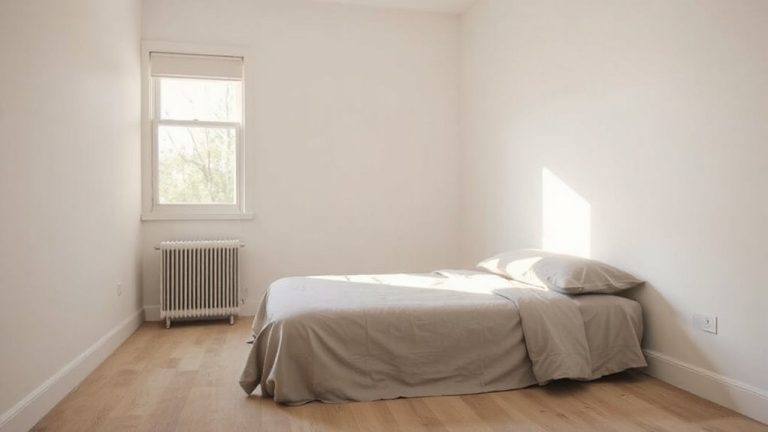
Make your space dark with blackout curtains that block sunlight and support melatonin production, ideally ones with thermal lining for sound reduction and a warranty for long-term use. Pair them with a contoured eye mask with adjustable straps for total light blockage. Use foam or silicone earplugs for noise protection, and add a white noise machine with adjustable settings to mask disruptions. Keep the room between 60–67°F using breathable bedding and a programmable thermostat. Limit screen time at least 30 minutes before sleep, and consider blue-light-blocking glasses if exposure is unavoidable-small adjustments like these build a stronger foundation for consistent daytime rest.
Notable Insights
- Use blackout curtains to block daylight and support melatonin production for better daytime sleep.
- Wear a contoured eye mask with an adjustable strap to prevent light exposure and improve comfort.
- Use foam or silicone earplugs to reduce disruptive noises and enhance sleep continuity during the day.
- Run a white noise machine to mask ambient sounds and create a consistent auditory environment.
- Maintain a cool room temperature between 60–67°F to support natural circadian cooling for daytime rest.
Trick Your Brain: Why Daytime Sleep Feels Impossible
Even though your body might be exhausted, trying to sleep during the day often feels like spinning your wheels because your brain is wired to stay alert in daylight. This struggle stems from light sensitivity and circadian confusion-your internal clock expects wakefulness when sunlight is present. Melatonin production drops, and alertness hormones rise, making rest feel out of reach. Shift workers or new parents often face this disruption, which can lead to ongoing sleep deficits if not managed. You might consider timed exposure to darkness and controlled lighting to signal rest phases. Some use low-blue lighting before planned sleep to ease the shift. Over-the-counter sleep aids exist, but they don’t fix the root cause and may carry drowsiness risks. Addressing circadian confusion directly-through routine and environmental cues-offers a more sustainable path than reliance on temporary fixes. For optimal results, incorporate sleep-friendly lighting that minimizes blue light and supports melatonin production.
Make Darkness Total With Blackout Curtains and Eye Masks
When you’re trying to sleep in daylight, even small amounts of light can interfere with melatonin production and disrupt rest, so blocking out light completely is key. Blackout curtains offer strong light blockage and often add sound isolation, thanks to their dense, layered fabric. Look for ones with thermal lining and a warranty-many brands offer trial periods so you can test performance. Pair them with an eye mask for total darkness. Contoured masks avoid eyelash pressure, while adjustable straps guarantee comfort. For maximum effectiveness, choose curtains specifically designed for best light-blocking performance.
| Feeling | With Total Darkness |
|---|---|
| Alertness | Reduced mental fatigue |
| Falling Asleep | Noticeably faster |
| Sleep Quality | Consistently deeper |
This combo improves conditions for shift workers or those with sleep disorders. Try different styles-some masks include light-blocking side shields. Combined with solid light blockage from curtains, the result supports your body’s natural rhythms without dependency.
Keep Noise Out With White Noise and Earplugs
You’ve already blocked out light to support melatonin and improve sleep depth, but sound can still interrupt rest, especially in busy households or urban settings. For effective noise isolation, consider using earplugs made from soft foam or silicone-they fit snugly and reduce sudden loud sounds. Pair them with white noise machines, which provide consistent sound masking that covers distracting noises like traffic or talking. Choose models with adjustable volume and multiple sound options to find what works best for you. Some devices offer timers and sleep-tracking features, adding convenience. Look for earplugs with hypoallergenic materials and try different sizes for a proper seal. Many brands offer sample packs or satisfaction guarantees, letting you test options risk-free. Used together, white noise and earplugs enhance sleep quality by improving auditory privacy. They’re simple tools that support deeper, uninterrupted daytime rest when calibrated to your environment and comfort. A top-rated sound machine option can make a significant difference in maintaining consistent auditory masking throughout your sleep cycle.
Set the Best Temperature for Daytime Rest
Though light and noise control set the stage for rest, temperature plays an equally critical role in how soundly you sleep during the day. Your body expects cooler temps when it’s time to rest, even if you’re napping off-schedule. Setting your ideal thermostat between 60–67°F (15–19°C) supports natural circadian alignment, helping you fall and stay asleep more easily. This range mimics nighttime cooling, which your internal clock responds to-regardless of sunlight outside. Too warm, and your core temperature won’t drop enough to sustain deep rest; too cold, and you may wake from discomfort. Use breathable bedding and lightweight fabrics to fine-tune warmth without adjusting the thermostat excessively. Some people test different temps over a few days to find their sweet spot. Consistency improves results, especially if you nap daily. A programmable thermostat can help maintain this environment with minimal effort.
Cut Blue Light and Screens Before Napping
Cool temps help your body settle into rest, but your eyes need preparation too-especially if screens have kept you alert during the day. Blue light from phones, tablets, and computers triggers screen exposure that can lead to melatonin suppression, making it harder to feel sleepy. Your body relies on melatonin to regulate sleep-wake cycles, so reducing this disruption matters. Try stepping away from screens at least 30 minutes before your nap. Use that time to unwind with a book or low-light activity instead. If you must use a device, enable night mode or wear blue-light-blocking glasses-they help lessen the impact. These small adjustments can improve nap quality by supporting natural melatonin production. While not a fix for all sleep issues, managing screen exposure is a low-cost, effective step. It’s easy to test and poses no risk, making it worth a try for most people seeking better daytime rest.
On a final note
You’ll sleep better in darkness and silence, so try blackout curtains and a snug eye mask to block light. Use earplugs with a white noise machine to reduce sound disruptions. Keep your room cool, around 65°F, for ideal rest. Test options like weighted blankets or cooling pads based on comfort. Check return policies when buying sleep aids. Small changes, backed by consistent use, often improve daytime sleep without medication.