Best Sleep Position for Hip Bursitis Pain Relief
Your sleep position affects hip bursitis pain by changing pressure and alignment. Lying on your side with a pillow between your knees keeps your hips neutral and reduces strain, while a firm mattress supports spinal alignment. Avoid sleeping on the affected hip or your stomach, as both increase inflammation and misalignment. Back sleeping with a cushion under your knees may relieve tension. Pillows with memory foam hold shape well, and many come with trial periods. There’s more to explore about lasting relief.
Notable Insights
- Side sleeping with a pillow between the knees helps align the hips and reduces strain on the inflamed bursa.
- Back sleeping with a cushion under the knees alleviates hip tension and supports spinal alignment.
- Avoid sleeping on the affected side to prevent increased pressure and worsening of bursitis pain.
- Stomach sleeping should be avoided as it misaligns the spine and tilts the pelvis, aggravating hip pain.
- Using supportive pillows and a medium-firm mattress promotes proper alignment and reduces nocturnal bursitis discomfort.
Best Sleep Positions for Hip Bursitis Pain
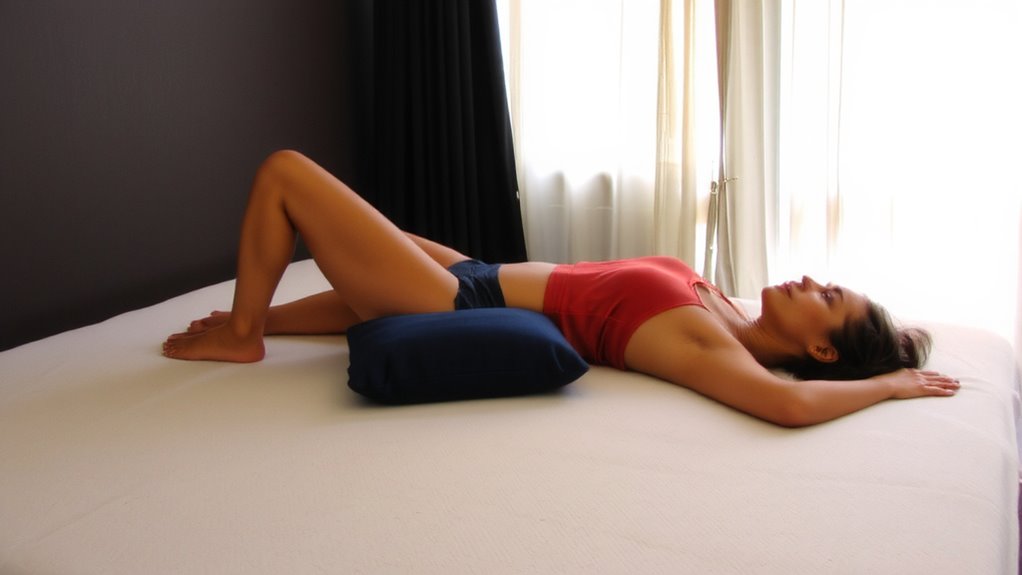
How do you find a comfortable position when hip bursitis flares up at night? Try side sleeping with a pillow between your knees to keep your hips aligned and reduce strain. This position helps relieve pressure on the inflamed bursa, especially when you place the pillow thick enough to maintain a neutral spine. If you prefer lying on your back, guarantee solid back support using a firm mattress and a small cushion under your knees. That slight bend can ease hip tension. A supportive sleep surface, paired with proper pillow placement, improves spinal alignment and reduces nighttime discomfort. Look for pillows with memory foam for better contouring and durability, many of which come with trial periods. Test adjustments gradually, observing how your hip responds over a few nights. Good positioning isn’t about perfection-it’s about finding what reduces pain and supports restful sleep. For those who struggle to stay upright or need extra support, consider the best pillows for upright sleeping.
Worst Sleeping Positions to Avoid With Hip Bursitis
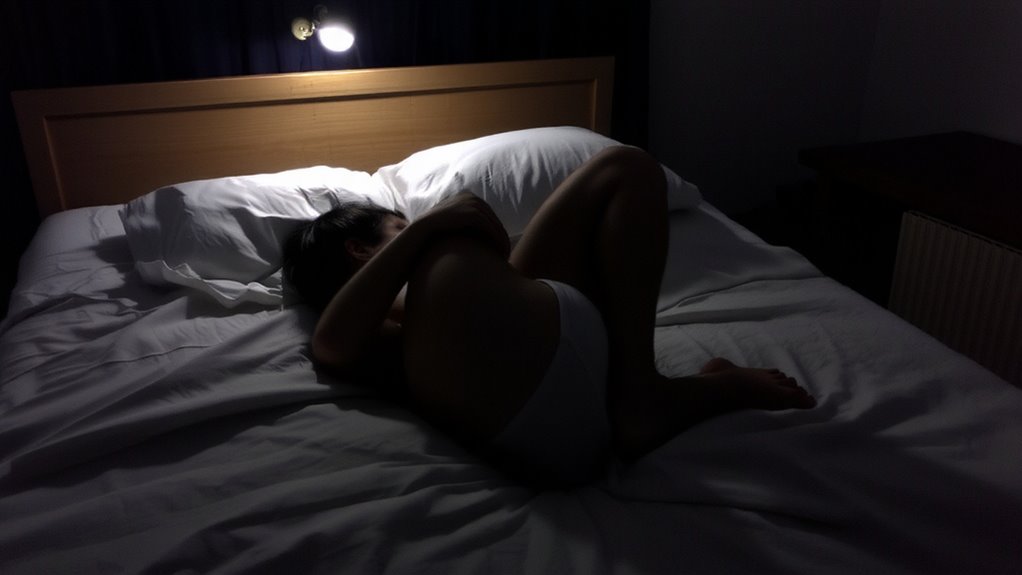
While side and back sleeping with proper support can ease hip bursitis discomfort, certain positions may worsen pain by increasing pressure on the inflamed bursa. Sleeping directly on the affected side creates side impact that aggravates symptoms, turning a restful night into a source of morning stiffness. Your body weight concentrates on fewer pressure points, intensifying strain where you need relief most. Stomach sleeping isn’t better-it can tilt the pelvis and misalign the spine, indirectly affecting hip tension. Even lying on your unaffected side without a pillow between the knees may allow subtle torque across the joint. These postures limit circulation and delay healing by stressing sensitive tissues. Adjusting your position isn’t about perfection-it’s about reducing strain. Trial periods with positional changes help you assess what’s sustainable. Pay attention to how your hip feels upon waking. Small shifts now can reduce pain triggers and improve rest quality over time. Using a supportive pillow between the knees can help maintain proper hip alignment and reduce nocturnal discomfort.
Optimize Your Bed for Hip Comfort
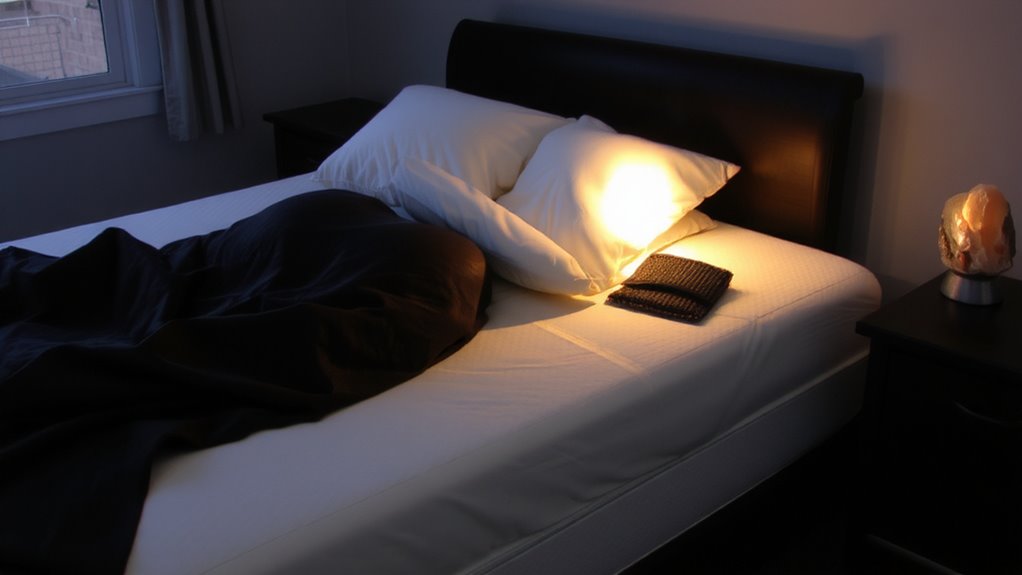
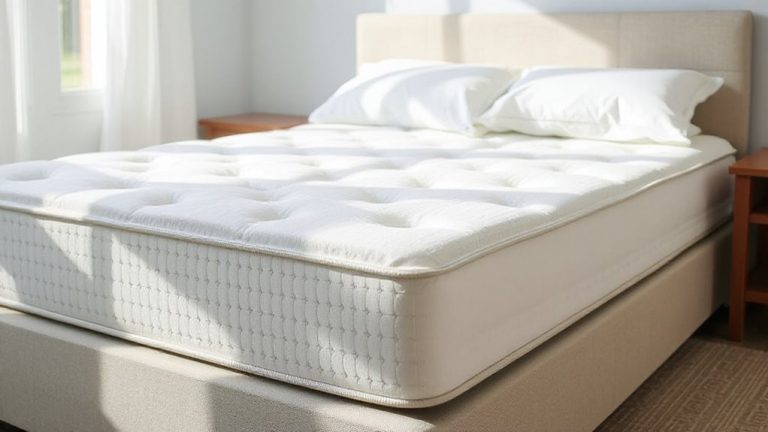
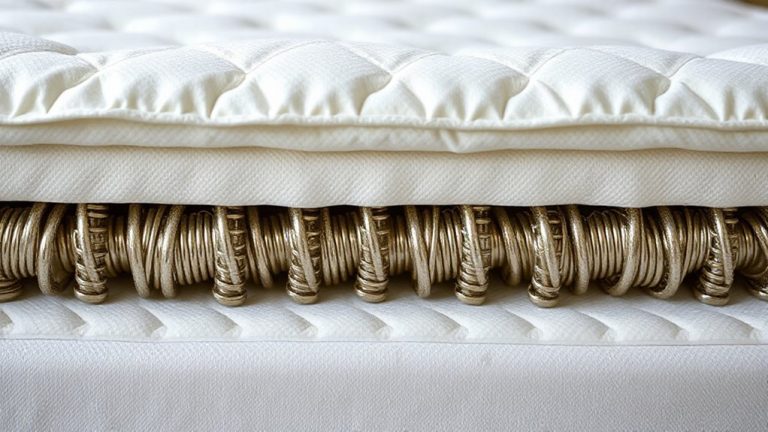
If your mattress sags or lacks support, it could be worsening your hip pain instead of relieving it. Proper mattress firmness is key-too soft, and your hips sink out of alignment; too firm, and pressure builds on sensitive joints. Look for medium-firm options that support spinal alignment while cushioning your hips. Memory foam and latex are common bedding material choices, each offering different levels of contouring and breathability. Memory foam molds closely but may trap heat, while latex provides responsive support and tends to sleep cooler. Consider a mattress with a trial period so you can test comfort and support over time. Check warranty terms, too, since long coverage often reflects durability. You’ll want something that balances support and comfort for long-term hip pain management. Test different firmness levels and materials to find what works best for your body and sleep style. For added comfort and proper fit, consider pairing your mattress with best deep-pocket sheets.
Use Pillows to Ease Hip Pain at Night
Your side sleeper’s comfort may depend heavily on how well you use pillows to align your hips and reduce pressure. Proper pillow placement helps keep your spine neutral, easing strain on inflamed tissues. Place a firm pillow between your knees to prevent your top leg from pulling your pelvis out of alignment-this also reduces stress on key pressure points. If your hips still ache, try adding a second pillow under the waist for extra support. Choose pillows with medium firmness and memory foam or down-alternative fill; they conform well without sinking too much. Test placements over a few nights, adjusting as needed. Many quality pillows come with trial periods, so you can return them if they don’t relieve discomfort. Consistent positioning minimizes nighttime hip strain and improves rest, supporting better day-to-day recovery.
Why Hip Bursitis Hurts More at Night
Why does hip bursitis seem to flare up just when you’re trying to rest? At night, your body’s movement slows, and inflammation flare ups can intensify without daily distractions. When you lie still, especially on the affected side, pressure builds around the bursa, worsening swelling and causing deeper discomfort. This prolonged compression may lead to nerve irritation, sending sharp or radiating pain through your hip or thigh. Reduced activity after dark also means less circulation, which can slow healing and increase stiffness. Your sleep position plays a key role-lying flat without support can misalign the hip, inviting more strain. But adjusting your posture with supportive pillows or a contoured mattress may reduce stress on the joint. Choosing breathable sheets and moderate room temperature can also minimize overheating, which sometimes aggravates inflammation. These small, evidence-based changes can improve comfort and support better rest without medical intervention.
When to See a Doctor for Hip Pain During Sleep
How long should you wait before seeking help if hip pain keeps waking you up night after night? If your night discomfort lasts more than two weeks and doesn’t improve with position changes or cushioning, it’s time to consult a doctor. Persistent hip inflammation may need more than rest-it could require targeted treatment like physical therapy or anti-inflammatory medication. You should also seek care if pain spreads, worsens at rest, or makes it hard to find a comfortable position. Early diagnosis helps prevent long-term issues. Watch for swelling, warmth around the joint, or difficulty bearing weight-these are clear signs of deeper inflammation. Doctors can assess causes and suggest solutions, from adjusted sleep aids to medical interventions. Don’t ignore recurring symptoms. Addressing hip inflammation early improves sleep quality and daily function. Your long-term comfort depends on timely, informed decisions.
On a final note
You can reduce hip bursitis pain at night by choosing sleep positions that align your spine and ease pressure on the hip. Side sleeping with a pillow between your legs, or back sleeping with a pillow under your knees, often helps. Avoid stomach sleeping, as it can worsen symptoms. Supportive mattresses and targeted pillow placement improve comfort. If pain persists despite adjustments, consult a doctor to rule out other issues.