Why Innerspring Mattresses Are Often Recommended by Chiropractors
You might find innerspring mattresses recommended by chiropractors because their coil systems support proper spinal alignment and reduce back strain. Firm, responsive coils keep your spine neutral, while layered foams cushion pressure points without sacrificing support. Many models offer zoned support and reinforced edges for better posture. With a lifespan of 7–10 years and trial periods often available, they let you test comfort and pain relief over time-so you can make sure this support truly works for you.
Notable Insights
- Innerspring mattresses provide firm, responsive support that helps maintain proper spinal alignment during sleep.
- Individually wrapped coils adapt to body contours while minimizing motion transfer and supporting neutral spine position.
- Targeted coil systems reduce pressure points and back strain, offering relief for chronic back pain sufferers.
- Chiropractors often recommend medium-firm innerspring models for their balance of support and spinal alignment.
- Durable construction with reinforced edges and long-term support makes them a trusted choice for posture correction.
How Innerspring Mattresses Align Your Spine
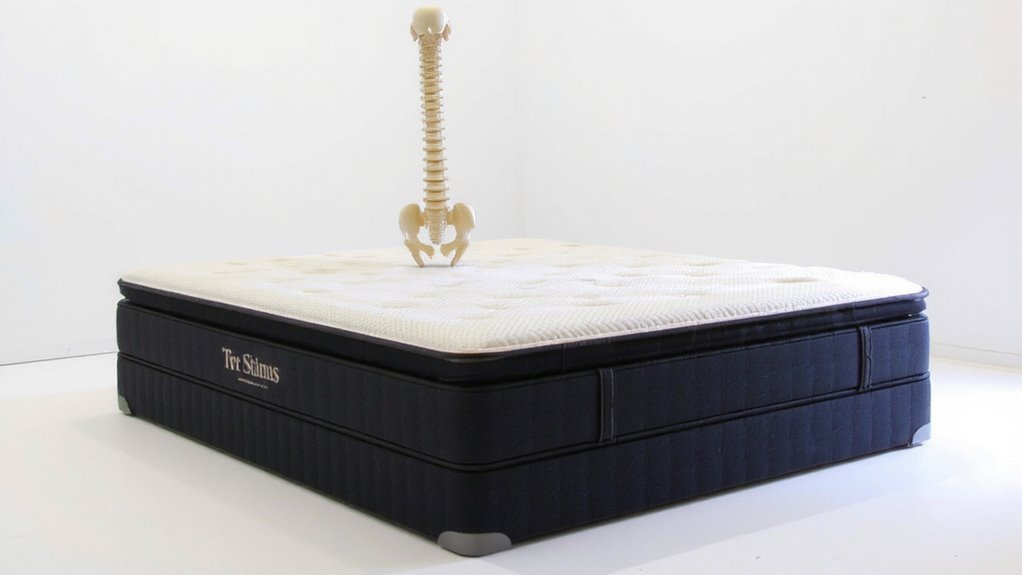
While every sleeper has unique needs, innerspring mattresses often help maintain proper spinal alignment because of their responsive support and structured design. You get a firm base from the coil system, which keeps your spine in a neutral position whether you sleep on your back, side, or stomach. This support works with your body’s natural curves, promoting even pressure distribution across your hips, shoulders, and lower back. Individually wrapped coils adjust slightly to your shape, reducing motion transfer while still upholding alignment. Innersprings with layered comfort foams or pillow tops add softness without sacrificing support, balancing comfort and spinal alignment. Most models come with trial periods and prorated warranties, letting you test firmness and support over time. Consider your preferred sleep position and body weight when choosing one-these affect how well pressure distribution and spinal alignment are maintained night after night.
Why Chiropractors Recommend Coils for Back Pain
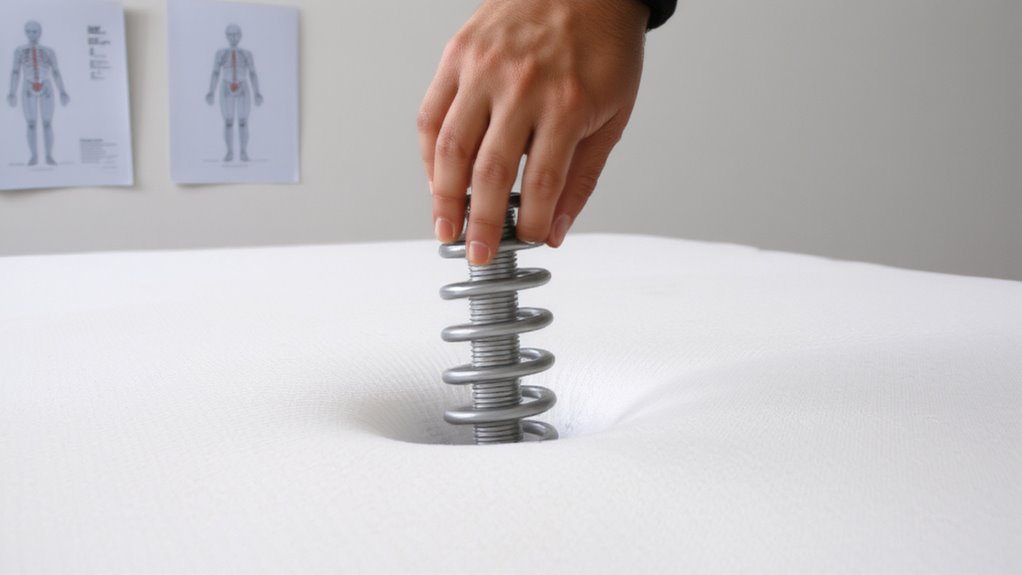
Support from a well-constructed coil system can make a real difference when you’re dealing with back pain. Coils provide targeted support that promotes proper spinal alignment, keeping your back in a neutral position while you sleep. This alignment helps reduce strain on muscles and joints, which may ease chronic discomfort over time. The individualized push-back from pocketed or interconnected coils offers consistent pressure relief, especially along heavier areas like hips and shoulders. You’ll likely notice less tossing and turning, since the mattress responds to your movements without sagging. Many chiropractors recommend innerspring models with firmer coils because they maintain structure longer and support posture effectively. Look for models with at least a 10-year warranty and a sleep trial-this lets you test the pressure relief and support in your own home. Choosing the right coil type and firmness can improve your sleep quality, especially when back pain is a concern. For those seeking optimal relief, the best mattresses for back pain often combine supportive coils with balanced cushioning layers. best mattresses for back pain
Do Innerspring Mattresses Work for Side Sleepers?
How well do innerspring mattresses really work if you’re a side sleeper? The answer depends on the model’s design and your need for pressure relief. Traditional innersprings may feel too firm, offering limited cushioning at the shoulders and hips-key areas for side sleepers. However, many modern versions include a comfort layer of memory foam or pillow tops that help distribute body weight more evenly, enhancing sleep comfort. Coils still provide solid spinal alignment, while the added padding reduces pressure points. If you weigh under 130 pounds, softer models may work better; heavier individuals might prefer medium-firm options with zoned support. Look for models with trial periods and clear warranty terms so you can test sleep comfort risk-free. Ultimately, choosing the right one balances coil support with enough give for pressure relief, making it possible to find a suitable innerspring-even on your side.
Are Innerspring Mattresses Durable Enough for Long-Term Support?
Durability often comes down to materials and construction when it comes to innerspring mattresses. You’ll find they’re built with strong steel coils that resist sagging over time, especially high-quality ones with reinforced edges. Good edge support means you won’t feel like you’re sliding off when you sleep near the side, and it makes getting in and out of bed easier. Many models include durable foams or fabrics on top that hold up well, though you should check the warranty-most reputable brands offer 10 years or more. Thanks to open coil systems, these mattresses provide solid temperature regulation, letting air flow freely so you don’t overheat. That breathability can help if you’re sensitive to heat at night. With proper care, an innerspring mattress can last 7–10 years, offering reliable spinal support throughout its life.
What Firmness Do Chiropractors Recommend by Sleep Position?
Why do chiropractors often suggest different firmness levels based on how you sleep? Because your preferred position affects spinal alignment and pressure points. If you sleep on your back, you’ll likely benefit from a medium-firm mattress-it supports your spine while cushioning lower back and pelvic areas. Side sleepers usually need a softer feel to cradle shoulders and hips, reducing pressure points that can disrupt sleep quality. Stomach sleepers often do best with a firmer surface to prevent lower back sagging. Innerspring mattresses offer customizable firmness, especially with pillow tops or adjustable coils. This balance helps maintain natural spine positioning. Better alignment means fewer nighttime awakenings and improved sleep quality. Always consider a mattress with a sleep trial and solid warranty-testing it in your home guarantees it truly fits your position-based needs.
Why Motion Isolation Matters in Chiropractor-Approved Mattresses
Ever wake up feeling restless because your partner’s late-night movements kept jostling you awake? That’s where motion isolation becomes important, especially in a chiropractor-approved mattress. While traditional innersprings can transfer motion across coils, newer designs reduce partner disturbance using advanced coil systems or zoned support. You’ll stay stable even when your partner rolls over or gets up. Good edge support also helps by keeping the surface firm near the sides, so you don’t feel like you’re sliding off. When tested, models with reinforced perimeter coils limit sagging and support easier entry and exit. If you share a bed, minimizing disruption supports deeper, more restful sleep-key for spinal recovery and long-term comfort. Look for trial periods and warranties, since personal feel varies. Investing in a mattress that balances motion isolation and support may lead to fewer sleep interruptions and better alignment.
On a final note
You’ll find innerspring mattresses often balance support and breathability, thanks to their coil systems that promote spinal alignment. Chiropractors may suggest them, especially if you need firm, consistent support. They’re durable, but check the coil count and gauge for long-term performance. While motion transfer can be an issue, many models now include stabilizing layers. Look for ones with trial periods and solid warranties so you can test comfort and support risk-free.