How Innerspring Mattress Construction Affects Pressure Relief for Hips
Your innerspring mattress may not relieve hip pressure if the coils are too stiff or too widely spaced, causing your hips to sink or rest unevenly. Pocketed or offset coils offer better contouring and reduce joint strain, especially with a lower gauge for firmer support. Paired with at least 2 inches of quality comfort foam, especially gel-infused for cooling, the mattress can balance support and cushioning. Strong edge support also helps maintain alignment. Consider models with trial periods to test what works best for your comfort.
Notable Insights
- Pocketed coils provide targeted support by contouring to hip curves and reducing joint strain through independent coil movement.
- A higher coil count (300–400+) improves weight distribution, minimizing pressure points and enhancing hip alignment.
- Lower gauge coils (thicker wires) offer firmer support, preventing excessive hip sinkage during side sleeping.
- Quality comfort layers, especially 2+ inches of memory or gel-infused foam, cushion hips and reduce pressure over coils.
- Reinforced edge support maintains spinal alignment by preventing hip tilting when sleeping near the mattress edge.
Why Your Innerspring Mattress Causes Hip Pain
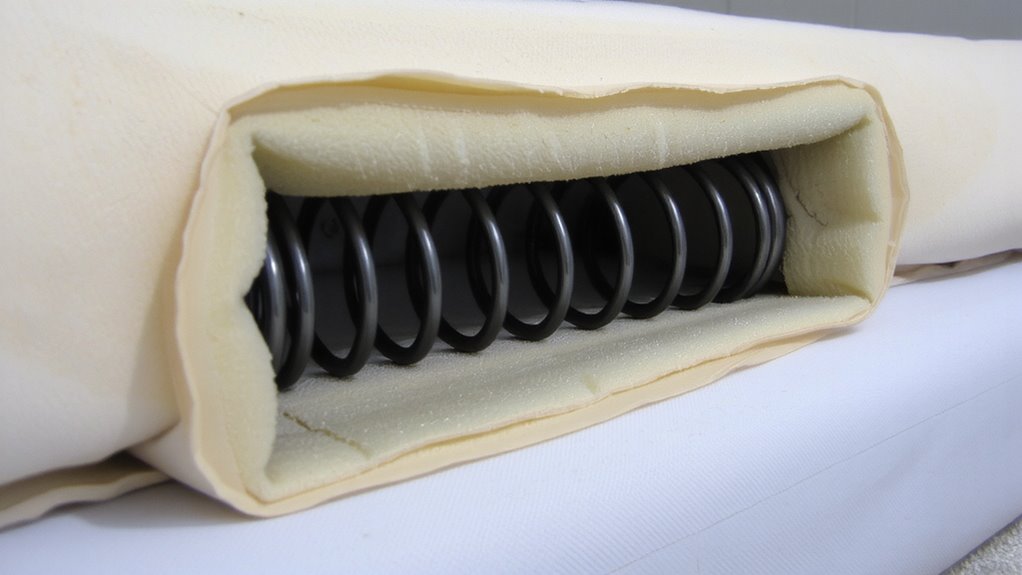
Why does your hip hurt more after a night on an innerspring mattress? Because traditional innerspring designs often lack targeted support, letting your hips sink too deeply or rest unevenly. This misalignment stresses joints and soft tissues overnight. You also deal with motion transfer-every shift from a partner travels across the bed, disturbing your sleep rhythm and possibly worsening discomfort. Plus, poor temperature regulation in many innerspring models traps heat, which may increase inflammation and reduce sleep quality. While the coil system offers breathability, thin comfort layers fail to cushion pressure points effectively. If you’re sensitive to movement or sleep hot, these factors can amplify hip pain. Consider models with reinforced edge support, thicker padding, or hybrid designs that improve both motion isolation and thermal control. Check trial periods and warranty terms-testing a mattress over weeks helps determine real-world relief.
How Innerspring Coil Types Shape Hip Support
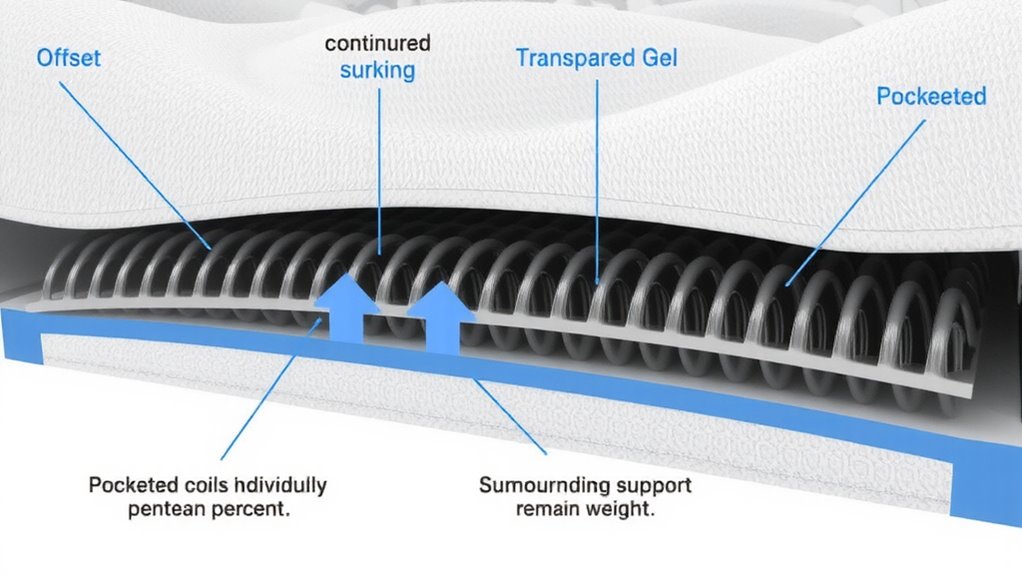
While you might assume all innerspring mattresses offer similar support, the type of coil inside plays a key role in how well your hips are aligned and cushioned overnight. Bonnell coils are common but may not contour closely, sometimes leading to uneven pressure on your hips. Offset coils, with their hourglass shape, compress individually and improve spring distribution, offering better spinal alignment. Pocketed coils go further-they move independently, adjusting to your body’s curves and maintaining consistent coil tension where you need it most. This targeted response helps reduce strain on sensitive hip joints, especially if you sleep on your side. You’ll want to check the manufacturer’s trial period and warranty, since personal comfort varies. While coil type alone won’t guarantee relief, understanding how spring distribution and coil tension work can guide your choice toward more supportive, pressure-relieving sleep.
Do Coil Gauge and Count Reduce Hip Pressure?
Pocketed coils might respond well to your body’s shape, but how firm those coils feel and how many there are also play a role in easing hip pressure. Coil gauge affects coil tension-the lower the gauge number, the thicker and firmer the wire, offering stronger support where your hips sink in. If you’re heavier or sleep on your side, firmer coils can prevent excessive sagging. Spring density, or the number of coils per square foot, impacts how evenly your weight is distributed. Higher spring density usually means better contouring and less pressure on hips. However, too many stiff coils might reduce comfort if your mattress lacks proper cushioning. Quality innerspring models often feature 300–400+ coils with balanced tension for durability and support. Check warranty terms and sleep trials-many brands offer 10-year coverage and 100-night trials. These help you test coil performance in real use, ensuring hip comfort without risk.
Which Comfort Layers Help Innerspring Mattresses Relieve Hips?
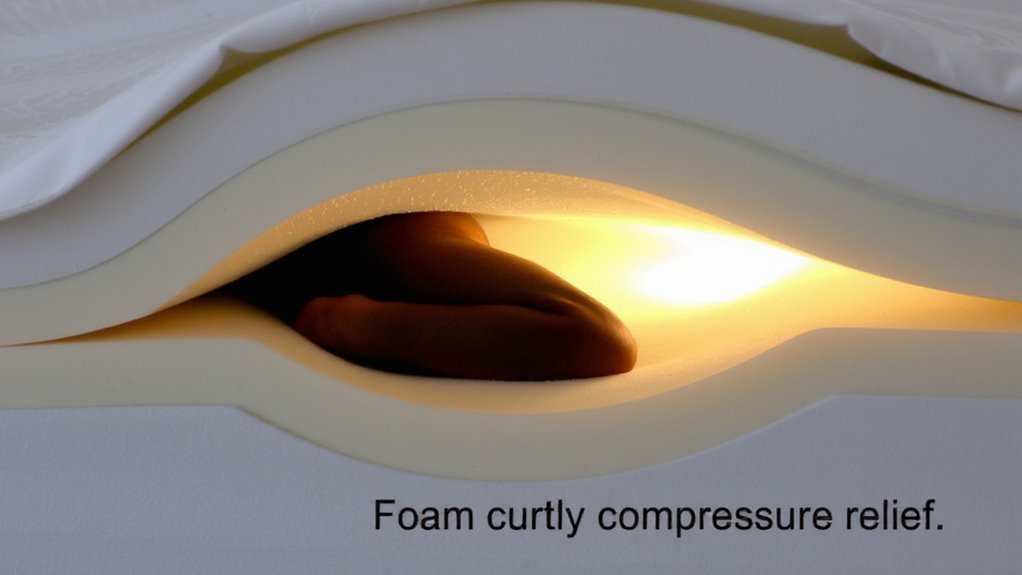
A well-chosen comfort layer can make a big difference in how well an innerspring mattress supports your hips. If you sleep on your side, you’ll likely benefit from memory foam, which contours closely to your body and cushions pressure points. Memory foam molds to your shape, helping distribute weight evenly and reduce strain on your hips. Many models also include gel infusion to help manage heat, making the foam more breathable and comfortable for longer sleep. Gel-infused layers offer the same conforming feel but with improved temperature control, which can be helpful if you tend to overheat. These comfort layers work with the coil system to provide balanced support and softness where you need it. When shopping, look for at least 2 inches of quality foam over the coils. Check trial periods and warranties to guarantee you can test the comfort safely.
Can Edge Support Affect Hip Alignment at Night?
Could the firmness of your mattress edges be influencing how well your hips stay aligned through the night? Weak edge support can lead to edge sag, especially near the foot or sides where you sit or shift frequently. When the perimeter softens, your body may tilt toward the edge, forcing your hips out of neutral alignment. A mattress with reinforced coils or dense foam along the border helps maintain frame stability, keeping your spine straight even if you sleep close to the edge. This stability matters if you share the bed or need support when getting in and out. Over time, better edge integrity reduces strain on your hips and joints. Look for models that highlight durable border coils or high-density encasements, as these features resist compression. Some brands offer trial periods, letting you test edge performance in real use. Good edge support won’t cure hip issues, but it can help maintain consistent alignment throughout the night. A well-constructed spring coil mattress can significantly enhance overall support and longevity.
What to Look for in an Innerspring Mattress for Hip Pain
Why do your hips still ache in the morning, even after a full night’s rest? Your innerspring mattress might not support your sleep position properly. If you sleep on your side, you need cushioning that aligns your spine and reduces hip pressure. Look for pocketed coils-they contour better than interconnected ones. A plush to medium comfort layer with memory foam or pillow-top adds relief without sinking too much. But don’t ignore mattress temperature; overheating can disrupt sleep and worsen pain. Choose breathable covers or gel-infused foams to stay cool. Edge support helps if you move during the night. Test the mattress in your usual sleep position, if possible. Most quality models offer a 100-night trial and solid warranty-use these to assess real-world comfort. Prioritize support, alignment, and temperature control for lasting hip relief.
On a final note
Your innerspring mattress may not relieve hip pressure if it lacks proper coil support or soft comfort layers. Look for pocketed coils and a plush top to cushion hips without sagging. A high coil count and lower gauge offer better support, while thick edge reinforcement helps maintain alignment. Test the mattress with a sleep trial and check the warranty, since comfort needs can change. A well-built innerspring can work, but only if it matches your body’s pressure points.