Implementing Sleep Journal Entries Focused on Awakening Pain Locations and Intensity
You can track morning pain by noting where it hurts and how badly on a 0–10 scale right after waking. Use a body map or app to log pain location, intensity, and sleep position daily. Wearables or phone apps help link pain patterns to movement, stress, or mattress changes. Consistent entries reveal how sleep habits affect discomfort, guiding better choices about pillows, routines, or treatment. Sharing this data with your doctor improves care-and there’s more to contemplate when fine-tuning your approach.
Notable Insights
- Record pain location and intensity upon waking using a body map and 0–10 scale for accurate tracking.
- Note pain characteristics like sharpness or dullness to identify patterns linked to sleep posture or aids.
- Use mobile apps or wearables to log subjective pain reports alongside objective sleep quality metrics.
- Track one sleep variable at a time-such as position or pillow type-to isolate pain triggers effectively.
- Share organized, chronological journal entries with healthcare providers to support diagnosis and treatment adjustments.
Why Tracking Morning Pain Matters

Why does that ache in your shoulder or stiffness in your lower back feel worse the moment you wake up? Tracking morning pain helps you identify patterns others might miss. You’re not just noting discomfort-you’re gathering data on pain correlation with sleep position, mattress support, or even room temperature. This record shows symptom progression over time, revealing whether your pain is worsening, stabilizing, or responding to changes. You can link flare-ups to specific sleep aids, like a new pillow or adjusted bedtime routine. It’s not about guessing what works-it’s about seeing real trends. With consistent entries, you give your doctor clearer insight, improving diagnosis accuracy and treatment options. Sleep journals aren’t just logs-they’re tools for smarter decisions about sleep quality, disorder management, and whether a trial of a new support product is worth continuing or covered under warranty. A well-documented pain journal can even help determine if your current mattress provides adequate support, especially if you’re considering options designed for heavier individuals, such as the best mattresses for heavy people.
How to Record Morning Pain Location and Intensity

Start with a clear body map sketch or mental checklist-neck, shoulders, back, hips, knees-so you can quickly pinpoint where morning pain shows up. Use pain mapping each morning to mark exact areas where discomfort appears, noting if it’s sharp, dull, or throbbing. This consistent tracking helps identify patterns linked to sleep posture or conditions. Right after waking, assign an intensity rating from 0 to 10, with 0 being no pain and 10 unbearable. Be honest and specific-did the lower back ache register a 4 or a 7? Recording both location and intensity rating over time reveals changes that might suggest the need to adjust sleep surfaces, pillows, or routines. These details support better decisions about sleep aids or when to consult a specialist. Over weeks, your notes become a reliable reference for evaluating what’s working. A supportive mattress can significantly influence pain levels, and trying one of the best mattresses for back pain may improve spinal alignment and reduce discomfort.
Best Tools to Track Sleep and Morning Pain
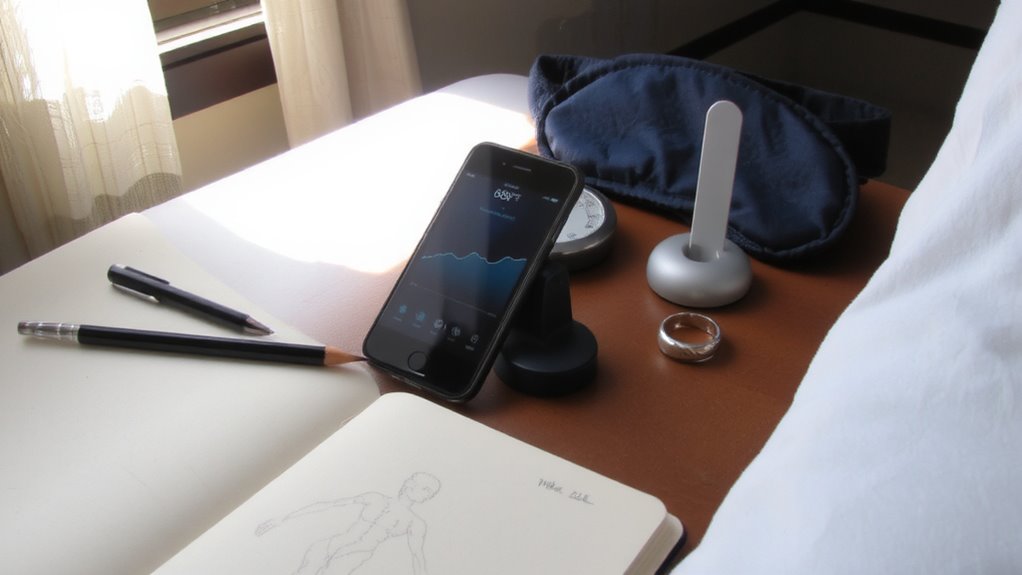
You’ve already begun mapping your morning pain with body sketches and intensity ratings, which gives you a solid foundation for spotting trends over time. Now, wearable sensors can add objective data, like sleep stages and movement, helping link rest quality to pain severity. Many track heart rate and breathing patterns automatically, so you don’t have to log each night manually. Paired with mobile applications, they store daily logs and generate progress charts. These apps let you input pain location, intensity, and even note stiffness or medication use each morning. Some sync with wearables, combining subjective pain reports with sleep data. Look for tools offering free trials, clear privacy policies, and easy data export-useful when consulting doctors. While wearables vary in accuracy, consistent use improves insights. Mobile apps differ in user interface, so test a few to find one that fits your routine. Both tools help organize patterns without pushing specific sleep aids or diagnoses. For those seeking alternatives to wearables, non-wearable sleep trackers provide contact-free monitoring using sensors placed near the bed.
How Sleep Habits Affect Morning Pain Patterns
Could the way you sleep be shaping how you hurt when you wake? Your sleep position and stress levels play key roles in morning pain patterns. Poor alignment or restless nights can intensify discomfort, especially in joints and the back. Monitoring habits helps identify triggers and improvement areas.
| Sleep Position | Common Pain Areas |
|---|---|
| Back | Neck, lower back |
| Side | Shoulder, hip |
| Stomach | Neck, spine |
| Fetal | Hips, knees |
| Curled | Spine, shoulders |
High stress levels often lead to muscle tension and disrupted sleep, worsening pain. Adjusting your sleep position can reduce strain, especially with supportive pillows or mattresses. Try adjusting one variable at a time-like sleep position or bedtime routine-and track changes in your journal. Consistent patterns help guide practical choices about sleep aids or stress-reduction techniques.
How to Share Your Pain Journal With Your Doctor
Why wait until your next appointment to get the most out of your pain journal? You can start using it now to spot pain patterns and notice symptom correlation over time. Bring your journal-whether digital or handwritten-to your doctor’s visit so they see exactly when and where you hurt upon waking. Highlight entries where changes in sleep position, sleep duration, or sleep aids occurred, since these may connect to your pain levels. Organize your notes by date and rate pain intensity side-by-side with sleep quality. This helps your doctor assess how your rest influences discomfort. Clear records make it easier to adjust treatment plans or test new strategies. Sharing your journal isn’t just helpful-it’s a practical step in managing your health with confidence.
On a final note
You now have a clear way to track morning pain and sleep patterns, giving you useful data for better decisions. Recording location and intensity helps identify links between sleep habits and discomfort. Tools like apps or notebooks work well, depending on your routine. When you share this journal with your doctor, it supports accurate assessments. Small changes in sleep position or support may reduce pain over time. Try adjustments slowly, note results, and keep expectations realistic.