How to Prevent Sleep Fragmentation in Advanced Sleep Phase Disorder
You feel sleepy early because your internal clock runs ahead of natural light cycles, often tied to genetics and early melatonin release. Use evening bright, blue-enriched light therapy (1,000–10,000 lux) for 30–60 minutes, avoiding morning light to delay your rhythm. Stick to a consistent sleep schedule, keep screens away at night, and shift caffeine to mornings. Combine light shifts with gradual bedtime delays for stronger results-there’s a method that builds on this for lasting change.
Notable Insights
- Use evening bright light therapy to delay melatonin onset and align sleep timing with desired schedule.
- Maintain a consistent sleep-wake schedule daily, including weekends, to stabilize circadian rhythms.
- Avoid morning light exposure to prevent further advancing of the internal clock.
- Limit caffeine and screen use in the evening to reduce sleep disruptions and melatonin suppression.
- Gradually delay bedtime using chronotherapy under medical guidance to reset circadian timing.
How ASPD Shifts Your Circadian Rhythm
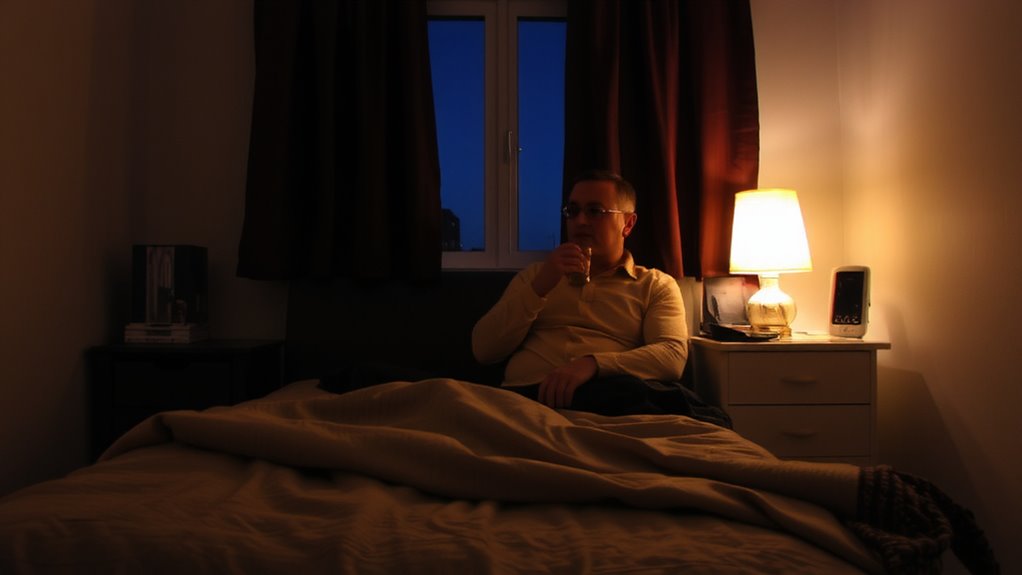
While your circadian rhythm normally aligns with natural light and dark cycles, ASPD-Advanced Sleep Phase Disorder-shifts that internal clock earlier, making you feel sleepy in the late afternoon or early evening and wake up too early in the morning, often before sunrise. This shift isn’t just habit-it’s tied to genetic predisposition, often running in families. Your body starts releasing melatonin earlier than usual, sometimes as early as 6 or 7 p.m., which drives sleep onset. That altered melatonin timing means your sleep cycle runs ahead of societal norms, increasing the risk of sleep fragmentation when external schedules delay bedtime. Recognizing this physiological shift helps guide choices around bedtime routines and potential sleep aids. You don’t need a cure, but understanding your body’s natural drift can inform timing for melatonin supplements or light therapy-though timing is key. Early fatigue isn’t laziness; it’s biology.
Use Light to Delay Early Waking

You can work with light to push back your early wake time, especially since your body starts releasing melatonin earlier due to ASPD. Evening light exposure helps shift your internal clock later by delaying melatonin timing. Use bright, blue-enriched light for 30–60 minutes in the evening, ideally from a light box or wearable device with measured lux output. Aim for 1,000 to 10,000 lux, placed at eye level without staring directly at it. Consistency matters-use it at the same time each night. Avoid dim or inconsistent light exposure, as it may weaken the effect. Some devices offer timers and adjustable brightness, improving trial adherence. Results often appear within 1–2 weeks. Combine this with morning light avoidance to strengthen the shift. Monitor changes in sleep patterns and adjust timing as needed. Light therapy is non-invasive and has minimal side effects when used as directed, making it a reliable tool to support your circadian alignment.
Use Sleep-Friendly Routines to Stay Asleep
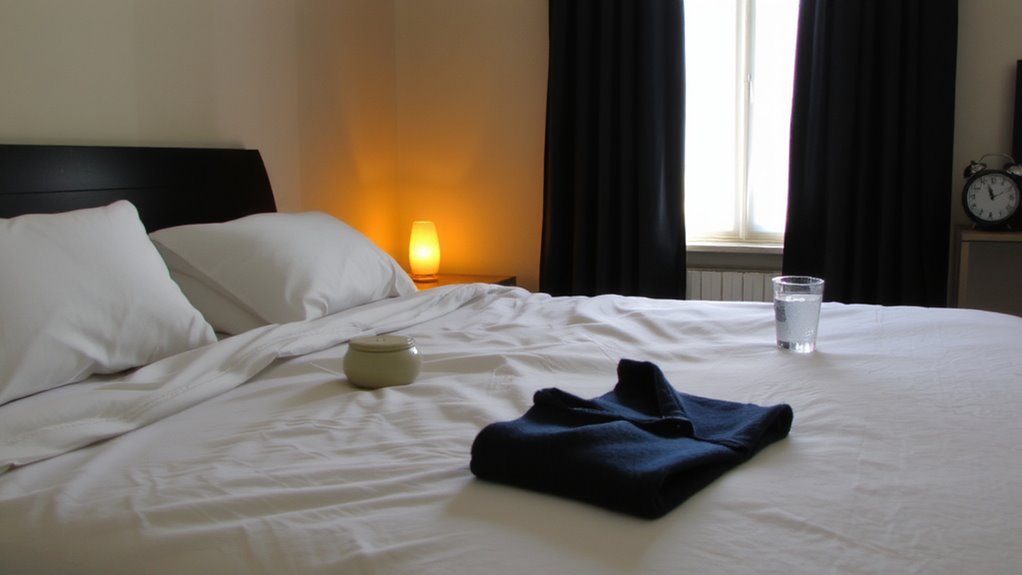
Sticking to consistent habits each night can make a real difference in reducing sleep interruptions linked to ASPD. Strong sleep hygiene helps your body stay in sync, making it easier to remain asleep once you’re settled. Set a regular bedtime and wake time, even on weekends, to strengthen bedtime consistency. This routine supports your internal clock and reduces spontaneous awakenings. Keep your bedroom cool, dark, and quiet-use blackout curtains or a sleep mask if needed. Limit screen time at least 30 minutes before bed, since blue light can disrupt melatonin release. Choose calming pre-sleep activities like reading or light stretching. Avoid heavy meals or intense exercise close to bedtime. These steps don’t require special tools, but they do need daily effort. Over time, improved routines can improve sleep continuity and overall rest quality. Incorporating effective sleep routine aids can further enhance your ability to maintain uninterrupted rest.
Avoid Common Evening Triggers That Break Your Sleep
Why do you wake up so often at night, even when you’re tired? Common evening triggers might be disrupting your sleep. High caffeine intake, especially in the afternoon or evening, can linger in your system and delay sleep onset or cause awakenings. Even if you don’t feel jittery, caffeine affects your sleep architecture, reducing deep sleep. Screen exposure before bed is another key issue. The blue light from phones, tablets, or TVs suppresses melatonin, making it harder to stay asleep. Reducing screen time at least one hour before bed helps your brain wind down. You don’t need to eliminate these entirely-just adjust timing and duration. Try shifting caffeine intake to mornings and swapping screens for dim lighting or books. These small changes can improve sleep continuity without drastic measures. Consistency matters more than perfection.
Try Chronotherapy to Reset Your Internal Clock
Adjusting habits like caffeine and screen use sets the foundation, but sometimes the body’s internal clock needs more direct recalibration-this is where chronotherapy comes in. You use gradual shifts in sleep scheduling to reset your circadian rhythm, moving bedtime and wake time later by 15–30 minutes every few days. This method works best with wake training, where you anchor your morning rise time, even on weekends. It’s a slow process, often taking several weeks, but helps align your sleep drive with desired hours. You’ll need consistency and tracking-possibly a sleep diary or app-to monitor progress. Some see improvements in just two to three weeks; others need longer. There’s no device or prescription required, though light therapy can support the shift. Talk to your doctor before starting, especially if you have other sleep disorders.
On a final note
You can manage sleep fragmentation in ASPD by using evening light to delay your cycle and keeping a consistent bedtime routine. Avoid screens and caffeine late in the day, as they often trigger early awakenings. Chronotherapy may help reset your rhythm over time. These strategies work best when combined and tested gradually. Check with your doctor before trying supplements or devices. Most approaches have a low risk, but results vary-track your sleep to see what’s effective.