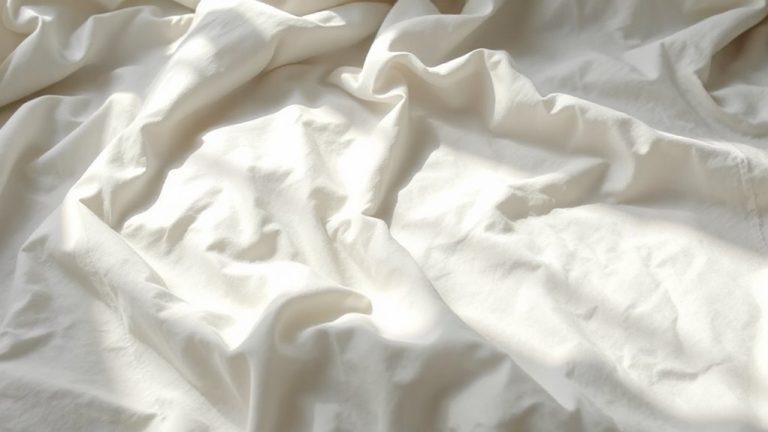
The Role of Sateen Weave in Creating Silky-Smooth Cotton Bedding
You feel the smoothness of sateen right away-its weave floats yarns over several threads, creating a soft, lustrous surface that drapes gently and reflects light evenly. Made from 100% cotton, it stays breathable despite its tight weave, letting air circulate and moisture move away from your skin. Higher thread counts don’t always mean better, since single-ply yarns offer more durability and softness. With proper care, sateen stays smooth and strong over time-something you’ll want to know more about as you choose the best fit for your comfort.
Notable Insights
- The sateen weave aligns fibers smoothly by floating yarns over three or four threads, creating a soft, lustrous surface.
- Tight weaving with high loom tension ensures fibers lie flat, enhancing smoothness and subtle light reflection.
- Longer floats in the weave reduce friction, allowing skin to glide easily across the silky fabric.
- Despite its density, the 100% cotton sateen weave maintains breathability and moisture-wicking for comfort.
- Optimal thread counts (300–600) with single-ply long-staple cotton preserve softness, durability, and a smooth hand feel.
What Makes Sateen Weave Different From Other Cotton Weaves?
Silky smoothness defines the sateen weave, setting it apart from other cotton weaves like percale or plain. Your experience with it starts with the weave structure-one yarn goes over three or four, then under one, creating a tight, soft surface. This arrangement boosts fiber alignment, letting threads lie flatter and reflect light gently. You’ll notice less crispness than percale but more warmth and drape. Because of this, sateen feels warmer in winter, yet may hold heat-something to take into account if you tend to sleep hot. High thread counts aren’t always better; a tight, well-constructed sateen at 300–400 threads often performs best. Many brands offer trial periods, so you can test comfort without risk. Check warranty terms for pilling resistance, as sateen can pill over time with heavy washing. Weigh these features when choosing bedding that supports your sleep routine. For those seeking top-tier comfort, the best luxury sateen sheets deliver exceptional softness and durability.
How Does Sateen Weaving Create a Silky, Lustrous Finish?
How does a simple change in weaving technique transform cotton into something that feels so smooth and looks subtly shiny? It’s all in the sateen weave’s structure. You see, this method floats the yarns over several threads before interlacing, creating a surface with more exposed fibers. That increased exposure catches light evenly, giving you that soft luster without being flashy. High loom tension keeps the weave tight and consistent, which prevents shifting and boosts durability over time. At the same time, precise fiber alignment guarantees each thread lies flat and parallel, enhancing both the silky hand feel and the fabric’s ability to drape smoothly over your body. Unlike looser weaves, this alignment reduces friction, so your skin glides across it easily-ideal if you value comfort during restless nights. It’s not magic, just smart construction that balances sheen and softness with everyday performance.
Why Is 100% Cotton Sateen Both Soft and Breathable?
You’ve already seen how the sateen weave gives cotton its smooth feel and soft shine, but what makes it a smart choice for sleep when breathability matters just as much? The answer lies in both fiber sourcing and weave density. High-quality, 100% cotton fibers are naturally breathable, allowing air to circulate and moisture to wick away-key for regulating body temperature through the night. While sateen is denser than plain weaves, it’s not so tight that it traps heat. The weave density balances softness with airflow, giving you a cozy yet comfortable sleep surface. Because cotton responds well to body heat and humidity, it supports sleep comfort without overheating. When choosing bedding, consider how fiber sourcing affects both feel and performance. Reputable brands often disclose sourcing details, helping you make informed decisions. Combined with trial periods or warranties, this transparency lets you test comfort risk-free, especially helpful if you’re managing sleep sensitivities.
Does Thread Count Matter for Sateen Sheets?
What really determines how luxurious and durable your sateen sheets feel-thread count, or something else? While thread count relevance gets a lot of attention, it’s not the whole story. High thread counts can suggest softness, but only if the fibers are fine and tightly spun. With sateen, material density matters just as much, since the weave packs more threads on the surface for that silky finish. Sheets between 300 and 600 thread count often strike the best balance-thick enough to feel lush, but not so dense they trap heat. Extremely high counts may use multi-ply yarns that reduce breathability and longevity. Instead of chasing numbers, focus on single-ply cotton and a tight sateen weave. That way, you get durability, comfort, and a smooth drape that improves with washing-giving you better sleep night after night.
How Should You Wash and Care for Sateen Sheets?
Choosing the right care routine helps maintain the soft sheen and smooth feel of your sateen sheets over time, just as much as selecting a quality weave or thread count. Use a gentle cycle and cold or lukewarm washing temperature to protect the fibers and prevent pilling. Avoid harsh detergents or bleach, which can weaken the cotton and dull the finish. When drying, opt for low-heat drying methods or air-dry whenever possible-high heat can damage the delicate sateen structure. Remove sheets from the dryer slightly damp to reduce wrinkling, then smooth them by hand before final drying. This helps preserve both appearance and texture. Regular care keeps your sateen sheets comfortable and long-lasting, supporting restful sleep without disrupting your routine. Proper maintenance won’t cure sleep disorders, but smooth, well-kept bedding contributes to a calm, inviting sleep environment. For those seeking similar comfort and sheen, best satin sheets offer an elegant alternative to cotton sateen.
How Do You Pick the Best Sateen Bedding for You?
Why does one set of sateen sheets feel more luxurious than another, even when both claim high thread counts? It often comes down to fiber quality and weave density, not just numbers. When choosing sateen bedding, look for long-staple cotton like Egyptian or Pima, which naturally boosts softness and reduces pilling. You’ll want a thread count between 300 and 500-higher counts don’t always mean better comfort and can worsen durability concerns. A tighter weave improves both feel and longevity. Check how well the fabric holds color; superior dyeing processes lead to better color retention, even after multiple washes. Many brands offer trial periods or warranties, so you can test comfort and performance risk-free. Consider your sleep preferences-do you run hot, or need extra softness for sensitive skin? These factors guide smarter choices. One brand known for balancing these qualities is Brooklinen, with their best Brooklinen sheets delivering both luxury and durability.
On a final note
Sateen weave gives cotton bedding a smooth, lustrous finish by floating threads in a way that reflects light and feels soft against the skin. While it’s silky, it still lets air flow, so you stay comfortable. Higher thread counts can add durability, but quality matters more than number alone. Check care labels-most sateen sheets do best washed in cool water and dried on low. Look for brands offering trials or warranties, so you can test feel and breathability. Try a set to see how it affects your sleep.