The Role of Sleep Position in Preventing SIDS in Newborns
Putting your baby to sleep on their back is the safest choice from day one. It keeps the airway open, reduces breathing risks, and lowers SIDS by preventing rebreathing and airway blockage. Back sleeping supports steady oxygen flow and proper spine alignment. Always use a firm, flat mattress with no loose bedding. Once your baby rolls both ways, repositioning isn’t needed-but starting on the back matters most. Consistency helps them adapt, and every safe sleep choice builds stronger protection over time.
Notable Insights
- Placing newborns on their back for every sleep reduces the risk of SIDS and supports safe breathing.
- Back sleeping prevents airway obstruction by keeping the tongue centered and airway open.
- Tummy and side sleeping increase risks of rebreathing exhaled air and accidental suffocation.
- A firm, flat mattress in a crib with no loose bedding ensures safe sleep positioning.
- Consistent back sleeping, even during fussiness, lowers SIDS risk and promotes healthy sleep patterns.
Back Sleeping Is Safest: Start Here
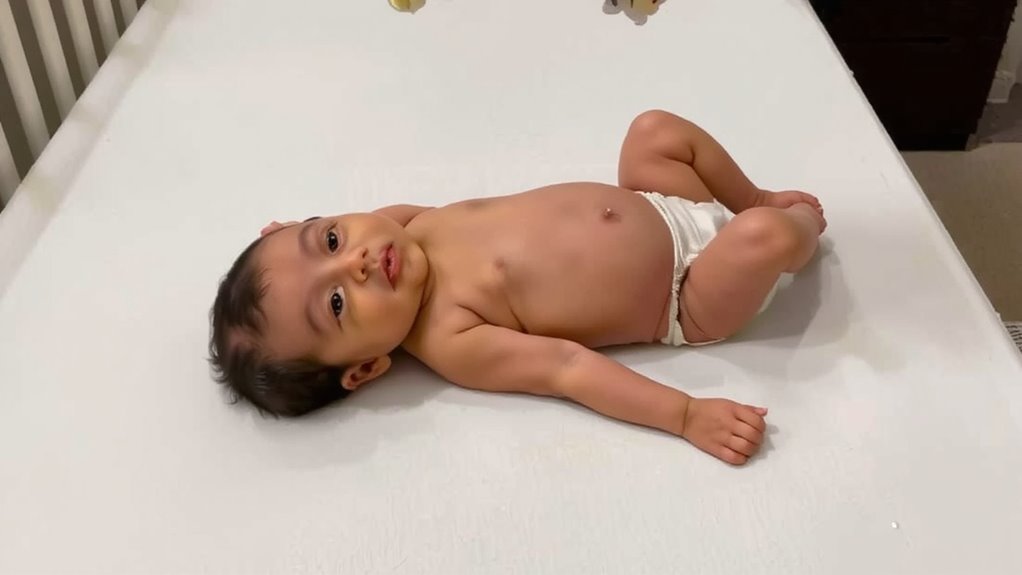
While it might feel natural to let your baby sleep in whatever position they seem comfortable, placing your baby on their back is the safest choice for every sleep. This position supports healthy sleep duration and allows uninterrupted breathing patterns essential for brain development. Back sleeping doesn’t increase the risk of choking, even if your baby spits up. You’ll find most infant mattresses and sleep surfaces are designed with this position in mind, ensuring proper airflow and comfort. When choosing sleep aids like monitors or swaddles, check that they’re safe for back-sleeping setups. Over time, consistent back sleeping helps regulate sleep cycles and reduces strain on the developing nervous system. It’s a simple step, supported by years of research, that aligns with safe sleep guidelines. You can confidently use this approach from day one-no trial period needed. It’s backed by pediatric evidence and woven into standard newborn care recommendations.
Why Tummy and Side Sleeping Raise SIDS Risk
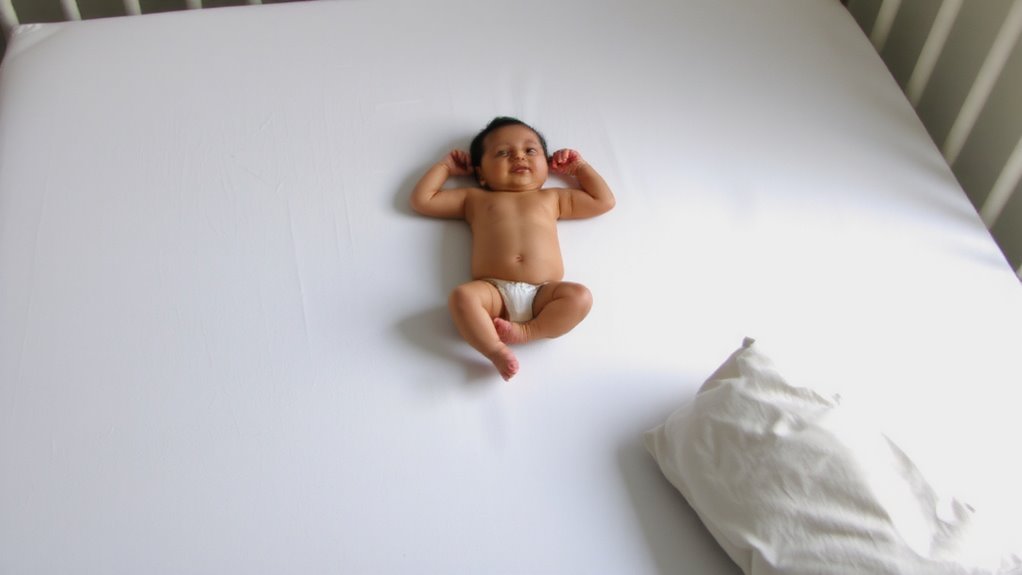
If your baby ends up on their stomach or side during sleep, it’s important to know these positions increase the risk of SIDS because they can limit airflow and make it harder for your baby to breathe easily. Tummy pressure can restrict chest movement, reducing oxygen intake and increasing the chance of rebreathing exhaled air. Side sleeping isn’t stable-your baby can roll onto their stomach, especially during light sleep. This side instability makes it unreliable as a safe position. Infants have weaker neck muscles and less control, so they may not reposition themselves if breathing becomes difficult. While back sleeping may seem less natural to some, it keeps the airway open without added pressure. Choose a firm, flat mattress that fits snugly in the crib to support proper alignment. Avoid pillows, blankets, or soft sleep aids that encourage unsafe positioning. Regularly check your baby’s position during sleep, especially if they roll early.
How Back Sleeping Keeps Airwaves Clear
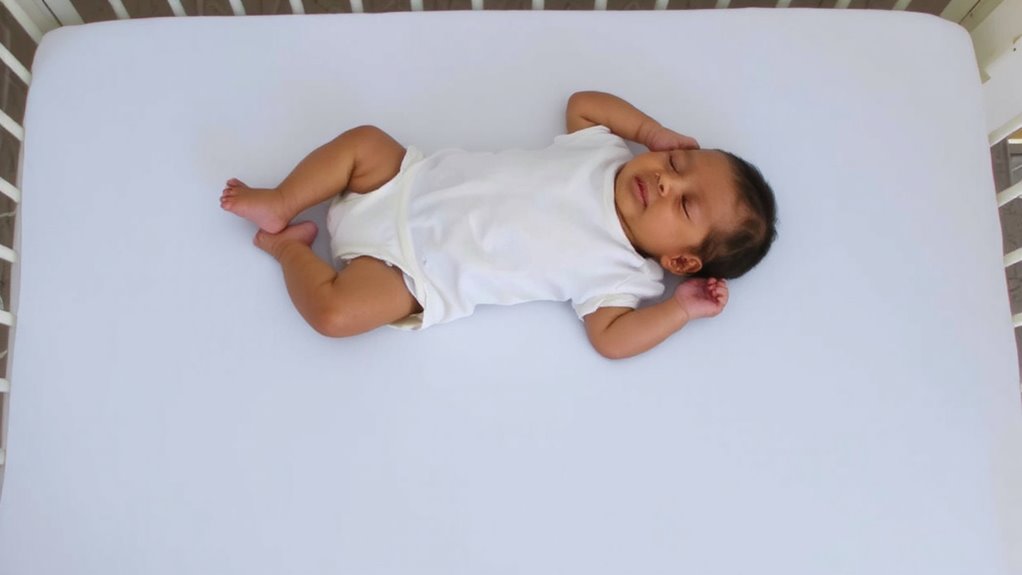
Though it might feel unfamiliar at first, placing your baby on their back to sleep helps keep their airway open and reduces breathing risks during rest. This position supports natural airway alignment, allowing oxygen to flow more freely without obstruction. When your baby lies on their back, the tongue stays centered, minimizing the chance of blocking the throat. This improves breathing efficiency, especially during deep sleep cycles when muscle control is relaxed. You’ll find that this position also reduces strain on the neck and chest, supporting steady respiration. While some parents worry about spit-up or discomfort, most babies adapt quickly and breathe more steadily in this position. It’s been studied extensively and consistently linked to lower breathing complications. Choosing back sleeping is a simple, evidence-based step you can take to support your newborn’s respiratory health from day one.
Create a SIDS-Safe Sleep Environment
Since a safe sleep environment plays a key role in reducing SIDS risk, setting up your baby’s sleeping space with care makes all the difference. Use a firm mattress in the crib-it supports your baby’s body and keeps airways open. Avoid soft bedding, pillows, or stuffed animals, as they increase suffocation risks. The mattress should fit snugly, with no gaps around the edges. Room sharing, but not bed sharing, is recommended for the first six to twelve months. Keep the crib or bassinet near your bed so you can monitor your baby easily during the night. Make sure the sleep space is free from loose cords, curtains, or nearby furniture. Maintain a comfortable room temperature and dress your baby in light sleep clothing. A pacifier may help, though it isn’t required.
Solving Common Back-Sleeping Struggles
Why does your baby fuss when placed on their back to sleep? It’s common for newborns to resist this position at first, especially if they’re used to being held or lying on their side. Back-sleeping may feel less secure, but you can ease the adjustment. Start with proper swaddle shift-move to a wearable blanket once your baby shows signs of rolling, usually around 2 months. Swaddling too long can increase risks. Pacifier use during naps and bedtime is linked to reduced SIDS risk and may soothe your baby. Offer it, but don’t force it. Make sure the pacifier is clean and in good condition-no cracks or weak parts. If your baby spits it out, don’t reinsert during sleep. Consistency helps. Give these strategies a few nights. Most babies adapt with time and routine, making back-sleeping less of a struggle. Choosing the right stretchy swaddle blanket can further support safe sleep by providing gentle, secure comfort without restricting movement.
What If My Baby Rolls Onto Their Stomach?
What should you do if your baby rolls onto their stomach during sleep? Stay calm-you don’t need to reposition them. Once your baby develops the rolling reflex, usually around 4 to 6 months, they can naturally shift during sleep. This skill is a normal part of developmental milestones, showing growing strength and coordination. As long as the sleep surface is firm and free of loose bedding, toys, or bumpers, rolling poses low risk. The ability to roll away from the back suggests your baby may also have the strength to adjust their airway. You still start them on their back, but once they roll independently, constant monitoring or repositioning isn’t needed. Watch their progression through milestones to understand their growing capabilities. Focus on a safe sleep environment rather than body position once rolling begins. Let your baby’s natural development guide adjustments to their sleep routine.
AAP’s Newborn Sleep Guidelines: What Parents Need to Know
How can you create a safe sleep environment that follows the latest recommendations? The American Academy of Pediatrics (AAP) advises placing your baby on their back for every sleep, reducing SIDS risk. Use a firm, flat mattress in a safety-approved crib with a fitted sheet-no blankets, pillows, or bumpers. Room sharing without bed sharing is encouraged; keep your baby nearby in a bassinet or crib for at least the first six months. Establishing consistent sleep routines helps signal bedtime and supports healthy sleep patterns. Avoid loose clothing and monitor for overheating. Pacifiers at naptime and bedtime may offer added protection. Always follow product instructions for sleep aids and guarantee they meet current safety standards. You can return or exchange most approved items if they don’t suit your setup. Trial periods and warranties vary by manufacturer.
On a final note
You should always place your baby on their back to sleep-it’s the safest position to reduce SIDS risk. Once they roll on their own, you don’t need to reposition them. Keep the sleep area clear of soft bedding, toys, and bumpers. Use a firm, flat mattress in a crib that meets current safety standards. A wearable blanket can replace loose covers. Follow AAP guidelines closely, and consult your pediatrician if sleep issues arise.