The Role of Parental Presence in Reducing Sleep-Onset Latency
Your calm presence at bedtime helps reduce how long it takes your child to fall asleep by signaling safety and relaxation. Warm lighting, soothing sounds, and gentle touch-like a hand on the back-support this shift without overstimulation. Staying nearby in a chair or on a floor mat maintains connection while respecting boundaries. Consistent routines build trust, easing sleep-onset over time. Over nights of repeated practice, children gradually develop stronger self-soothing skills. Small, steady changes set the foundation for lasting sleep wellness-you’ll see how simple shifts grow into smoother nights.
Notable Insights
- Parental presence signals safety, helping children wind down and reducing time to fall asleep.
- Calm, consistent proximity supports emotional security and decreases nighttime fears and restlessness.
- Soft tactile contact, like a hand on the back, regulates breathing and promotes neural relaxation.
- Co-sleeping alternatives maintain closeness while encouraging gradual independence and self-soothing.
- Predictable bedtime routines with warm lighting and quiet bonding enhance sleep-onset efficiency.
How Parental Presence Reduces Sleep-Onset Latency
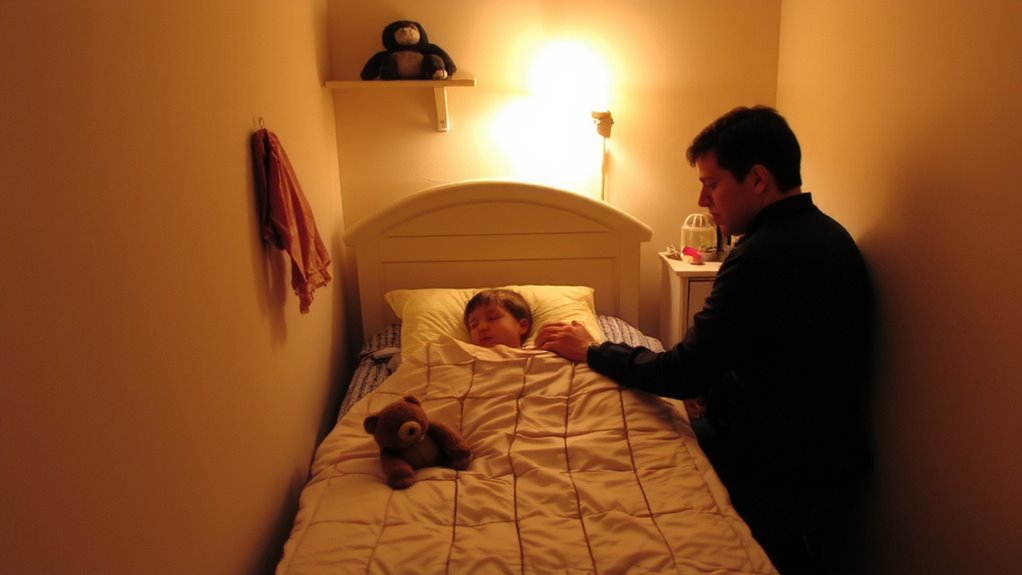
While you might not think a parent’s presence affects how quickly your child falls asleep, research shows it often plays a key role in reducing sleep-onset latency. Your calm presence, paired with warm lighting, signals the brain that it’s time to wind down, easing the shift into sleep. Soft, amber-toned lights mimic sunset conditions, supporting natural melatonin release. Soothing sounds-like gentle lullabies or white noise-further stabilize the environment, minimizing disruptions. When you stay nearby, your child feels safer, which can shorten the time it takes to fall asleep. You don’t need expensive sleep aids; often, consistency and atmosphere matter most. Try positioning a chair near the bed, using a dimmer switch for warm lighting, and playing low-volume soothing sounds nightly. These features are easy to adjust, cost little, and can be tested over a week. Most home sound machines come with warranties, allowing trial periods to assess effectiveness.
Why Touch and Proximity Calm Kids at Bedtime

Your calm presence does more than just shorten how long it takes your child to fall asleep-it can deepen that sense of safety when combined with gentle touch and close proximity. When you’re near, your child experiences emotional security, which helps quiet nighttime fears and reduces restlessness. Physical closeness supports sensory regulation, calming an overactive nervous system by providing familiar warmth, rhythm, and scent. This quiet interaction doesn’t require talking-just a hand on their back or sitting nearby can signal that the environment is safe. Over time, consistent proximity at bedtime strengthens their ability to self-soothe. You’re not creating dependency; you’re building a foundation for healthy sleep patterns. These moments of connection are tools, not fixes-simple, accessible ways to meet your child’s developmental needs while supporting long-term sleep health.
How Physical Contact Triggers Faster Sleep Onset

One gentle touch can make a noticeable difference in how quickly your child drifts off to sleep. Your presence, combined with light physical contact like a hand on the back or a soft stroke of the arm, provides comforting sensory stimulation that signals safety. This tactile input helps regulate your child’s breathing and heart rate, easing the passage into sleep. Research suggests such contact supports neural synchronization between parent and child, aligning brain wave patterns that promote relaxation. These small physiological shifts reduce sleep-onset latency without reliance on sleep aids or devices. You don’t need prolonged interaction-brief, calm contact often suffices. Unlike sound machines or weighted blankets, physical touch adapts naturally to your child’s needs. Still, consider how your involvement fits your family’s routine. This method works well when part of a consistent bedtime pattern, offering a drug-free way to support healthy sleep development.
Stay Close Without Creating Sleep Crutches
Because consistent closeness at bedtime can support relaxation without leading to dependency, it’s possible to stay nearby in a way that encourages independence over time. You can sit in a chair near the crib or lie beside your child on a floor mat-both are co sleeping alternatives that let you remain present while setting physical boundaries. These quiet bonding moments help signal bedtime without requiring your constant touch. Over time, your child learns to connect your presence with safety, not with direct contact. Keep the interaction calm and predictable, avoiding stimulating activities. This method works well when sleep-onset latency is a concern, especially if your child resists being alone. Gradually reduce your involvement as confidence grows. Trial periods of a few nights can help assess effectiveness, and consistency increases success. No warranty exists for emotional processes, but patience improves outcomes.
Build Independence Through Consistent Bedtime Routines
While consistency might seem simple, it’s actually the foundation for helping children fall asleep more easily and stay asleep through the night. You can build independence by establishing a predictable sequence of calming activities each evening. Begin with a set start time for quiet time, signaling that playtime is over. Dim the lights and limit screen exposure at least 30 minutes before bed to support natural melatonin release. Follow with activities like brushing teeth, putting on pajamas, and reading bedtime stories-these aren’t just comforting, they train your child’s brain to associate them with sleep. Repeat the same steps in the same order every night, including weekends, to strengthen the routine’s effectiveness. Over time, predictable patterns reduce sleep-onset latency, even when you’re nearby. This structured approach supports self-soothing and lays the groundwork for long-term sleep health without relying on intervention.
When and How to Phase Out Parental Presence
If your child has grown accustomed to falling asleep with you nearby, it’s usually safe to begin phasing out parental presence once they’re consistently following their bedtime routine and can calm themselves during minor disruptions. Start with gradual withdrawal, sitting farther from the bed each night while keeping the environment predictable. You might shorten bedtime storytelling slightly or end it earlier in the routine to signal increasing independence. Stay calm and consistent, as shifts can affect sleep-onset latency temporarily. Monitor how your child responds-some adjust quickly, while others need more time. Avoid rushing the process or relying on sleep aids unless problems persist. The goal isn’t to remove comfort but to transfer self-soothing skills. Over weeks, most children learn to fall asleep without direct supervision. Trial adjustments carefully, and if sleep issues return, consider pausing and reassessing readiness.
On a final note
You can reduce your child’s sleep-onset latency by staying nearby during bedtime, using touch and quiet presence to signal safety. Physical closeness calms the nervous system, helping sleep come faster. Over time, pair this with consistent routines so dependence doesn’t form. Gradually phase out your presence as confidence grows. Watch for improved sleep quality without full reliance, balancing comfort with independence. Monitor progress over weeks, adjusting gently based on your child’s cues and sleep patterns.